Poriso Guide: Pricing, Suppliers, and Choosing Wisely
This guide explains how Poriso is typically evaluated, where pricing and supplier selection fit into decision-making, and what practical conditions to check before purchase. Objectively, “Poriso” is treated here as a product or brand identifier used in commerce; buyers often compare specs, sourcing transparency, lead times, and warranty terms rather than relying on marketing claims.
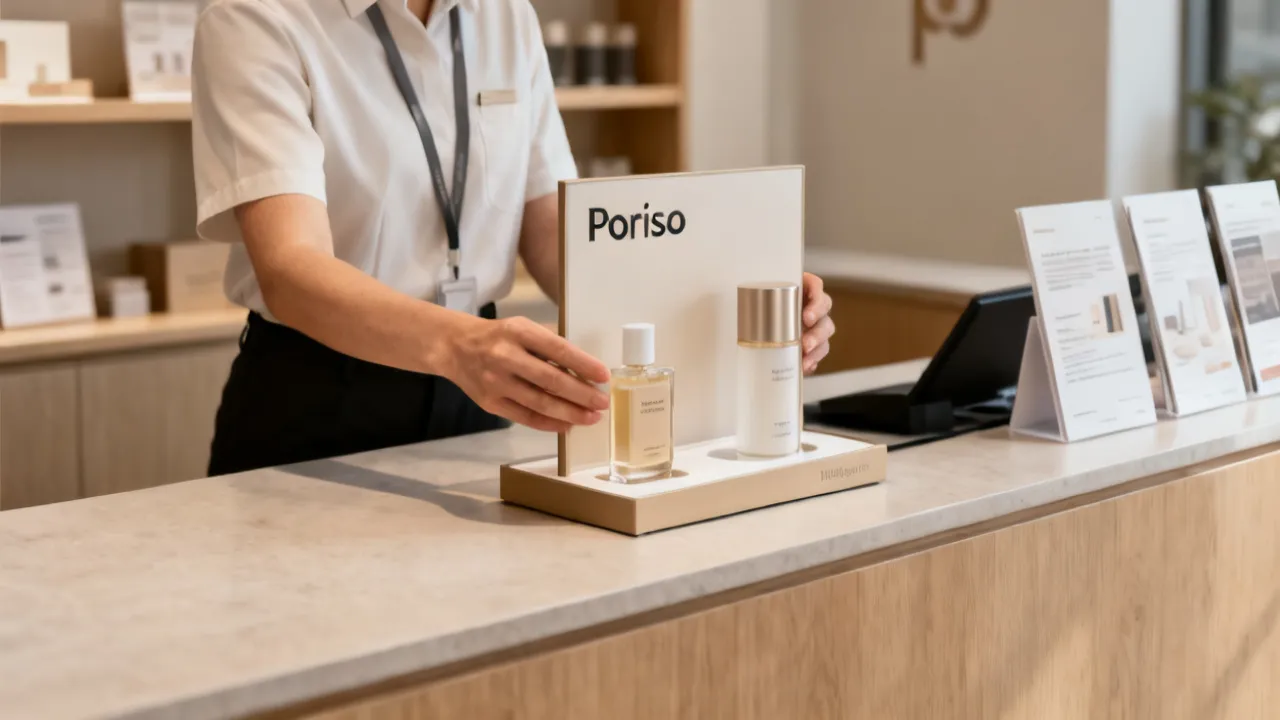
Poriso decisions start with the right cost and sourcing signals
When considering Poriso, buyers usually focus first on what they will pay and who can supply consistently. A practical evaluation begins by comparing total pricing (not just the headline figure), verifying supplier capabilities, and confirming the conditions attached to quality—such as packaging integrity, documentation, delivery timelines, and post-purchase support.
In many markets, “Poriso” functions as a commercial label—either for a specific product line or for a brand used in distribution. Because the name can appear across different catalogs, the most reliable buying approach is to treat it as a reference term and validate the exact item, specifications, and contractual terms that match the listing you’re viewing.
In other words, “Poriso” is often not a single, universally identical product in the real world. It can be a family of configurations. It can also be a label applied by sellers to items that may have different underlying manufacturing origins, different packaging methods, different compliance paperwork, and different warranty handling procedures. That is why the decision process should begin by separating what the listing claims from what the supplier can prove.
For buyers, the most time-efficient method is to collect a few key signals early. Those signals should answer three questions quickly: (1) what exactly you will receive, (2) what it will cost you when it arrives, and (3) what happens if something goes wrong. When those questions are answered clearly, you can move forward confidently; when they are not, you should treat the listing as unverified.
Why buyers compare Poriso pricing beyond the sticker number
Pricing for Poriso commonly varies due to factors that affect your final cost and risk profile. Instead of relying on a single number, evaluate the price you’ll actually pay, including:
- Included components and variants: Different configurations can carry materially different costs.
- Packaging and protective handling: Especially important when products are sensitive to shipping conditions.
- Documentation: Invoice details, batch identifiers, and compliance paperwork can change supply reliability.
- Delivery terms: Shipping charges, lead times, and return policies often explain price gaps.
- Warranty or guarantee conditions: Some suppliers price lower but narrow coverage.
From an industry perspective, the “best deal” usually emerges when the scope of what you receive aligns with the supplier’s ability to stand behind it. For Poriso, that means you should compare like-for-like listings and request written confirmation of what’s included.
To make the pricing comparison practical, buyers often convert offers into a common structure. A seller might advertise a lower unit cost but include fewer protections: for example, thinner packaging, limited documentation, or a warranty that requires additional steps to activate. Another seller might show a higher sticker price but include batch trace documentation, more robust packaging, and a warranty that is easier to claim. When you normalize these differences, the apparent “cheap” option can become expensive due to follow-up costs, delays, replacement shipments, or administrative time spent resolving disputes.
Consider the typical hidden cost categories that come up with product-labeled sourcing:
- Inspection and rework time: If documentation is incomplete, your team may spend more time verifying the product on receipt or dealing with compliance gaps.
- Downtime risk: If lead times slip, you may lose production time, delay installations, or disrupt schedules with customers.
- Return logistics: Some suppliers require return shipping at the buyer’s expense or only offer partial refunds.
- Handling and storage requirements: Products that must be stored under specific conditions can add costs if the seller’s packaging does not match those requirements.
- Evidence requirements for warranty claims: If the warranty is contingent on specific packaging integrity or serial/batch evidence, incomplete traceability can reduce your practical leverage.
Thus, when comparing Poriso offers, buyers should not only ask “Which is cheaper?” but also “Which is cheaper after factoring in the total costs and risk controls?” This approach is consistent across industries and reduces the likelihood that you will end up with a product that is “technically close” but operationally mismatched.
How to evaluate Poriso suppliers objectively
Supplier selection is where many purchasing processes become inconsistent. To choose a reliable Poriso supplier, use a verification mindset rather than relying on promotional descriptions.
Key supplier indicators to examine include:
- Traceability: Can the supplier identify the exact batch, origin, or production run tied to your order?
- Operational reliability: Do they consistently meet timelines and respond to inquiries with clear documentation?
- Quality assurance process: Are there stated inspection steps before shipment?
- After-sales procedures: How are defects handled, and what evidence is required?
- Contract clarity: Are the terms written in plain language for returns, warranties, and replacements?
- Communication discipline: Do they provide updates proactively (shipping confirmation, tracking, or status notes)?
- Consistency of claims: If you ask for specs twice, do they repeat the same information or change it?
- Compatibility support: Can they help verify that the Poriso variant fits your use case?
Even when multiple suppliers offer the same “Poriso” label, the supply chain behind it can differ. A supplier that provides transparent documentation and responsive communication generally reduces procurement friction and lowers the probability of disputes.
It can also help to evaluate suppliers along two axes: capability and process maturity. Capability means they can deliver the item. Process maturity means they can deliver the item reliably with predictable documentation, consistent packaging methods, and a known approach to quality control.
A buyer should be cautious when:
- Specifications are provided only as marketing text without a technical sheet.
- Warranty claims are described vaguely (“we support it if there is an issue”) without a documented procedure.
- Traceability is “available upon request” but the supplier cannot confirm what they will be able to provide for your specific order.
- Lead times depend on “availability” without any schedule commitment or order processing timeline.
- Return terms conflict across documents (e.g., one policy page says returns are allowed, while invoice terms say they are restricted).
Conversely, a strong supplier typically offers consistent answers: clear spec references, traceability practices, documented shipping conditions, and a defined resolution path.
Industry best practice: match Poriso specifications to intended use
In professional purchasing, the main question is not “Is it Poriso?” but “Which Poriso, and does it fit the intended use?”
To evaluate suitability, gather the following practical details before ordering:
- Exact model or variant: Confirm the product code or configuration.
- Compatibility requirements: Any constraints based on installation, materials, or usage environment.
- Performance expectations: Use stated specifications from the listing or supplier documentation.
- Packaging and storage requirements: Especially relevant for items that may degrade if mishandled.
- Operating or usage constraints: If the product has temperature, humidity, pressure, or exposure limitations, these should be explicitly stated and confirmed.
- Quality acceptance criteria: Ask how defects are identified before shipping and what “within tolerance” means for your context.
Once you have clarity on specifications, it becomes easier to compare Poriso pricing and supplier value in a structured way—rather than guessing whether a lower-cost listing is “basically the same.”
In many procurement environments, this is where buyers use a simple internal mapping process. They map the requirements of the intended use (for example, installation environment, required performance levels, and regulatory documentation needs) to the supplier’s stated specifications. If the supplier cannot provide enough detail to support that mapping, the listing becomes a candidate for “hold” or “request clarification,” not for immediate purchase.
Another best practice is to ask for a written confirmation of the exact variant before you place an order. That confirmation should ideally include: the SKU/model, a description of what is included, the warranty duration, and any condition such as batch trace documentation. This transforms the transaction from verbal agreement to documented assurance.
Location-aware considerations for “nearby” procurement
Your decision process should also consider whether you want supply from local distribution. Since the request includes the instruction to replace any city/country placeholders with nearby, it’s worth noting a common procurement pattern: buyers often prefer vendors who can offer shorter lead times and more predictable logistics from nearby distribution channels.
In practice, procurement from nearby can reduce shipping uncertainty and simplify inspection steps upon arrival (e.g., verifying seals, checking packaging condition, and documenting receipt promptly). While availability and pricing still vary by supplier, choosing a vendor who can deliver reliably from nearby often improves operational continuity.
It is still important to avoid overvaluing “nearby” purely as a convenience factor. A nearby supplier that cannot provide strong documentation or has weak warranty support may still create risk that outweighs the benefit of speed. Therefore, buyers should evaluate nearby distribution as one variable within a larger scoring system, not as the deciding criterion by itself.
There are also practical operational benefits to nearby procurement:
- Faster discrepancy resolution: If the shipment is damaged, you can potentially coordinate quicker replacement or inspection steps.
- Reduced exposure to transit conditions: Shorter travel time can reduce exposure to extreme variations that may affect sensitive products.
- Smoother receiving workflows: Your team may have established protocols for receiving and inspecting shipments that arrive within certain windows.
- Lower administrative friction: Fewer cross-border documentation steps can mean fewer compliance delays (when relevant to your region).
If your organization requires strict intake controls, nearby distribution can make it easier to verify conditions quickly and capture evidence (photos, lot numbers, and packaging inspection records) while the shipment is still in immediate custody. This evidence later becomes valuable if you need to open a warranty claim or a defect investigation.
Quality and compliance: what to request for Poriso before paying
A disciplined pre-purchase checklist can prevent most downstream problems. For Poriso, request or confirm:
- Product documentation: Technical sheets or spec sheets that match the SKU.
- Batch/lot identifiers: Helpful for traceability in case you need support later.
- Warranty terms: Clarify duration, scope, and evidence requirements.
- Return/defect policy: Confirm process steps and time window.
- Shipping conditions: Ask about protective packaging and handling practices.
- Compliance paperwork (if applicable): For regulated products, confirm what certifications or declarations are included and whether they match the destination requirements.
- Change-control expectations: If the product may be updated over time, ask how suppliers handle revisions and whether your order will be tied to the specified version.
From an expert viewpoint, the goal is to reduce ambiguity. When expectations are documented, supplier performance becomes measurable—rather than subjective.
A useful technique is to request documentation in the form you will actually use internally. For example, if your team uses SKU-based validation, ask for spec sheets that clearly reference the SKU you are ordering. If your compliance team needs a certain certificate, ask for the exact certificate type and ensure it matches the batch you will receive.
In addition, buyers should confirm how the supplier treats packaging and labeling. It is common for labels to include key information such as serial numbers, batch codes, or manufacturing dates. If the supplier cannot provide batch/lot details, the buyer may still receive a product—but may lose an important route to warranty support. Traceability is not just a paperwork requirement; it is often the mechanism that turns an “issue” into an actionable resolution.
Another overlooked area is documentation timing. Some suppliers provide paperwork only after shipping, while others can provide it before you pay or before dispatch. If you need to validate compliance before receiving the goods, request paperwork early. This can prevent situations where you accept an incompatible shipment and only later discover that compliance documentation is missing or incorrect.
Pricing fairness: how to compare Poriso offers without speculation
Because the request does not provide a specific price for Poriso, the appropriate approach is to define a reliable method for comparison. In most procurement environments, buyers compare offers by calculating:
- Unit price: The advertised per-item cost.
- Total cost of receipt: Unit price + shipping + packaging + any mandatory fees.
- Risk-adjusted cost: How warranty coverage, return ease, and documentation reduce the likelihood of costly disputes.
- Time value: Faster lead times can reduce downtime and planning uncertainty.
This method is consistent with widely used purchasing frameworks described in professional procurement literature, including guidance on total cost of ownership (TCO) approaches found in operations and supply chain references.
To make this comparison method operational, buyers can assign consistent values to risk and time. You might do it informally at first (e.g., “lower is better” scoring for warranty clarity, response time, documentation completeness), then later refine it into a more formal scoring or weighting system for repeat purchases.
Here are practical factors you can incorporate into risk-adjusted cost for Poriso:
- Warranty claim friction: If claims require extensive evidence or have restrictive conditions, the effective cost increases because resolution becomes harder.
- Replacement logistics: If replacement items have long lead times, defects become more expensive.
- Return window: A short return window increases the chance you miss the eligibility period due to inspection delays.
- Documentation quality: Better documentation reduces compliance and verification time and helps avoid “approval-blocking” outcomes.
- Supplier responsiveness: A supplier who responds slowly can prolong issue resolution even if policies are favorable on paper.
For time value, consider the impact of lead-time uncertainty. Even if the average lead time is acceptable, a supplier with frequent delivery slips creates operational risk. That risk can show up as expedited shipping costs later, schedule disruptions, or customer-facing delays. When you normalize offers, the supplier with slightly higher unit price but better delivery reliability may become the most cost-effective option.
Supplement: comparison table for what to check (no links)
The following table summarizes how to evaluate Poriso across the most practical dimensions. It is intentionally written as a comparison tool so you can apply it consistently to different suppliers and listings.
| Check Item | What “Good” Looks Like for Poriso | Red Flags to Watch |
|---|---|---|
| Pricing clarity | Line-item breakdown; shipping/handling and taxes clearly stated | Unclear fees, frequent “final amount” changes |
| Supplier documentation | Consistent technical/spec information tied to the SKU | Generic descriptions that don’t match the exact listing |
| Traceability | Batch/lot identifiers or trace records provided | No identification; inability to confirm what you receive |
| Lead time reliability | Clear delivery window and responsive order updates | Vague timelines; slow communication during processing |
| Warranty & returns | Documented terms and a straightforward resolution process | Only partial coverage; unclear evidence requirements |
| Packaging integrity | Protective packaging and stated handling conditions | Minimal packaging; no mention of storage or transit protection |
| Compliance paperwork (if relevant) | Certificate/declaration type matches destination requirements | Certificates missing, delayed, or not tied to batch/SKU |
| Product version control | Supplied version matches your specification | Supplier can’t confirm version or substitution is possible |
| Customer support behavior | Clear escalation path; timely responses; written answers | Replies are vague; policies vary by conversation |
Step-by-step guide: how to buy Poriso with controlled risk
Use this step-by-step flow to keep your Poriso purchasing process objective and repeatable.
- Confirm the exact Poriso item: Identify the variant/model/SKU, and ensure it matches your intended use requirements.
- Collect two to three comparable quotes: Compare offers only after normalizing for the same configuration and inclusions.
- Request documentation: Ask for spec sheets, warranty terms, and any batch/lot identification process.
- Review supplier policies: Examine returns and defect handling—especially timelines and required evidence.
- Evaluate lead time realism: Confirm whether the supplier can meet the schedule for delivery from nearby channels or otherwise.
- Calculate total cost of receipt: Include shipping, mandatory fees, and the practical cost of uncertainty.
- Place a controlled initial order (when feasible): For new suppliers, start with a smaller quantity to validate quality and logistics.
- Document receipt and storage conditions: Photograph packaging condition, verify seals, and store according to any provided guidance.
- Validate internal acceptance criteria: Check that the received item matches the agreed specifications, including labeling and traceability data.
- Record outcomes for future decisions: Track performance metrics like defect rates, on-time delivery, and resolution time to improve subsequent sourcing.
This step-by-step approach works well because it progressively removes uncertainty. Early steps confirm the identity and specs. Middle steps confirm cost and policies. Final steps confirm what arrived and whether it performs as expected. By the time you scale the order volume, you have evidence-based confidence rather than assumptions.
Conditions and requirements: what you should insist on before proceeding
To protect your procurement outcome for Poriso, insist on the following conditions/requirements:
- Written agreement: Capture the exact item configuration, price, delivery terms, and warranty/returns policy.
- Specification match: The supplier should confirm the SKU corresponds to the stated specifications.
- Traceability evidence: Batch/lot details or equivalent trace documentation should be available when requested.
- Clear resolution process: Define how disputes are handled—who authorizes replacements or refunds.
- Receipt inspection plan: Agree on inspection steps and documentation timing after arrival.
- Shipping and packaging method statement: Ensure protective packaging and handling conditions are documented to reduce transit damage risk.
- Escalation contacts: Identify who handles issues when customer support fails to resolve the matter quickly.
It is helpful to treat these requirements as procurement “gates.” A gate means you do not pass forward until the requirement is met. For example:
- Gate 1 (Before PO): Confirm SKU and obtain spec sheet + warranty/return terms in writing.
- Gate 2 (Before shipment dispatch): Confirm traceability details (batch/lot) and confirm packaging/handling expectations.
- Gate 3 (On receipt): Verify labeling, packaging integrity, and batch/lot identifiers match the agreed record.
- Gate 4 (After inspection): Confirm performance acceptance and document any deviations immediately.
These gates reduce the probability that you will accept a mismatch unknowingly and then discover it is too late to claim remedy. In many disputes, the core issue is not the product defect itself; it’s delayed recognition and missing evidence. A disciplined gate approach solves that.
Expert perspective: how procurement teams reduce Poriso-related variability
In mature procurement environments, buyers recognize that product labels can hide differences in origin, configuration, and support coverage. To reduce variability around Poriso, teams typically:
- Use standardized “like-for-like” comparison templates.
- Require documentation before purchase order issuance.
- Track supplier performance indicators (on-time delivery, defect rates, resolution speed).
- Maintain a traceability log for each received shipment.
- Implement controlled ordering for new suppliers (small quantity validation) before scaling.
- Establish escalation rules so unresolved issues do not stagnate.
- Perform periodic supplier audits or reviews based on historical performance and documentation quality.
This reduces operational uncertainty and improves auditability. While the exact procedures vary by industry, the underlying logic stays consistent: objective verification first, marketing second.
Procurement variability often comes from the supplier side, but it can also come from the buyer side. Buyers sometimes introduce variability by using inconsistent acceptance criteria or changing requirements mid-order. For Poriso, buyers can reduce their own variability by creating a single internal requirement list that stays stable through the ordering process. That list may include: exact SKU, minimum documentation, packaging expectations, delivery requirements, and the evidence needed for defect claims.
When buyers standardize this internal list, they also reduce negotiation confusion. Supplier discussions become more precise (“Can you provide the spec sheet for SKU X and include batch traceability for that SKU?”) rather than broad (“Is it the same Poriso?”). Precision makes sourcing more measurable and less emotional.
Another expert tactic is to build a supplier scorecard. A scorecard might include categories such as:
- Quality documentation completeness
- Traceability availability
- Delivery performance (on-time and within agreed windows)
- Defect/return resolution speed
- Communication clarity
- Commercial fairness (clear pricing breakdown and stable invoicing)
Over time, scorecards allow buyers to identify patterns. For example, a supplier might be strong on delivery but weak on warranty clarity; another might be expensive but consistently provides complete documentation. These patterns help teams make decisions quickly on future orders.
Relevant sources and sourcing principles (for objective grounding)
When evaluating supplier quality and procurement risk, many organizations rely on widely adopted principles such as total cost of ownership (TCO) and supply chain risk management. General background guidance on these topics can be found in reputable publications from professional bodies and recognized standards frameworks, including resources related to procurement strategy and quality management.
Note: The article does not assert specific Poriso prices, supplier names, or market performance figures because such details would require verified, item-specific data. For your exact purchase, use the step-by-step guide above to obtain documentation and compare like-for-like offers.
It can also be useful to align your process with broader quality management thinking: the idea that quality is not “inspected in” at the end, but built through clear requirements, documentation, traceability, and controlled processes. When these are missing, problems show up later as rework, delays, and disputes. When these are present, quality becomes more predictable.
Additionally, the logic behind risk-adjusted cost parallels a common operational concept: the least expensive option is not always the cheapest once downstream effects are included. In procurement practice, this means your evaluation should incorporate not only what you pay, but what it costs to manage uncertainty and what it costs to recover when things deviate from expectations.
FAQs about Poriso pricing and suppliers
1) What does “Poriso” refer to?
“Poriso” is used here as a commercial identifier that may denote a product line, brand, or SKU across different listings. Because the term can appear in more than one context, you should confirm the exact variant/model you are buying.
2) Why does Poriso pricing differ across suppliers?
Price differences usually reflect variations in configuration, packaging, documentation completeness, shipping terms, lead time, and warranty/returns scope. To compare fairly, normalize offers to the same specification and total cost of receipt.
3) How can I verify that a Poriso supplier is reliable?
Request documentation tied to the specific SKU (spec sheets, warranty terms, and traceability details such as batch/lot). Also review responsiveness, delivery consistency, and the clarity of the returns/defect resolution process.
4) Should I prioritize suppliers near me (nearby distribution)?
Not automatically, but nearby supply can reduce delivery uncertainty and make receipt inspection easier. The deciding factor should still be the total deal value: quality documentation, warranty coverage, and delivery reliability compared across suppliers.
5) What conditions should be in place before purchasing Poriso?
Insist on written terms for the exact item configuration, delivery conditions, and warranty/returns policy. Require evidence of traceability or at least a process for confirming what you receive, and document receipt and storage conditions upon arrival.
6) How do I handle a defect or mismatch with a Poriso order?
Follow the supplier’s resolution process as stated in the warranty/returns terms. Provide the requested evidence promptly (often including photos, batch/lot details, and packaging condition), and keep communication in writing to ensure clarity.
7) What evidence is typically most useful when opening a Poriso warranty claim?
Most useful evidence includes: proof of purchase (invoice or PO reference), batch/lot or serial identifiers matching the shipment record, photos of packaging integrity on receipt, photos of the product issue, and a clear description of the defect or mismatch. If your internal testing produces results (dimensions, performance checks, or compliance verification), include those as well. The goal is to make it easy for the supplier to verify that the problem aligns with the batch and the agreed specifications.
8) Is it worth ordering from multiple Poriso suppliers to compare performance?
It can be worth it, especially if you are using Poriso for a critical operational role or regulated workflow. However, the comparison should be controlled: match the SKU and configuration, keep quantities manageable, document everything at receipt, and evaluate outcomes using the same acceptance criteria. Random mixing of variants or receiving from different configurations can produce ambiguous results. A controlled comparison reduces confusion and speeds the decision of which supplier to standardize on.
9) How can I reduce the chance of receiving a mismatched Poriso item?
Reduce mismatch risk by insisting on SKU-level confirmation in writing before the purchase order is finalized. On receipt, immediately verify: product labeling, model identifiers, batch/lot numbers, packaging labels, and whether included components match the agreed scope. If there is any discrepancy, document it promptly—delaying issue identification can make warranty claims harder to substantiate.
10) What should I ask about packaging for Poriso to ensure safer delivery?
Ask whether the supplier uses protective packaging suitable for the shipping conditions and whether storage requirements are communicated. If the product is sensitive (for example, to moisture, impact, temperature extremes, or long storage duration), ask how the supplier protects it during transit and what storage condition guidance is provided for after arrival. Also confirm whether the supplier includes protective materials, proper labeling, and any instructions needed to maintain product integrity.
Conclusion: choose Poriso through verification, not assumptions
Choosing Poriso with confidence comes down to three controllable elements: (1) comparing pricing as total cost of receipt, (2) selecting a supplier with transparent documentation and traceability, and (3) confirming conditions for warranty, returns, and delivery—especially when sourcing from nearby channels. When you follow a structured checklist, the decision becomes measurable and repeatable rather than subjective.
In practical procurement terms, the most important mindset shift is to treat “Poriso” as a starting reference rather than a final proof of equivalence. The proof comes from documentation, SKU alignment, traceability, clear warranty/return terms, and a reliable delivery process. When those elements are verified before purchase—and when receipt is documented carefully—buyers convert a potentially ambiguous sourcing label into a controlled, evidence-based transaction.
-

A Guide to Cost-Efficient Small Electric Cars for Seniors
-
Mastering Debt Consolidation: Boost Your Credit Score and Manage Interest Rates
-
Your Guide to Loans, Credit Checks, and Interest Rates
-
Affordable Independent Living: Finding the Right Senior Housing
-
Guide to Senior Living Apartments: Affordable and Comfortable Environments