Understanding Serto.obgrada in Modern Sourcing Practices
This guide explains how “Serto.obgrada” is discussed within sourcing and product-fit decisions, focusing on what buyers should evaluate before committing. It provides objective background on the term, common buyer concerns, and practical industry perspectives on risk, verification, and supplier alignment. A comparison table and step-by-step checklist support more confident procurement decisions.
Why “Serto.obgrada” Matters in Buyer Decision-Making
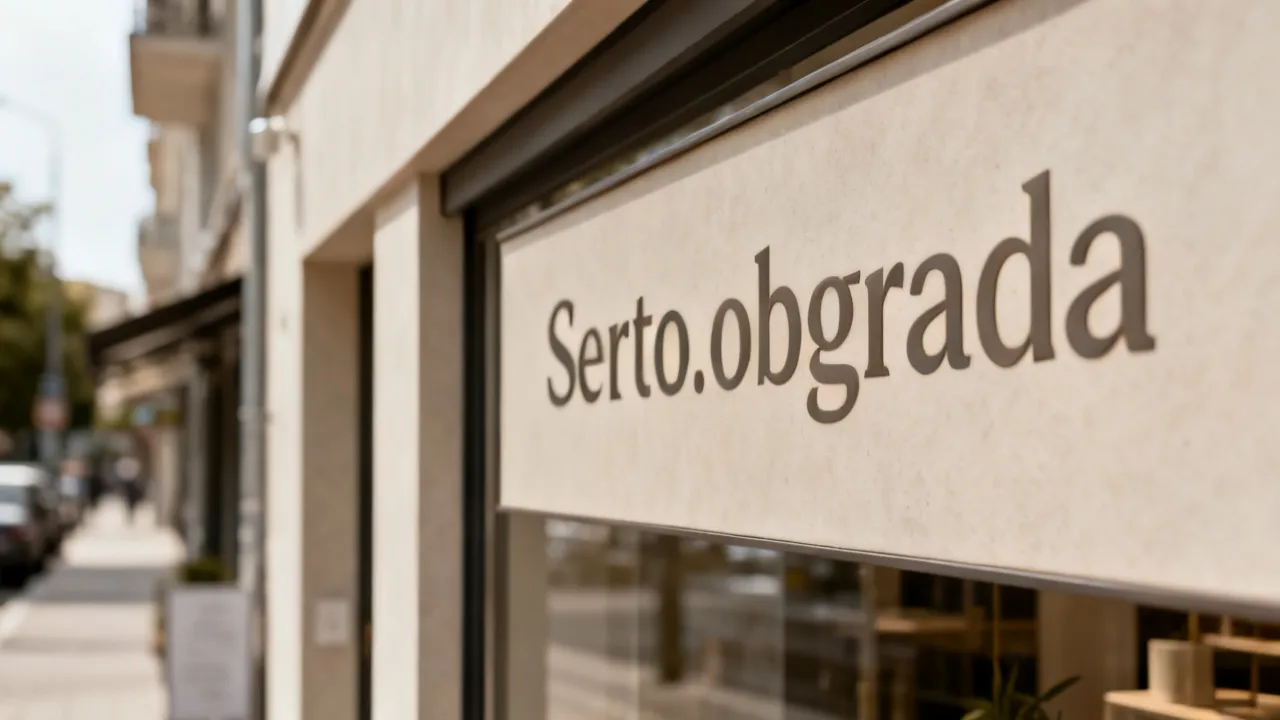
When people mention Serto.obgrada, they are often signaling a need for clarity around how a supplier, product set, or sourcing pathway aligns with real requirements—quality expectations, documentation readiness, delivery reliability, and after-sales responsibilities. This guide treats “Serto.obgrada” as a practical buyer-facing concept: a shorthand that may represent a sourcing route, a supplier identity, or a product specification pattern that buyers must verify through evidence rather than assumption.
From an industry perspective, the safest way to engage with any unfamiliar sourcing reference—especially one that appears in procurement discussions without standardized context—is to translate it into verifiable procurement criteria. That means asking: What exactly is being offered? Under what terms? With what documentation? Managed by which entity? And how will issues be resolved if expectations and deliverables diverge?
In other words, “Serto.obgrada” should rarely be treated as the “answer.” It should be treated as a trigger—the moment when a buyer decides to stop guessing and start confirming. In mature procurement organizations, this is not just a compliance posture. It is a performance strategy that reduces rework, avoids operational downtime, improves supplier accountability, and strengthens the audit trail.
Ambiguity is one of procurement’s most expensive hidden costs. A vague label can lead to mismatched versions, unanticipated substitutions, missing certifications, incomplete documentation packages, or unclear liability when something goes wrong. Buyers who treat unclear terms as “requirements to be verified” transform risk into manageable work items.
As you read this guide, keep a consistent lens: “Serto.obgrada” is only valuable when it can be translated into measurable specifications, contractual scope, and enforceable operational responsibilities.
Objective Background: Interpreting “Serto.obgrada” Without Overclaiming
Serto.obgrada does not, by itself, guarantee a single universally recognized meaning in public domain references. In procurement contexts, unfamiliar or stylized terms can reflect one of the following:
- A supplier or storefront label used in private catalogs, local listings, or recurring vendor communications.
- A product naming convention used to differentiate variants, materials, versions, or bundles.
- A sourcing channel shorthand that groups multiple procurement options under one reference so buyers can request quotes quickly.
- A vendor-managed configuration where the vendor coordinates components from different upstream partners.
Because the exact definition can vary by context, responsible buyers focus on what can be verified: contract terms, product specs, measurable quality requirements, and documented operational capability. This approach aligns with widely accepted procurement best practices in supply chain risk management and vendor due diligence.
It is also worth addressing a common procurement temptation: assuming that because a term appears repeatedly in vendor messages, it must mean something standardized. In practice, repeated usage often reflects internal convenience. Vendors may reuse labels across different catalogs or product families, and a term might map to different underlying configurations depending on batch, revision, geography, or customer-specific customization.
Therefore, a buyer must avoid two extremes:
- Overclaiming: Treating “Serto.obgrada” as if it were an official standard without evidence.
- Undervaluing: Dismissing it entirely and missing the opportunity to clarify a potentially useful product family or sourcing route.
The correct posture is evidence-based verification. The label is an entry point. The real decision foundation is the documented scope and measurable performance.
Finally, consider that “Serto.obgrada” could be a transcription, transliteration, version tag, or internal SKU that changed over time. A buyer should ask for the mapping between the label and:
- The official manufacturer part number (if applicable)
- The revision or ECO/ECN version (Engineering Change Order/Notice)
- The applicable specification standard or internal quality document
- The quality acceptance criteria used for receiving inspection
This mapping transforms a fuzzy term into a traceable procurement reference.
What Buyers Should Verify First (Critical Information Up Front)
If you are evaluating a sourcing item or vendor reference related to Serto.obgrada, prioritize the items below before you request final pricing or place an order.
- Entity clarity: Identify the legal supplier entity and procurement point of contact. Confirm whether the seller is the manufacturer, an authorized distributor, or a coordinator.
- Specification alignment: Obtain technical documents that match your use case (drawings, test reports, materials data, compatibility notes, or performance targets—depending on the category).
- Quality and inspection process: Confirm incoming inspection standards and any pre-shipment checks. If the vendor claims compliance, ask for the underlying documents (not just statements).
- Delivery and lead-time realism: Require a lead-time estimate grounded in capacity and logistics, not only best-case assumptions.
- Warranty and returns: Define acceptable failure/defect thresholds, remediation timelines, and the return or replacement procedure.
- Compliance and documentation: Ensure you can obtain invoices, packing lists, and any regulatory paperwork required for your jurisdiction and intended use.
These checks help prevent common procurement failure modes: mismatched expectations, undocumented substitutions, inconsistent quality, and unclear liability. They also support better internal auditing and accountability.
To make these verification steps more actionable, buyers often convert them into a vendor-request checklist. For example, before signing an agreement, you can request an “evidence pack” containing:
- Specification sheets or technical datasheets with revision dates
- Certificates of conformity (CoC) and/or certificates of analysis (CoA) where relevant
- Test reports showing compliance metrics for key characteristics
- Quality plan excerpts (e.g., inspection levels, sampling plans, test methods)
- Packaging and labeling standards for traceability
- Warranty statement and RMA (Return Merchandise Authorization) procedure
- Shipping terms and Incoterms (if applicable)
This evidence pack approach is especially important when “Serto.obgrada” is used as a shorthand. Without evidence, a buyer cannot confirm what the label maps to.
Industry Expert View: How “Serto.obgrada” Fits into Modern Procurement Workflows
In many procurement organizations, the earliest stage is not “buying,” but translation: converting vendor text or informal labels into structured requirements. A term like Serto.obgrada often functions as an entry point—useful for initiating a conversation—but it must be mapped to your organization’s requirement framework.
Modern procurement workflows frequently include:
- Standard requirement templates (so vendors answer consistently)
- Controlled catalogs (so internal teams use consistent part definitions)
- Technical review gates (so engineering validates compatibility)
- Supplier qualification steps (so QA approves the supplier’s processes)
- Compliance checks (so regulatory and procurement policies are satisfied)
From an operations and sourcing standpoint, there are two common patterns:
1) Vendor reference as a product identifier
Here, Serto.obgrada may represent a specific product line or configuration. The buyer’s job is to request the exact spec set: dimensions, tolerances, materials, certifications, and any version-specific constraints.
When a label functions as a product identifier, the risk is that “same label” does not always mean “same spec.” Product lines often have multiple revisions, and vendors may update materials or production methods. If “Serto.obgrada” is reused across revisions without clear version notation, buyers can accidentally purchase an item that looks similar but fails in performance, fit, form, or documentation requirements.
2) Vendor reference as a sourcing pathway
Here, Serto.obgrada may indicate that the supplier will coordinate sourcing from upstream manufacturers. Buyers should then evaluate transparency: who is actually producing, how substitutions are handled, and how quality is assured across multiple tiers.
When a label functions as a sourcing pathway, the key challenge is visibility. A buyer may receive goods that meet the vendor’s general description but come from an upstream batch with different characteristics, different testing records, or different compliance documentation. Buyers must therefore ask for:
- Upstream manufacturer identification or at least traceable evidence
- Lot traceability mechanisms (batch numbers, serial ranges, labeling)
- Quality oversight across tiers (how the vendor verifies upstream output)
- Document control practices (ensuring test reports match the delivered lots)
Either way, the best procurement outcomes come from structured communication and evidence-based verification—not from relying on the prominence of a name.
A practical way to operationalize this is to create a “label-to-spec mapping” document internally. For each inquiry referencing “Serto.obgrada,” the mapping includes:
- Your intended application/use case
- Requested spec sheet revision
- Required certifications
- Required inspection steps and acceptance thresholds
- Vendor’s documentation plan
That mapping becomes the buyer’s control point throughout RFQ, negotiation, order placement, delivery, and receiving inspection.
Price Considerations: What to Ask for Before You Accept a Quote
You asked for price information integration; however, no explicit price values, currency, or package pricing were provided in the prompt. In situations like this, industry practice is to ensure the quote is complete and comparable. When discussing Serto.obgrada-related offers, treat pricing as a total cost of ownership question rather than a single-line number.
Even when the vendor provides a price, buyers should evaluate whether the quote includes the real cost drivers that determine whether the delivered goods will be accepted without delay.
Before accepting any quote, ask for:
- Unit price breakdown (what is included in each unit or bundle).
- Minimum order quantity (MOQ) and how MOQ affects per-unit cost.
- Incoterms or shipping terms to understand where responsibility shifts.
- Lead-time and escalation terms (what happens if delivery is late).
- Quality cost (inspection fees, testing fees, or certification costs if applicable).
- Payment terms and any penalties for delayed payment.
To remain objective, avoid assuming that a lower initial quote always improves value. In supply chain decision-making, hidden costs—rework, returns, expedited shipping, downtime risk, and documentation gaps—can dominate the final outcome.
Here are additional “quote completeness” items buyers often request to prevent misunderstandings related to ambiguous labels:
- What exactly is being priced? Confirm whether the quote includes all components, accessories, or packaging required for use.
- What version is included? Require reference to revision/version identifiers, not only the label.
- What documentation is included in the shipment? Request explicit list of papers provided with the goods and any separate digital delivery schedule.
- Are certifications included? Some vendors include generic certificates; others provide test reports tied to lots. Clarify which is provided.
- Is substitution allowed? Ask under what conditions substitutions can occur and who must approve them.
- Is pre-shipment inspection included? Determine whether inspection is performed and whether results are shared.
When the quote does not answer these questions, buyers should treat the quoted “price” as incomplete. A complete procurement decision requires clarity on scope.
It can also help to frame pricing discussions around “cost of nonconformance.” For example, if the goods fail acceptance criteria, what costs does your organization bear (scrap, downtime, engineering time), and what costs does the supplier bear (replacement, freight, corrective actions)? By negotiating these responsibilities upfront, you reduce the likelihood of disputes after delivery.
Supplier Alignment: Due Diligence for “Serto.obgrada” References
Even if a term like Serto.obgrada appears in vendor messaging consistently, the supplier’s operational maturity is what matters. A buyer should assess:
- Traceability: Can the supplier trace components and lot information to production batches?
- Corrective action capability: If there’s a defect, do they have a documented corrective action process?
- Communication consistency: Are responses timely and technically precise?
- Evidence quality: Do documents look authentic and consistent (format, versioning, dates), or are they generic?
For risk guidance, organizations commonly align vendor due diligence with frameworks described by credible bodies such as ISO standards related to quality management and risk-based thinking. For compliance and supply chain risk references, the World Bank’s guidance on supply chain risk management and due diligence concepts is often used as a general orientation. (See: ISO 9001 for quality management structure, and World Bank supply chain and procurement risk guidance.)
To expand on these due diligence areas, buyers often perform a blend of documentary checks and behavioral checks:
- Documentary checks: Is the supplier’s quality management system documented? Are test methods defined? Are certificates controlled by document revision and lot mapping?
- Behavioral checks: When requirements change, does the supplier respond with structured updates? Do they proactively flag risks? Do they admit gaps early?
Traceability deserves special attention when “Serto.obgrada” may represent a sourcing pathway. In such cases, the buyer’s real question is: “If there is a problem with our lot, can we isolate it and prove where it came from?” To answer, the supplier should explain how it captures:
- Lot/batch identifiers used at production
- Inspection and release history
- Packaging and labeling traceability practices
- Document retention and retrieval processes
In addition, “corrective action capability” should be assessed not just by whether the supplier can describe a process, but whether they can demonstrate outcomes. Buyers may ask:
- How many nonconformances were reported in the last cycle?
- What fraction were resolved within a defined timeline?
- What types of issues were common (documentation errors, material variability, labeling problems)?
- What does the supplier do to prevent recurrence?
Evidence quality matters because poor evidence often correlates with poor process control. Generic documents that do not match revision numbers or that do not correspond to delivered lots can create a compliance vulnerability. In practice, buyers should confirm that documents include at least:
- Supplier name and address (matching the invoice entity)
- Document revision/version and dates
- Lot/batch numbers tied to the shipped goods
- Test results and acceptance criteria (not just “pass” statements)
Finally, buyers should confirm contact governance. If a supplier uses “Serto.obgrada” as an umbrella label, there may be multiple roles inside the supplier organization (sales, procurement coordinator, manufacturing quality manager). The buyer should request a clear escalation path for issues, including who can authorize replacements, who can release amended documentation, and who can resolve delivery disputes.
Comparison Table: Quick Buyer View of Common “Serto.obgrada” Scenarios
This table compares typical interpretations and the buyer’s corresponding verification focus. It is meant as a practical decision aid, not a guarantee of any single meaning.
| Scenario (How “Serto.obgrada” May Be Used) | What It Likely Indicates | What You Should Request | Key Condition/Requirement |
|---|---|---|---|
| Product identifier | A specific version/configuration of an item or bundle | Exact technical specification sheet + revision/version number | Specs must match your application requirements; substitutions require written approval |
| Sourcing pathway label | Seller coordinates sourcing from upstream partners | Upstream/manufacturer identity disclosure + quality assurance plan | Lot traceability and pre-shipment inspection evidence are mandatory |
| Catalog or storefront reference | Vendor uses the term for catalog organization | Catalog entry screenshot/text + commercial terms | Final commercial scope must be confirmed in writing before payment |
| Managed configuration | Vendor assembles or configures an outcome based on your needs | Bill of materials (where applicable) + acceptance test criteria | Acceptance criteria and responsibility boundaries must be explicit |
Use this table as an internal prompt: whenever someone proposes an offer associated with “Serto.obgrada,” ask which scenario you are in. Then follow the “what you should request” column to reduce ambiguity.
It is also possible that “Serto.obgrada” is used in more than one way at the same time—for example, a label that is both a product identifier and a sourcing pathway umbrella. In that case, the buyer should apply both sets of verification requirements: revision-controlled specs and traceable evidence tied to lots.
Step-by-Step Guide: How to Evaluate a “Serto.obgrada” Offer Responsibly
Below is a step-by-step workflow you can apply to most sourcing discussions where Serto.obgrada appears as a label, reference, or sourcing marker.
-
Translate the label into requirements.
Ask what exactly the term refers to: product type, variants, included components, and performance goals. Replace vague descriptions with measurable attributes.
To support this step, you can create a requirement matrix. For example, if the item is an industrial component, the matrix might include mechanical dimensions, material grade, surface finish, tolerances, and relevant testing requirements. If it is a service or solution, the matrix might include deliverables, timelines, acceptance tests, and documentation outputs.
-
Request documentation before final pricing acceptance.
Ask for spec sheets, certifications (if relevant), test reports, and any quality plans. If documentation can’t be shared, ask why and what alternative evidence is available.
A buyer-friendly approach is to specify the minimum documentation package required for approval: “We need the specification revision, test report format, and certificate type, plus the lot-to-document mapping method.” This makes it clear that the vendor must not only provide documents, but provide the right category and version.
-
Confirm supplier role and accountability.
Determine whether the seller is the manufacturer/authorized distributor/coordinator. Ensure the contract names the responsible party.
Because many disputes arise from unclear accountability, you should confirm the contracting entity (the legal seller on the invoice and purchase order). Even if the goods come from an upstream manufacturer, the buyer’s contractual remedies usually depend on the contracting party.
-
Align on quality inspection and acceptance criteria.
Define what “pass” means at receiving and whether pre-shipment inspections are included. Set how defects are categorized and handled.
Acceptance criteria should be measurable, testable, and traceable. For instance, rather than “meets quality standards,” define explicit acceptance thresholds (dimensions within tolerance, test results within range, documentation completeness rules). If relevant, define sampling plans and what happens if samples fail.
-
Validate lead-time assumptions.
Ask for lead-time by stage (processing, packing, logistics) and confirm what happens if delays occur.
Lead-time should include operational dependencies such as raw material availability, production scheduling, and documentation generation. Buyers also want a clarity point: if a delay occurs, is the supplier responsible for mitigation actions (e.g., expedited production, alternate documentation strategy) or only for informing the buyer?
-
Lock payment and terms.
Use payment terms that match risk: for higher uncertainty, consider escrow-like arrangements or milestone-based payments (as allowed by your policies and legal context).
For example, you might structure payments so that a portion is paid after documentation approval, and another portion after goods receipt and acceptance testing. This reduces the risk that you pay before verifying that “Serto.obgrada” maps to the correct specification revision.
-
Run a small verification order when feasible.
If the item is new to your organization, start with a trial batch to confirm quality and documentation match. Treat it as a validation step, not a substitute for due diligence.
A verification order is most effective when it has defined test criteria and explicit acceptance/rejection outcomes. Otherwise, it becomes an informal “try it and hope” exercise.
-
Document outcomes and feedback loops.
After delivery, record performance against acceptance criteria. If there are issues, request corrective action details and track resolution.
Feedback loops should connect to supplier performance monitoring. If “Serto.obgrada” appears repeatedly in future quotes, historical issues tied to that label mapping should inform your next negotiation, acceptance, and documentation requirements.
Conditions and Requirements for Safe Engagement
To reduce procurement risk when Serto.obgrada is involved, the following conditions are commonly required in professional buying environments:
- Written scope confirmation: The final scope must be documented in purchase orders or contracts.
- Documented compliance (if applicable): Compliance claims need underlying evidence.
- Clear defect handling: Define replacement/repair timelines and the process for reporting issues.
- Traceability expectations: Lot/batch identifiers should be included when relevant to your use case.
- Data privacy and contact governance: If the sourcing requires sharing technical plans, ensure appropriate confidentiality terms.
To expand these conditions into practical contract language categories (without supplying legal advice), buyers often specify:
- Scope of supply: includes what is delivered (quantity, versions/revisions, packaging, documentation)
- Acceptance procedure: receiving inspection time window, tests required, and consequences of failure
- Documentation schedule: what must be delivered with the shipment and what may be delivered digitally
- Substitution policy: whether substitutions are allowed and what approvals are required
- Warranty period: duration and coverage, including any exclusions
- Remedies: replacement, repair, refund, freight responsibility, and cost recovery rules
- Escalation and dispute resolution: who escalates and when, and how disputes are handled
When “Serto.obgrada” is ambiguous, written scope is not just a contract formality. It is the buyer’s mechanism for converting a label into enforceable deliverables.
FAQs
1) What does “Serto.obgrada” mean?
It can function as a supplier label, product identifier, or sourcing pathway reference. The most reliable approach is to verify the exact meaning in the specific commercial context you’re dealing with and translate it into measurable requirements.
If you want a fast internal method to clarify meaning, ask the vendor to answer three questions in the same message: (1) what it maps to (product/spec), (2) what evidence confirms that mapping (documents), and (3) who is responsible for delivering it (legal entity/manufacturer coordination).
2) How should I request details tied to “Serto.obgrada”?
Ask for the exact specification set, revision/version numbers, included components, acceptance criteria, lead-time by stage, quality assurance steps, and the responsible legal entity. Ensure the quote includes documentation and inspection terms where applicable.
To make your request more actionable, you can use a structured template. For example, request: “Provide the specification revision for Serto.obgrada, the CoC/CoA/test report type and lot mapping, pre-shipment inspection plan, and warranty/RMA process.” This reduces back-and-forth and limits the vendor’s ability to respond with generic statements.
3) Can I rely on a quote that references “Serto.obgrada” only?
Often you can use the quote as a starting point, but you shouldn’t rely on the label alone. Professional due diligence requires a written scope plus documentation that supports the quoted item’s performance and compliance claims.
In procurement terms, a quote is not the final decision artifact. The final decision artifact is the purchase order scope, the attached technical requirements, and the acceptance documentation. “Serto.obgrada” is an input to those artifacts only after validation.
4) How do I prevent substitutions or mismatched versions?
Require version/revision identifiers in the purchase documentation and specify that substitutions require written approval. Ask how substitutions are handled if stock is unavailable, and what evidence accompanies any change.
You can further reduce substitution risk by requesting a change notification clause. For example, if the vendor anticipates a change in materials, manufacturing method, or revision, they must notify you before shipment and provide revised documentation for approval.
5) What should be in the acceptance criteria for deliveries?
Acceptance criteria should reflect measurable and testable requirements—such as dimensional tolerances, functional performance indicators, documentation completeness, packaging/labeling standards, and defect classification thresholds.
Buyers often include “documentation acceptance” as part of acceptance. For instance, the goods may be acceptable only if the required certificates and test reports arrive in the agreed format within a defined time window. If documentation is missing, the goods may be held pending documentation verification.
6) Are there recognized frameworks for supplier quality and risk?
Yes. Organizations frequently use quality management and risk-based approaches consistent with ISO quality management principles, and they may consult supply chain risk guidance from recognized institutions (e.g., the World Bank provides procurement and supply chain risk perspectives). For your specific category, align due diligence with your internal compliance obligations.
In practice, frameworks should be adapted to category risk. For high-risk categories (critical components, regulated materials, safety-related items), due diligence requirements should be more stringent: more verification, tighter acceptance, and stronger traceability requirements.
7) Where can I find official sourcing or procurement best practices?
Check reputable standards bodies, recognized procurement guidance from major institutions, and your internal procurement handbook. If you tell me your industry category (e.g., electronics, industrial parts, packaging, services), I can suggest more targeted verification questions.
Additionally, your internal policies (quality management, supplier approval process, procurement governance) often provide category-specific templates. Aligning your questions to internal policy language increases consistency and audit readiness.
Related Sourcing Practices to Consider
Even though Serto.obgrada is the focal term, buyers usually improve outcomes by strengthening broader procurement controls:
- Structured RFQs: Use a requirement template so vendors respond consistently.
- Bid evaluation discipline: Score not only price, but documentation completeness, lead-time realism, and quality assurance capability.
- Audit-ready records: Keep correspondence, specifications, acceptance evidence, and change history.
- Supplier performance tracking: Monitor repeat issues and enforce corrective actions.
To expand these practices in a way that supports “Serto.obgrada” scenarios, consider implementing these additional controls:
- Controlled vocabulary for internal part references: If “Serto.obgrada” is used by vendors, maintain an internal mapping so your engineering and procurement teams always refer to the validated specification (not the vendor label).
- Revision control and document control: Ensure that the correct revision is referenced in purchase orders and that incoming documents match revision identifiers.
- Standard escalation playbooks: When a shipment arrives without documentation or with mismatched specs, define who acts, what evidence is required, and what decisions can be made without legal escalation.
- Risk-tiered qualification: For suppliers tied to ambiguous sourcing pathways, require enhanced qualification: more documentation, more traceability checks, and more frequent audits.
These controls reduce reliance on interpretation. They also make it easier for internal stakeholders to coordinate. For example, engineering can validate specification revision and compatibility; QA can validate test methods and acceptance criteria; procurement can enforce scope and remedies; logistics can validate lead-time and shipping terms. When all teams align, ambiguous labels become manageable.
Conclusion: Treat “Serto.obgrada” as a Verification Starting Point
In procurement discussions, Serto.obgrada is best understood as a prompt for clarification. Rather than assuming meaning from the label alone, apply a disciplined verification process: confirm what the term represents, validate documentation, align quality acceptance criteria, and lock responsibilities into written agreements. By doing so, you transform an ambiguous reference into a concrete, audit-ready procurement decision—one that stands up to scrutiny long after delivery.
When buyers treat “Serto.obgrada” as an evidence-driven mapping problem, they reduce risk across the entire procurement lifecycle: negotiation becomes clearer, acceptance becomes testable, disputes become less likely, and performance becomes measurable. The label may start the conversation, but the buyer’s verification work determines the outcome.
References (general guidance sources): ISO 9001 (quality management principles) and World Bank procurement/supply chain risk guidance materials are commonly used reference points for establishing structured quality and risk-aware procurement practices.
-

A Guide to Cost-Efficient Small Electric Cars for Seniors
-
Mastering Debt Consolidation: Boost Your Credit Score and Manage Interest Rates
-
Your Guide to Loans, Credit Checks, and Interest Rates
-
Affordable Independent Living: Finding the Right Senior Housing
-
Guide to Senior Living Apartments: Affordable and Comfortable Environments