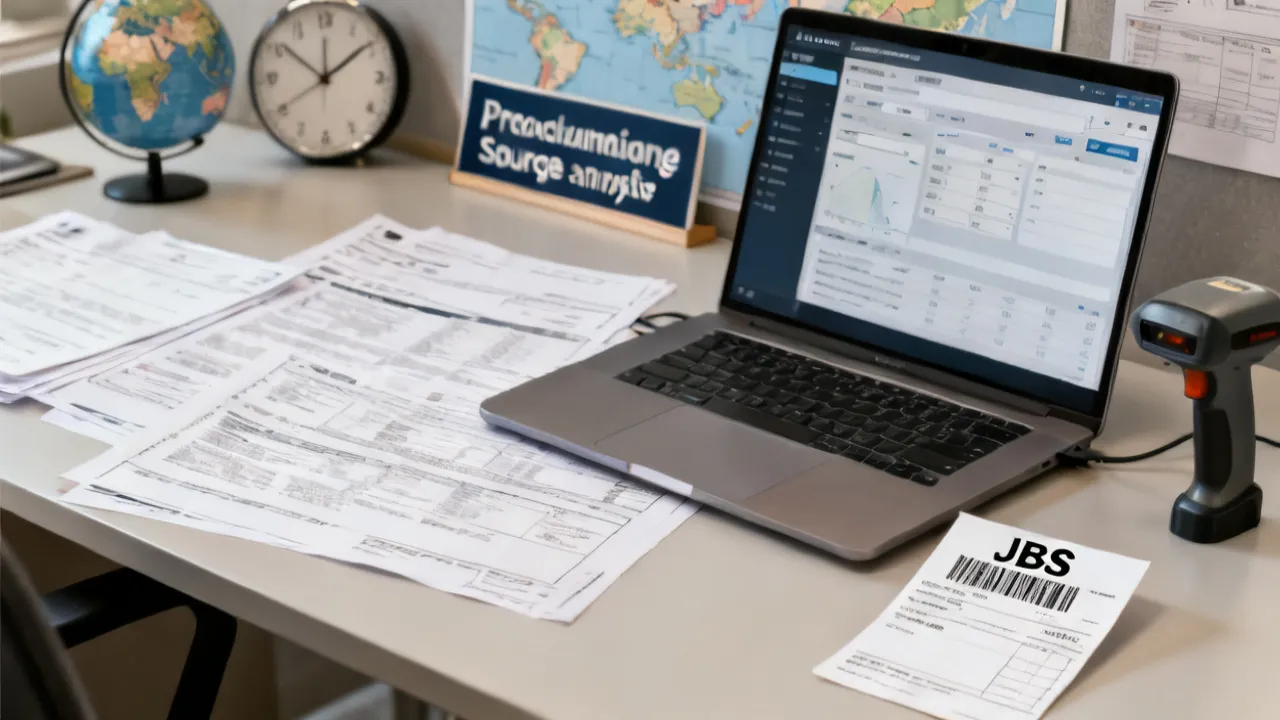
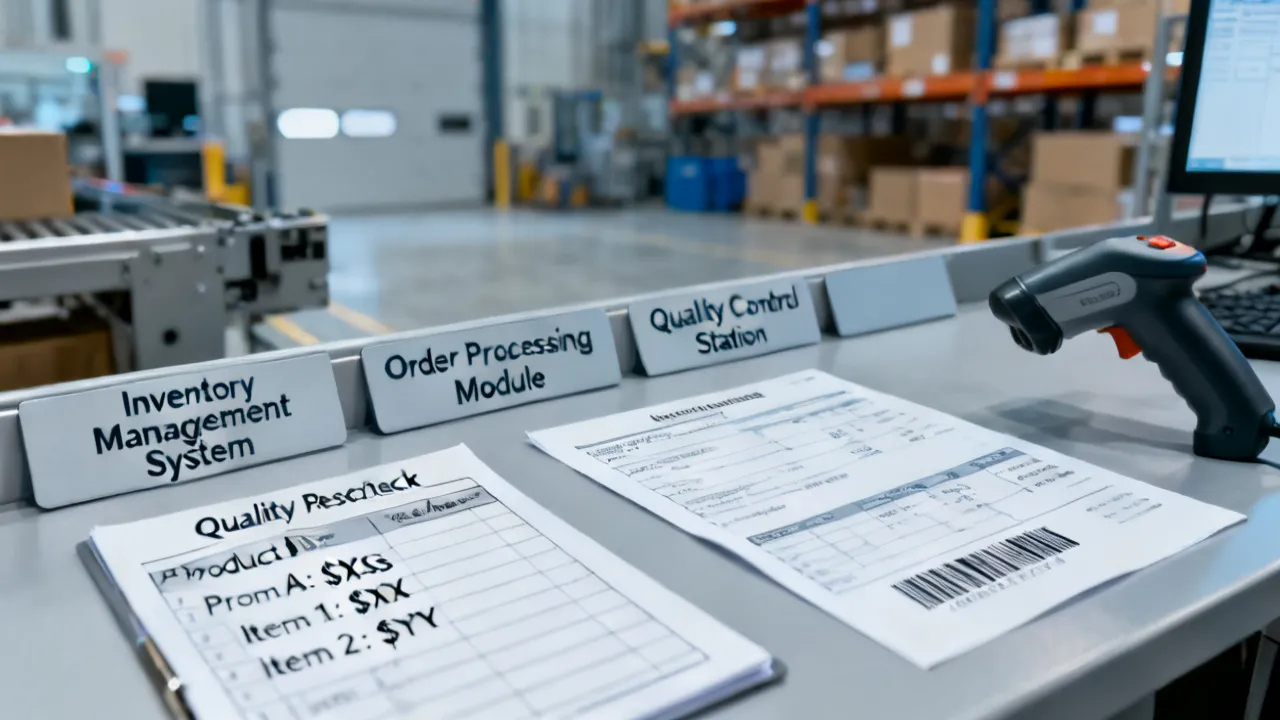
Understanding “Jbs” and Their Practical Supply Chain Role
This guide explains how “Jbs” functions in procurement and operations, and what buyers typically evaluate before committing to a supplier. Objectively, “Jbs” is often used as an operational label within job-bundling or production-routing contexts, and it may appear in purchase discussions alongside delivery terms, quality checks, and lead-time expectations.
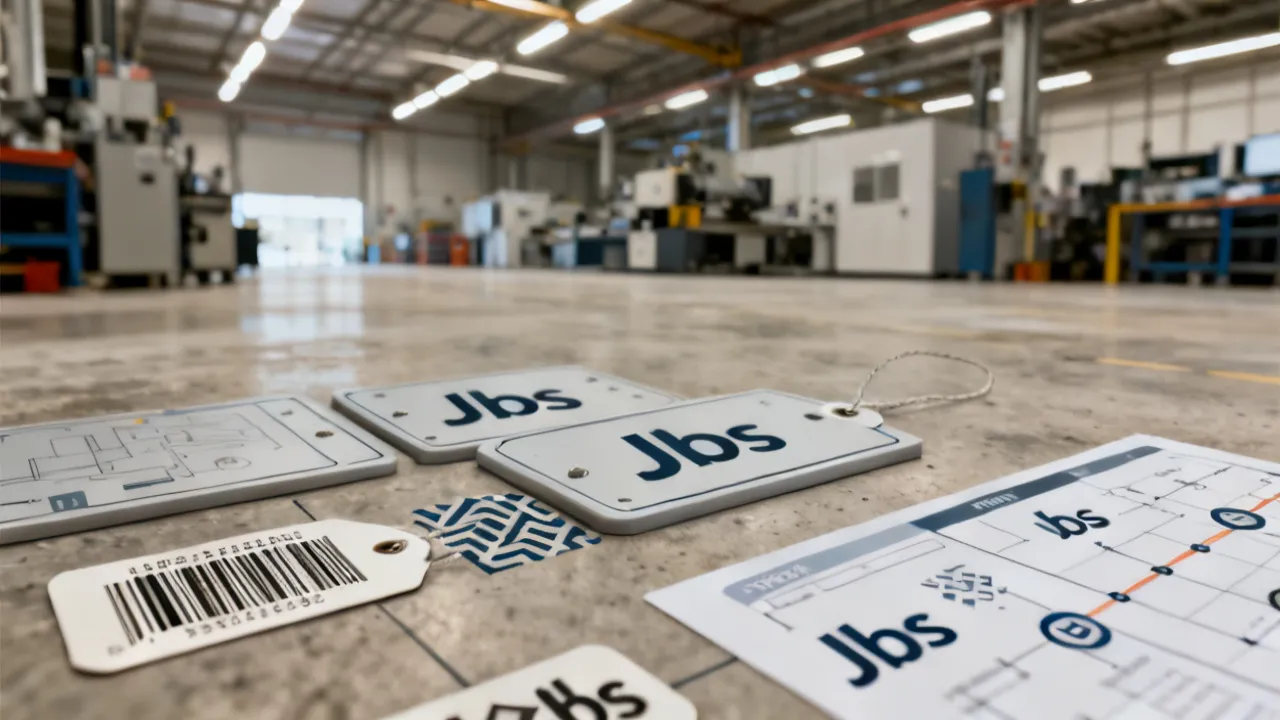
Start with the most important decision: how “Jbs” fits your sourcing workflow
When teams discuss Jbs during purchasing or planning, the practical question is usually the same: What exactly is being bundled, routed, verified, and delivered? In many industries, “Jbs” is used as a shorthand term tied to operational bundles—such as grouped tasks, standardized production steps, or logistics-ready work units—so buyers can compare suppliers on consistency rather than isolated quotes. This article provides an objective framework for understanding that role, the typical checks involved, and the conditions under which suppliers can reliably meet expectations. If you are evaluating Jbs alongside supplier commitments, focus first on scope clarity, measurable quality controls, and lead-time realism—not marketing phrasing.
In other words, don’t treat “Jbs” as a slogan or a mysterious add-on that automatically makes outcomes better. Treat it as a contractual construct that must be defined, verified, and evidenced—because that’s how procurement and quality systems actually reduce risk.
What “Jbs” usually means in supplier discussions (objective background)
“Jbs” is not a single globally standardized acronym across all sectors; rather, it commonly operates as an internal or industry-specific shorthand. In procurement and operations contexts, it may refer to a “bundle” concept—grouping multiple work items (for example, testing, packaging, documentation, or staged handling) under one operational package so that delivery and acceptance criteria become more predictable.
From a buyer’s perspective, the value of using Jbs language is that it can translate vague statements (“we can handle it”) into structured expectations: what is included, which standards apply, how outputs are verified, and what happens if something deviates from plan. In practice, teams often want the same deliverables from every supplier, even if the suppliers are different.
However, because “Jbs” is not universally standardized, different suppliers may attach different meanings to the same term. One supplier might treat “Jbs” as a set of production steps; another might treat it as a logistics and documentation package; a third might use it to represent both production and verification. This variability is exactly why buyers should insist on a written scope that turns shorthand into operational truth.
How buyers evaluate “Jbs” during sourcing: the decision layers that matter
Because Jbs discussions are frequently embedded in procurement packages, evaluation usually unfolds in layers. Below is an industry-style inverted approach: start with verification and risk controls, then move to commercial and operational alignment.
Think of this as a funnel. At the top, you interpret what the supplier means by Jbs. As you move deeper, you test whether the supplier can execute it repeatedly, show evidence for it, and deliver it on time under realistic capacity constraints. Only after those questions are answered should price negotiations finalize.
1) Scope definition: what is included under “Jbs”?
The first critical step is to define the bundle boundaries. If your contract or purchase order references Jbs, require a clear written scope that enumerates included items such as:
- Process steps (e.g., inspection, finishing, labeling, documentation)
- Acceptance criteria (how quality is measured and by whom)
- Packaging and handling requirements
- Traceability documentation (batch/lot records, test reports, certificates)
- Revision control if specifications change mid-run
This is where many procurement misunderstandings begin—“Jbs” might sound straightforward, yet scope can be interpreted differently unless it is pinned down in writing.
To tighten scope, buyers often use a “bundle bill of work” approach. Instead of asking “Do you include documentation?” ask “Which exact documents are included, at what format version, and under which acceptance milestone?” For example, if “Jbs” includes a certificate, specify whether it is a material certificate, a test report, a conformance certificate, or a certificate of analysis. Different document types support different compliance outcomes and different customer requirements.
Similarly, if “Jbs” includes inspection, ask whether it includes internal calibration checks, sampling plans, calibration evidence for measurement tools, and how results are recorded. Buyers are typically not interested in whether “inspection happens.” Buyers are interested in whether the inspection is controlled, documented, and acceptable to receiving.
2) Quality verification: how will “Jbs” outputs be validated?
Buyers typically want verification mechanisms tied to objective standards. In most mature supply chains, quality checks are designed around:
- Incoming inspection or controlled acceptance at receiving
- In-process checks to prevent late-stage surprises
- Final inspection with defined pass/fail criteria
- Nonconformance handling (containment, root-cause, corrective actions)
For Jbs bundles, the key point is that verification should be included in the same operational package, not assumed to occur “somewhere later.”
One of the most common failure modes in “bundle” arrangements is that buyers assume the bundle includes verification, but the supplier treats verification as a separate internal step or as “customer responsibility.” To avoid this, require explicit mapping of evidence to acceptance gates. For example:
- At the in-process gate, specify what checks are performed (e.g., dimensions, functional test, visual inspection) and what record is produced (e.g., inspection worksheet, electronic log, stamped report).
- At the final gate, specify pass/fail criteria and whether samples are tested or the full lot is verified.
- For nonconformance, specify containment responsibilities, time-to-response expectations, and whether rework resets acceptance or triggers re-inspection under a revised plan.
In high-risk industries—such as aerospace, medical devices, automotive safety components, and regulated chemical distribution—quality verification often includes additional controls like documented traceability, tool calibration evidence, and audit-friendly record retention. Even when regulations are not identical, buyers can apply the same discipline: evidence must be complete, consistent, and retrievable.
3) Lead times and capacity realism
Even when a supplier can deliver the core items associated with Jbs, the bundle may require additional steps (testing, documentation, packaging, staging). Ask for lead-time breakdowns—not just a single “from order to delivery” number.
To keep it evidence-based, align your request with established supply chain evaluation practices found in official procurement and quality guidance from recognized bodies (for example, quality management and supplier evaluation approaches used in ISO-aligned systems). Doing so avoids inflated expectations and reduces schedule risk.
Lead-time breakdown is not merely administrative. It is the fastest way to uncover hidden bottlenecks. For instance, a supplier may claim a two-week delivery window, but the breakdown reveals:
- Production time is 8–10 business days
- In-process inspection takes 1–2 days with scheduling constraints
- Testing takes 2–3 days including equipment availability
- Documentation finalization takes 1–2 days due to approvals
- Packaging staging takes 0.5–1 day with freight pickup windows
When buyers understand these components, they can request milestone-based timelines, include realistic buffers, and set up contingency triggers for expedite. This prevents the typical scenario where “the product is done” but shipments are delayed due to unresolved documentation, missing labels, or late test result compilation.
Buyers also benefit from capacity realism by asking a question that seems basic but is powerful: “What is your current capacity utilization for each step inside the Jbs bundle?” If capacity is constrained (e.g., limited testing equipment), the bundle lead time might be accurate only under certain workload assumptions.
4) Commercial structure: how “Jbs” pricing is typically constructed
Since you asked for price integration, it’s important to be precise: your prompt did not include explicit numeric price figures, supplier names, or a specific quote. In real procurement, Jbs-related pricing is often composed of multiple cost drivers such as materials, labor, testing/inspection effort, documentation, and logistics-ready packaging. If you receive a supplier quote referencing Jbs, request a cost breakdown that maps to your defined bundle scope.
Rather than relying on one-line totals, buyers usually benefit from understanding:
- Unit cost vs. bundle cost
- What is included in the bundle (and what is excluded)
- Rework or re-inspection fees
- Expedite charges and trigger conditions
- Payment terms tied to milestones (inspection pass, shipment, receipt)
If your procurement policy allows, compare quotes on a like-for-like basis by mapping each supplier’s offer to the same Jbs scope and acceptance criteria.
To further reduce ambiguity, buyers can request a “cost-to-scope traceability” view. In practice, this means the supplier provides a table where each scope line item is paired with the associated cost component. For example:
- Documentation line item “CoC + test report package” corresponds to labor/time and document preparation steps.
- Packaging line item “shipping labels + protective packaging + lot identifiers” corresponds to packaging materials and handling time.
- Inspection line item “in-process dimension check + final functional test” corresponds to equipment time and labor.
When buyers see that traceability, it becomes easier to negotiate changes. If you want additional documentation or tighter labeling controls, you can quantify how it affects the bundle cost—rather than forcing a vague “yes/no” change order.
5) Supplier reliability: evidence-based indicators to check
Objective supplier evaluation commonly includes:
- Documented quality management (process control, corrective action workflow)
- Traceability capability supporting lot/batch identification
- Historical delivery performance using internal receiving records or shared KPIs
- Audit readiness (ability to provide evidence without delays)
- Change management for materials or process adjustments
When Jbs is discussed, ask whether the supplier treats the bundle as a controlled process with repeatable outcomes.
Reliability isn’t only about passing quality the first time. For bundle-based deliverables, reliability also includes:
- Consistency of evidence: the supplier must produce the same documentation package each time, in the correct format.
- Consistency of packaging and labeling: lot identifiers and shipping labels must match records and packing slips.
- Consistency of acceptance timing: acceptance must be triggered by the same conditions (e.g., “final inspection passed” and “evidence package submitted”).
Buyers can also check supplier reliability through practical probes. For example, ask the supplier to provide a redacted example of a completed Jbs bundle for a recent order (or a similar product). A real-world sample often reveals whether the supplier’s internal process is mature or improvised.
Where “Jbs” appears in daily operations: common use cases
Even though “Jbs” may be shorthand, it often shows up in recurring operational scenarios:
- Job bundling: grouping multiple tasks under one operational package
- Standardized production routing: enforcing a fixed sequence so acceptance is consistent
- Logistics-ready completion: packaging + documentation readiness before shipment
- Batch-level verification: combining testing and documentation for traceability
- Supplier onboarding: clarifying deliverables early so rework decreases
To make these use cases more concrete, consider how “bundle” language often appears in real purchasing conversations:
- A buyer requests a lot-tested and documented supply package, not just raw parts.
- A logistics team refuses shipment until labels and packing documents match batch records.
- A quality team requires traceability that can survive audits or customer investigations.
In each case, “Jbs” functions as a shorthand for bundling steps that ensure the final shipment is both technically compliant and operationally acceptable.
Industry context: aligning “Jbs” with quality and procurement standards
Procurement teams increasingly rely on structured supplier management rather than ad hoc communication. From a standards perspective, organizations often adopt quality management systems and supplier evaluation routines to reduce variability. For instance, ISO 9001–aligned processes emphasize documented controls, continual improvement, and corrective action—principles that map naturally to how buyers expect Jbs bundles to be handled (clear scope, measurable acceptance, and traceable outcomes).
In the absence of a universal definition of “Jbs,” the safest method is to treat it as a contractual concept: define it explicitly in scope, attach acceptance criteria, and ensure the supplier’s internal process supports those requirements.
This alignment with standards can be expressed as a practical checklist. Even if your company does not formally reference ISO in procurement documents, you can adopt ISO-style discipline:
- Plan the bundle (scope + requirements + acceptance gates).
- Do the bundle (supplier executes controlled processes).
- Check the bundle (verification, inspection, evidence generation).
- Act on results (nonconformance handling, corrective action, change control).
When buyers treat Jbs as a controlled cycle rather than a label, they reduce the gap between what was promised and what arrived.
Practical comparison table (supplemental conditions and requirements)
The table below compares typical Jbs-related supplier arrangements. Use it as a checklist for negotiating requirements and reducing ambiguity.
| Evaluation Area | What to Ask About “Jbs” | Buyer-Friendly Conditions | Common Risk if Unclear |
|---|---|---|---|
| Scope | What work steps and documents are included under the “Jbs” label? | Written scope list; acceptance criteria referenced to scope items | Surprise omissions (e.g., documentation or packaging not included) |
| Quality checks | How are outputs inspected and what are pass/fail rules? | Defined test method, sampling plan, and nonconformance procedure | Disputes at receiving due to inconsistent interpretation |
| Traceability | What traceability data is produced per “Jbs” bundle? | Lot/batch identification plus report retention period | Inability to investigate defects or perform recalls |
| Lead time | What is the breakdown for each step inside “Jbs”? | Milestone-based schedule with realistic buffers | Schedule slips caused by underestimated inspection or documentation effort |
| Pricing model | How is “Jbs” priced (items, labor, inspection, documentation, logistics)? | Cost breakdown tied to the scope; change-order rules | Cost creep during variations and rework |
| Change management | What happens if specs change after the “Jbs” start? | Documented change procedure; impact assessment timeline | Inconsistent versions shipped under the same “Jbs” reference |
| Requirements for acceptance | Who signs off, and when is acceptance considered complete? | Defined acceptance window and evidence submission format | Delayed approvals and payment disagreements |
Step-by-step guide: how to assess “Jbs” offers before purchase
Use the following step-by-step approach to evaluate Jbs offers in a controlled, repeatable way. This is written from an operations and procurement risk-management perspective.
- Request a one-page “Jbs” bundle definition. The supplier should list every included item, step, document, and acceptance method.
- Map your internal requirements to the bundle scope. If your receiving team needs specific evidence or labeling formats, ensure these are part of the Jbs deliverables.
- Require evidence of quality control. Ask how inspection happens (in-process and final), what records are generated, and how nonconformance is handled.
- Ask for a lead-time breakdown. Confirm milestone dates for each step inside the bundle, not a single aggregated number.
- Compare pricing on like-for-like scope. If two suppliers quote different inclusions under Jbs, normalize the comparison by scope—otherwise the “cheaper” option may actually cost more.
- Set clear acceptance and documentation timing. Define when acceptance is triggered and what evidence must be submitted, including format requirements.
- Run a pilot or controlled trial when appropriate. For new suppliers or material/process changes, validate performance under controlled conditions.
- Document lessons learned and update requirements. After receiving, update your internal Jbs checklist so future purchases are smoother.
Conditions and requirements to set in writing
To avoid confusion, many buyers embed specific conditions in purchase orders and supplier agreements when Jbs is used. Typical requirements include:
- Defined deliverables (what is shipped, what documents come with shipment)
- Defined quality evidence (inspection records, test methods, sampling rules)
- Traceability requirements and data retention expectations
- Change control (what triggers re-approval or re-test)
- Nonconformance resolution process (containment, corrective action, timelines)
- Commercial terms tied to milestones (payment after acceptance evidence)
However, “conditions in writing” is more than listing items. The writing must be operationally precise. Consider adding specificity around:
- Evidence submission method: email PDF, portal upload, API integration, or physical document inclusion. If you require both digital and physical copies, say so.
- Evidence versioning: specify that certificates and reports must correspond to the exact revision of the specification and the actual lot shipped.
- Acceptance window: for example, acceptance occurs within 5 business days of receipt of both goods and evidence, otherwise status defaults to “pending.”
- Handling of rework: if rework is performed, specify whether the lot must receive a new inspection plan and whether acceptance resets.
These details reduce disputes because they give both sides a shared procedure for what happens when reality deviates from plan.
Extending the evaluation: what to check beyond the basic bundle checklist
Once you have scope, verification, lead time, pricing, and supplier reliability, there are additional dimensions that frequently determine whether a Jbs arrangement succeeds.
Buyers often overlook these until something goes wrong—so it’s worth addressing them early.
Bundle acceptance mechanics: “When is acceptance complete?”
Acceptance language is frequently the root cause of procurement disputes. To prevent this, define acceptance mechanics so there is no ambiguity about whether acceptance is based on:
- Goods arrival alone
- Goods + evidence submission
- Goods + evidence + testing outcomes
- Goods + evidence + buyer sign-off
For Jbs, a buyer-friendly model often ties acceptance to two parallel conditions: technical acceptance (inspection/test results) and administrative completeness (documentation package and traceability data). If either component is incomplete, the bundle should remain “pending” and payment triggers should reflect that.
Also define who is allowed to reject a bundle and under what conditions. For example, receiving teams may reject for shipping-label mismatch, while quality teams reject based on test failures. These rejection categories should map to a consistent procedure for nonconformance handling.
Nonconformance handling: containment, escalation, and timelines
Nonconformance handling determines whether problems remain contained or expand into major delays. Buyers should insist that Jbs includes a nonconformance procedure with minimum expectations such as:
- Containment: what actions the supplier takes immediately after failure (hold, quarantine, stop shipments, flag records)
- Notification: time-to-notify the buyer (e.g., within 24 hours of discovery)
- Escalation: who participates in root-cause reviews
- Corrective action plan: timeline for providing the plan and evidence of completion
- Verification of corrective action: what testing confirms the fix is effective
- Cost responsibility: clarify what costs are borne by the supplier vs the buyer, especially if the failure is due to supplier-controlled steps in Jbs
Even if your business is not highly regulated, the discipline above prevents “silent failure” patterns. Without explicit timelines, suppliers may take weeks to respond, forcing buyers to either accept nonconforming inventory or halt operations.
One additional detail that helps: define how rework affects traceability. If a reworked lot is shipped, it must retain full traceability so that any future investigation can differentiate original vs reworked items.
Traceability and record retention: audit-ready by design
Traceability is often described generically (“we can track lots”), but procurement needs measurable requirements. When Jbs is referenced, define traceability requirements explicitly. Buyers should ask:
- What identifiers appear on the product and the packaging (lot number, serial number, manufacturing date code)?
- What identifiers appear in documents and reports? Are they consistent with the physical labels?
- How long are records retained (retention period)?
- Can the supplier provide records quickly if requested? (audit readiness)
- Does traceability support the ability to perform controlled recalls or customer investigations?
Audit readiness is not only about having records; it is about retrieval speed and completeness. A supplier may claim strong traceability but fail when asked to produce evidence within a required timeline.
Buyers can test this by asking for a sample of traceability documentation and requesting a mock retrieval scenario: “If there is a concern on lot X, how quickly can you provide the full evidence package?”
Change management: handling specification or process revisions without chaos
Change management becomes critical when Jbs spans multiple steps that may be affected by specification revisions. Buyers should require a change control process that includes:
- Notification requirements for changes in materials, process parameters, subcontractors, inspection methods, or documentation formats
- Approval requirements before shipment (what must be approved by buyer)
- Impact assessment timeline (how long the supplier takes to assess effect on quality and lead time)
- Version control for documentation (ensuring shipped evidence matches the spec revision)
- Restrictions on shipping mixed revisions under the same Jbs label
A buyer-friendly posture is to treat Jbs as a stable promise tied to a defined version. If the supplier needs to make a change, the supplier should not “silently” continue shipping as if the promise remained identical.
In practical terms, this means you should ask whether the supplier can produce a “revision ledger” linking each production run (or batch) to the specific approved documents, inspection plans, and standards used.
Logistics-ready completion: packaging, labeling, and shipping evidence
For many procurement teams, delivery failure is not only a technical problem; it is an operational one. “Logistics-ready completion” is often where bundle concepts prove valuable—if they are well-defined.
Buyers should specify logistics components included in Jbs, such as:
- Correct packaging type and quality (protective packaging, moisture barrier, cushioning)
- Correct labeling requirements (lot numbers, barcodes, shipping codes, destination labels)
- Inclusion of packing slips and shipment documents
- Shipping method and carrier expectations (if applicable)
- Requirements for split shipments (do documents match partial loads?)
Operational disputes often happen when the product is “fine” but the paperwork or labels prevent receiving from accepting it. If you define Jbs to include logistics-ready packaging and documentation, then acceptance and payment should reflect that. The supplier’s bundle deliverable should be more than just parts in a box; it should be a shipment that can pass through your receiving gate.
Documentation completeness: what “evidence packet” actually contains
In many organizations, quality documents are treated as interchangeable. But for Jbs, you should define documentation completeness as a checklist. Consider requiring an “evidence packet index” that accompanies each shipment.
For example, an evidence packet might include:
- Certificate of conformance (with correct lot references)
- Test report(s) for relevant tests
- Inspection summary sheet
- Traceability report linking identifiers to manufacturing records
- Material certificates (if applicable)
- Packaging and labeling compliance statement (if used in your process)
If documents are digital, specify naming conventions and the file format. If documents are physical, specify inclusion requirements and backup copies if possible.
Buyers can also request evidence submission before shipment as part of acceptance planning. For instance, the supplier can submit the evidence packet for review prior to releasing the shipment. That reduces the chance that shipping occurs and acceptance evidence later fails to meet requirements.
Pilots and controlled trials: when they are worth the extra step
The basic guide suggests running a pilot or controlled trial when appropriate. This can be expanded with decision criteria to help teams decide when a pilot is justified.
Pilots are commonly valuable when:
- Introducing a new supplier for a critical product
- Shifting to a new manufacturing line or new subcontractor
- Applying process changes that can affect quality (new equipment, new inspection method)
- Implementing a new Jbs scope that is not identical to previous agreements
- Demand volume is uncertain, and you want to validate scheduling assumptions
For pilots, define pilot success criteria explicitly. A pilot is not successful if it only produces acceptable parts. It should also produce the correct evidence packet, correct labeling, correct packaging, and delivery on agreed milestones. In other words, the pilot should validate the entire Jbs concept end-to-end.
Also define how pilot results influence the contract: does the pilot confirm the supplier’s ability to execute the full volume, or does it require corrective actions before scaling?
Evaluation scoring: turning “Jbs” into a measurable procurement decision
Many procurement teams move from “qualitative discussion” to “quantitative decision” by using scoring models. If you want to ensure consistent evaluation, you can score suppliers on dimensions tied to Jbs deliverables.
A practical scoring model could allocate points to:
- Scope clarity (does the supplier provide unambiguous, complete bundle definition?)
- Quality evidence plan (are inspection and documentation methods defined?)
- Traceability readiness (can they produce evidence quickly and consistently?)
- Lead time realism (are milestone dates credible and detailed?)
- Nonconformance response (do they have a timeline and process?)
- Commercial alignment (pricing maps to scope; change order rules exist?)
- Past performance (delivery and quality history)
The benefit of a scoring model is that it reduces bias from negotiation dynamics. Suppliers with weaker Jbs definitions may offer a lower price, but a structured score will reveal the hidden cost risk.
Procurement and legal alignment: drafting Jbs as a contractual promise
Even though the topic here is practical procurement, it is worth emphasizing that Jbs should be drafted as contractual promise rather than a verbal expectation. Procurement and legal teams often get involved late, after negotiations. To prevent this, involve stakeholders early when drafting the Jbs scope language.
Buyer-friendly drafting practices include:
- Defining Jbs in the contract or purchase order with a clear appendix or exhibit listing scope items.
- Linking acceptance criteria to specific scope items and evidence outputs.
- Including nonconformance handling terms that define timelines and responsibilities.
- Including change control terms describing what counts as a change and how approvals occur.
- Including record retention and audit support obligations (to the extent applicable).
This drafting discipline matters because it influences how disputes are resolved. Without clear drafting, disputes become interpretation battles (“we thought you meant…”) rather than process battles (“the evidence requirements state…”).
FAQs about “Jbs,” supplier selection, and procurement verification
1) Is “Jbs” a standard industrial term?
Not universally. “Jbs” is often used as internal shorthand in procurement or operations. Because definitions can vary by company and sector, the best practice is to define it explicitly in your scope and acceptance criteria.
2) What should I ask a supplier when they mention “Jbs”?
Ask for a detailed bundle definition: what steps are included, which quality checks are performed, what documentation is produced, and the milestone-based lead-time breakdown.
To make the question more actionable, ask for examples: “Show one recent completed evidence packet” and “Describe what happens if a test fails.” These probes quickly reveal the maturity of their process.
3) How do I compare two suppliers if their “Jbs” pricing differs?
Compare like-for-like by mapping each quote to the same scope items and acceptance criteria. Request cost breakdowns tied to the Jbs deliverables so you can normalize differences.
If one supplier includes extra evidence or tighter inspection controls under their Jbs scope, incorporate that value into the comparison. Conversely, if a supplier is excluding documentation but charging as if it were included, call it out and require alignment.
4) What evidence should come with “Jbs” shipments?
Common evidence includes inspection records, test reports where applicable, traceability identifiers, and packaging/labeling documentation. The exact items depend on your industry requirements and the agreed Jbs scope.
A practical enhancement is to require an “evidence packet index” that lists each document included and confirms the corresponding lot identifiers. This can dramatically reduce receiving delays.
5) What happens if products fail acceptance under a “Jbs” bundle?
Your agreement should define nonconformance handling: containment, root-cause analysis expectations, corrective actions, timelines for rework or replacement, and how costs are handled.
You should also define whether failure affects future Jbs shipments (e.g., whether you pause orders, require enhanced inspections, or require a corrected process plan before resuming shipments).
6) Can “Jbs” be used for both routine and urgent orders?
Often yes, but urgent orders may change lead time assumptions and inspection schedules. Ensure any expedite rules and documentation timelines are written into the purchase terms.
In urgent cases, define which acceptance criteria remain unchanged and which may have temporary procedural adjustments (for example, using expedited document review rather than full documentation compilation until later). The supplier should not reduce verification standards silently.
7) What’s the most common reason “Jbs” causes disputes?
Usually ambiguous scope or acceptance definitions—e.g., one side assumes certain inspection or documentation is included while the other side does not. This is why written bundle scope and measurable acceptance criteria matter.
Another common dispute driver is evidence mismatches: correct goods with incorrect documents, or documents that reference a different lot. These should be prevented with strict traceability and packaging reconciliation steps.
8) Are there any legal or compliance considerations?
Compliance requirements vary by sector, but generally you should ensure the supplier can meet relevant regulatory or customer standards, and that documentation supports audit readiness. Your procurement process should not assume compliance without evidence.
Even when compliance requirements are not spelled out, many customers and regulators expect documentation to be retrievable and consistent with the shipped inventory. That is why traceability and record retention are important parts of Jbs deliverables.
Further credible sources for quality and supplier management principles
For readers who want authoritative background on supplier quality management and process control principles, consult standards and guidance published by recognized organizations such as:
- ISO (e.g., ISO 9001 quality management system fundamentals)
- National standards bodies and audit guidance relevant to your industry
- Industry association publications on supplier performance measurement and risk controls
When you apply these principles to a Jbs bundle, the common thread is clear: define scope, make acceptance measurable, verify evidence, and enforce change control.
Even if you do not adopt a particular standard verbatim, the underlying ideas—documented controls, traceability, corrective action, and continuous improvement—are universally useful for bundle-based sourcing.
Conclusion: treat “Jbs” as a scoped operational promise, not a vague label
If you remember one thing, let it be this: Jbs should be treated as a scoped operational promise with written deliverables, objective acceptance criteria, and evidence-based supplier verification. When you structure sourcing around those fundamentals—rather than relying on shorthand—procurement decisions become more defensible, delivery performance becomes more predictable, and quality disputes become less frequent.
Whether you are negotiating price construction, aligning lead-time milestones, or establishing traceability evidence, the most effective approach is consistent: define the bundle precisely, validate the supplier’s ability to execute it, and document your conditions up front.
In the end, the goal is not to “understand what Jbs means” in a generic sense. The goal is to ensure that your organization receives exactly what it needs—on time, with the evidence required to accept, operate, and (if necessary) investigate. When Jbs is used correctly, it becomes a tool for operational clarity. When it is used loosely, it becomes a source of avoidable risk. Your procurement process should decide which outcome you are building.
-

A Guide to Cost-Efficient Small Electric Cars for Seniors
-
Mastering Debt Consolidation: Boost Your Credit Score and Manage Interest Rates
-
Your Guide to Loans, Credit Checks, and Interest Rates
-
Affordable Independent Living: Finding the Right Senior Housing
-
Guide to Senior Living Apartments: Affordable and Comfortable Environments