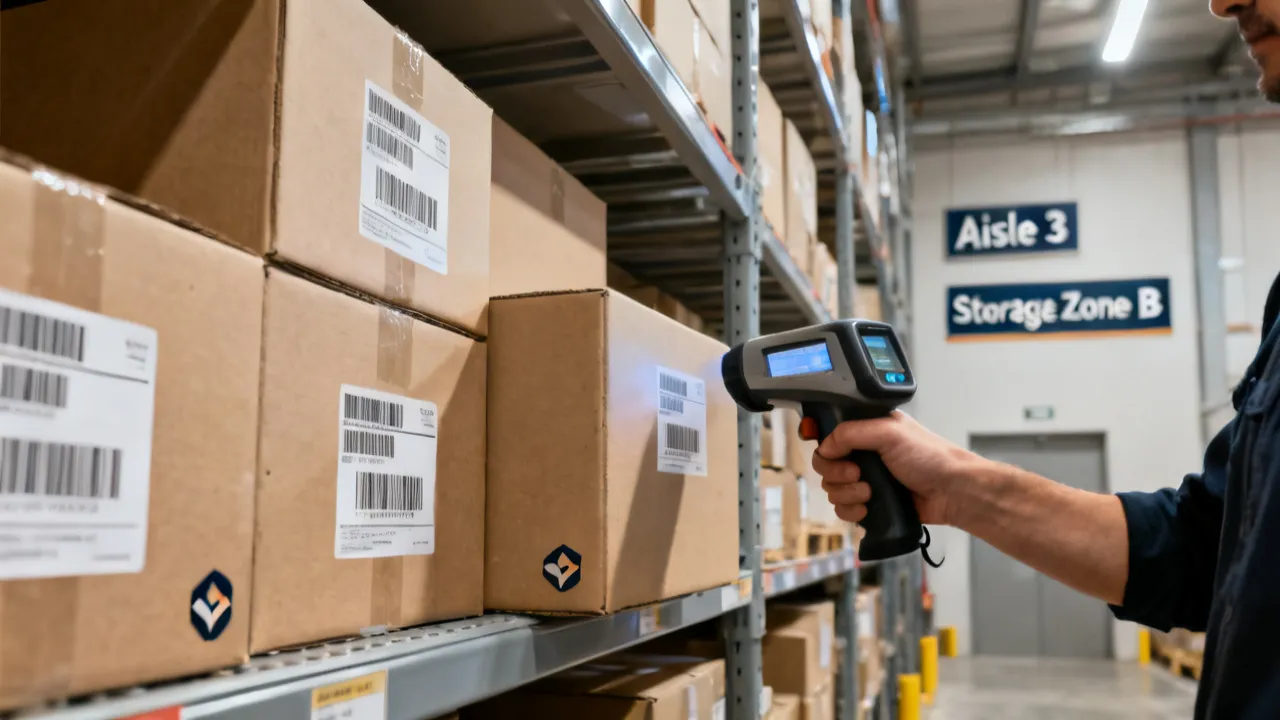
Understanding 95999028383 for Trusted Sourcing Decisions
This guide explains how to evaluate “95999028383” in the context of sourcing and procurement, helping you compare supplier credibility, total costs, and fulfillment reliability. Objectively, the number can function as a reference code, catalog key, or batch identifier in supply documentation. Practical evaluation criteria—documentation, traceability, and conditions—reduce procurement risk.

1) Executive takeaways for assessing “95999028383”
If “95999028383” appears in your sourcing documents, treat it as a reference anchor for verification—not as proof of quality on its own. The most reliable approach is to cross-check the identifier against supplier documentation, specification sheets, traceability records, and delivery terms to confirm that the item and batch truly match what your project requires. In day-to-day procurement, this distinction is critical: a reference code can be perfectly accurate, partially accurate, or outright misleading depending on how it was generated inside the supplier’s systems and how your organization records it inside your purchase workflow.
From an industry perspective, the early stages of procurement determine later outcomes: delays, mismatched specifications, warranty disputes, and quality nonconformity often originate from incomplete supplier checks around reference codes like “95999028383.” In mature operations, the early verification steps aren’t “extra paperwork”—they are the controls that prevent downstream firefighting. A code that is not tied to a documented revision, lot mapping, or acceptance criterion can create false confidence, which then turns into measurable cost: expediting charges, engineering rework, field returns, line downtime, and procurement cycles that drag on for months.
To put it plainly, you want “95999028383” to function as a reliable pointer to the correct configuration—not as a standalone item description. That means you should insist that every document that touches the transaction—quote, purchase order, packing list, shipping label, invoice, and test/inspection records—converges on the same identifier and the same underlying technical configuration.
Finally, remember that procurement is not only a commercial process; it is also a quality and compliance process. Even when the identifier is “just a number,” it can be the key that controls which spec revision applies, which certificate set must be provided, which packaging requirements are relevant, and which acceptance tests you should run upon receipt. If you manage “95999028383” correctly, it becomes a controllable signal in your sourcing system.
2) Why identifiers matter in procurement workflows
In manufacturing and procurement environments, numeric strings frequently serve as internal or transactional identifiers. A value like “95999028383” may correspond to a catalog reference, procurement order line, lot/batch number, component SKU, drawing index, revision-related key, customs/warehouse handling label, or even a “bundle key” that groups multiple subcomponents under one procurement record. In practice, the “meaning” is not inherent in the digits—it’s defined by the system that produced it and the document set that carries it forward.
Procurement identifiers exist because companies need consistent ways to communicate complex information across departments, sites, and time. Without identifiers, a single change in spec revision might be communicated informally (“it’s the same thing, just newer packaging”), or a batch might be shipped with the wrong documentation, or an inspection might be performed against the wrong checklist. Identifiers like “95999028383” are intended to prevent these failures by providing a stable handle for retrieving the correct definitions.
However, identifiers can also become sources of failure when they are treated as self-explanatory. Digits rarely tell you the full story. For example, one supplier may create reference numbers by concatenating vendor-specific codes, revision digits, and packaging variants. Another supplier may use the same base number for multiple revisions but keep the revision in a separate field. A third supplier may use “95999028383” as a placeholder for “any compatible variant,” relying on later labeling to clarify. If you only see the identifier without the associated spec and lot mapping, you cannot reliably infer compatibility, compliance, or quality level.
Therefore, the decision you make should be based on what the supplier can substantiate: documentation alignment, technical compatibility, and contractual clarity. When these are in place, a reference code becomes a practical tool for traceability rather than a guessing exercise. When they are not in place, the code becomes a risk signal—you should assume the supplier may be unable (or unwilling) to guarantee that the delivered unit matches your requirements.
In addition, consider the human-factor angle: procurement teams often operate under time pressure and rely on partial data in early stages. If “95999028383” is provided without complete context, teams may prematurely commit to lead times or forecasts. Later, when the correct revision or batch can’t be confirmed, the team may be forced into expensive changes. Treat the identifier as necessary but not sufficient.
3) How to interpret the keywords and related sourcing signals
Because the provided keywords are largely numeric or empty placeholders, the safest professional stance is to treat them as potential procurement identifiers and data fields rather than as claims about performance. In real-world sourcing, numeric tokens typically indicate that there is underlying structured information—such as item family, revision level, packaging type, compliance status, or unit-of-measure—that must be confirmed with the seller’s documentation. The absence of text meaning in the identifier does not reduce its importance; instead, it increases the need to determine what that identifier points to in the supplier’s system.
Accordingly, your evaluation should focus on verifiable supplier inputs: what specification governs the item tied to “95999028383,” what documentation is available (e.g., test reports, certificates of conformity, COAs), and what fulfillment promise accompanies the quote (lead time, Incoterms, and return conditions). If “95999028383” is tied to a specific datasheet revision, you want that revision explicitly named, not implied. If it is tied to a specific batch, you want the batch label and production date, not only the batch number.
It’s also useful to interpret “keywords” as potential hints about data structure. Empty placeholders can sometimes indicate missing fields in a quoting template or a supplier-side data mapping problem. That might sound like a minor clerical issue, but in procurement it often predicts a larger problem: if fields are missing in the quote, they can be missing in the shipment paperwork as well. A missing field in early documents frequently turns into missing documentation at receiving—when you have limited leverage and the system is already moving forward.
Another signal to interpret is the presence of “95999028383” in multiple documents. When the same identifier appears across quote line, PO line, and packing label, it suggests the supplier’s internal traceability is functioning at least at the document level. When it appears in one document but not the others, or appears differently (e.g., leading zeros, hyphens removed, spacing variations), it suggests the mapping may be inconsistent. Your evaluation should include these cross-document consistency checks.
In practice, treat “95999028383” like a key in a database. You want to know what record it opens. You can only trust the record when it aligns across the entire procurement chain: commercial terms, technical specifications, and physical shipment identity.
4) Cost evaluation: price visibility versus total procurement cost
Procurement teams often begin with the quoted unit price, but in mature purchasing operations the more meaningful metric is total cost of ownership for the delivered items. Even when you know a price-related detail connected to your sourcing context, you still need to compute a realistic landed cost profile, which can include:
- Shipping and handling fees
- Import duties, taxes, and customs brokerage (where applicable)
- Packaging that preserves handling integrity
- Inspection and acceptance testing costs
- Rework, scrap, or replacement risk if specifications diverge
- Warranty and service terms for operational continuity
When “95999028383” is part of the quotation data, you should ensure your cost model is explicitly tied to that same reference. Otherwise, you can end up paying the right price for the wrong variant. For example, a supplier might quote “95999028383” for a packaging format that is cheaper to produce, while shipping a different packaging configuration that increases damage risk. Or the supplier might quote a unit that has included test documentation at a certain scope, but then deliver without that documentation or with partial records, shifting costs to your internal QA team.
As a professional baseline, you should request a line-item quotation that ties every cost component to the correct reference code (e.g., “95999028383”) and item description. This reduces the chance that the number is linked to one variant while a different variant is shipped. In a high-discipline purchasing process, the line item should include: unit price, quantity, unit of measure, packaging unit (e.g., per piece, per carton), shipping cost allocation, any document handling fees (COA, certificates, reports), and lead time conditions.
It is also worth analyzing “hidden” costs linked to documentation and compliance. If your application requires compliance evidence (such as material declarations, test reports, or conformance certifications), and the supplier cannot provide them for the batch tied to “95999028383,” the downstream costs can be significant. You might have to hold inventory, run additional incoming inspections, or delay assembly until documentation is corrected. In regulated industries, missing compliance evidence can trigger audits, nonconformance reporting, and potential regulatory delays.
Another practical cost consideration is operational risk. If the item fails acceptance or doesn’t match the referenced revision, the remediation may include expedited shipping, replacement orders, or engineering disposition. Each of those actions has costs beyond the replacement part itself. The total procurement cost should incorporate these risks, ideally based on your historical failure rate with that supplier or product category.
To improve procurement accuracy, set up a landed cost worksheet where you can plug in values tied to “95999028383.” Then require the supplier to confirm packaging and documentation scope before you finalize the purchase order. Doing so turns the reference code into a control lever for cost realism.
5) Supplier credibility checks tied to reference “95999028383”
When an identifier appears in procurement records, you gain confidence when the supplier can demonstrate traceability end-to-end. In industry practice, credibility is often supported by standardized quality management systems and documented inspection regimes. The key point is that credibility should be evidenced, not merely asserted. A supplier may be confident in verbal communication, but you need evidence that the item tied to “95999028383” can be tracked back to the exact production run and configuration.
Consider evaluating suppliers using a structured lens:
- Traceability: Can the supplier link “95999028383” to a specific lot/batch and production date? Ask for the lot/batch mapping and how it is recorded in their manufacturing execution or inventory systems.
- Specification alignment: Do drawings, datasheets, and revision notes match the code’s documented configuration? Ensure the revision level referenced in documentation corresponds to what you approved internally.
- Compliance documentation: Are relevant certifications available for the product category (for example, quality certificates and test evidence)? Confirm which documents apply to which batch.
- Process consistency: Can they explain how the item is inspected before shipping? Look for documented inspection steps, sampling plans (where relevant), and measurement traceability.
- Responsiveness: Do they provide clear answers quickly, or do they only react after problems occur? Responsiveness is a proxy for how well their documentation and quality systems are maintained.
These points are consistent with internationally recognized quality and compliance practices. For broader context on quality management frameworks, organizations like ISO publish widely adopted standards and guidance relevant to supplier evaluation. However, even if a supplier claims alignment with a standard, your procurement action should still verify that the specific reference “95999028383” is covered by their quality process in a way that matches your receiving requirements.
To add robustness, require the supplier to show how “95999028383” appears in their system from the perspective of traceability. For example, you can ask: “When we receive this shipment, what batch identifiers are printed on the label, and how do those correspond to “95999028383” on the order documents?” This type of question forces clarity on their mapping logic.
You can also assess credibility by requesting evidence from prior shipments. If you have previously purchased from the supplier, ask for nonconformance history related to shipments that used similar reference codes. If the supplier can provide nonconformance summaries, corrective action status, and closure evidence, it demonstrates that issues are tracked systematically rather than handled informally.
Another credibility lever is consistency of documentation formatting. If the supplier’s certificates and test reports are consistently legible and formatted with clear lot references, you can process them efficiently and reduce clerical QA costs. If documentation frequently arrives late or lacks batch detail, you should treat “95999028383” as a risk and potentially adjust order quantities, acceptance inspection intensity, or payment terms.
6) Contract and delivery conditions you should require
Even a well-verified reference number cannot fully protect you if terms are vague. From an operational standpoint, the key procurement protection comes from clear conditions/requirements in the purchase agreement and order confirmation. A reference like “95999028383” can identify the product, but the contract decides what happens when reality deviates from the paperwork.
Make sure your documentation specifies:
- Exact item description tied to “95999028383” (including revision/variant)
- Unit of measure (UoM) and packaging configuration
- Lead time and shipment schedule
- Acceptance criteria (what constitutes conformity and what happens on nonconformance)
- Returns/replacements procedure and timelines
- Warranty or performance commitments, if applicable
- Incoterms or equivalent delivery responsibility terms
Delving deeper into each of these points helps reduce common dispute pathways. For instance, acceptance criteria must be specific enough to be testable. If the contract says “conforms to specification,” you may still face ambiguity if the specification revision isn’t clearly referenced. Instead, reference the exact drawing/datasheet revision or provide measurable acceptance test limits. Even for simpler items, define tolerances, inspection method, or acceptance plan.
Returns and remedies should specify timelines and responsibilities. If the supplier fails to meet the acceptance criteria, the contract should state whether replacement is offered first, whether credit is allowed, whether expedited shipping costs are covered, and how long the supplier has to respond. Without these terms, you can end up in a negotiation during which your production line waits.
Lead time terms should address what happens if the supplier delays production. You may want to include schedule adherence commitments and how delays affect delivery dates. If “95999028383” refers to a custom configuration, ensure the contract clarifies what “release” means—i.e., when the item is considered reserved for your order and whether the supplier can reassign production capacity.
Incoterms matter because they define risk transfer, delivery obligations, and who is responsible for freight damage or packaging suitability. If the supplier and you interpret delivery risk differently, you can end up attributing damage claims incorrectly. For shipments tied to “95999028383,” require clarity on packaging and handling standards aligned with the Incoterm.
It’s also valuable to include documentation obligations in the contract. For example, require that the supplier deliver certificates of conformity and test reports in advance (or at least at shipment) with identifiers that match “95999028383” and the lot/batch on the packing list. When documentation is treated as optional, receiving staff can be forced into last-minute calls that slow acceptance.
7) Practical step-by-step guide for verifying “95999028383”
Below is a pragmatic validation process used in purchasing and supplier quality teams. It is designed to be repeatable, auditable, and resistant to common failure modes such as variant mismatches and paperwork gaps. The approach assumes that you want evidence strong enough to withstand internal audits and external disputes.
| Stage | What to do | Evidence to request | Decision condition (requirements) |
|---|---|---|---|
| 1. Capture identifiers | Record where “95999028383” appears (quote, PO line, packing list, label). | Quote line details and any item master reference. | Identifier must match across quote, PO, packing list, and invoice. |
| 2. Confirm specification | Verify the technical description tied to the reference code. | Datasheet, drawing/specification, and revision level. | Revision and variant must match your approved requirements. |
| 3. Validate traceability | Ask for lot/batch traceability linked to the code. | Lot/batch number mapping and production date records. | Supplier must explain how the lot maps to “95999028383.” |
| 4. Check compliance and test records | Confirm any needed test documentation for your industry context. | COA/test reports/certificates relevant to product category. | Documents must be complete, legible, and consistent with shipped batch details. |
| 5. Evaluate fulfillment terms | Review shipping terms, lead time, and responsibility boundaries. | Incoterms/delivery schedule and packaging details. | Lead time and delivery responsibilities must be explicit in writing. |
| 6. Define acceptance and remedy | Set acceptance criteria and define corrective action if nonconforming. | Inspection/acceptance procedure and RMA/returns workflow. | Remedy must specify timelines, responsibility, and how replacement or credit is handled. |
To make this guide even more operational, consider the “before shipping” and “upon receipt” split. Before shipping, you want to confirm the document set and any pre-shipment inspection requirements. Upon receipt, you want to confirm that physical units match the batch described by the paperwork and that the lot identifiers align. Many problems happen in the gap between “shipment confirmed” and “goods received,” so it helps to define controls for both moments.
Before shipping (pre-receipt control):
- Verify that the purchase order references “95999028383” exactly and includes the correct revision and description.
- Confirm that the supplier’s pro-forma invoice and packing list format include the same identifier and lot mapping.
- Request pre-shipment documentation for high-risk or high-value items (e.g., certificates, test reports, inspection summaries).
- Confirm packaging details (protective materials, labeling, unit pack count) that align with handling requirements.
Upon receipt (receiving control):
- Cross-check that the physical label on the cartons/items corresponds to the lot/batch and that those map back to “95999028383.”
- Perform incoming inspection aligned with the contract acceptance criteria. If the contract includes sampling plans, follow them and record traceability.
- Confirm that documentation is complete. If documents arrive incomplete, hold acceptance until the documentation gap is corrected.
- Document discrepancies promptly with photos and measurement records; do not wait for engineering to discover the issue.
For audit resilience, store all correspondence and documents in a transaction folder keyed to “95999028383” and the shipment date. This is especially useful when later disputes arise and you need to prove what you expected versus what you received.
Also consider the “change control” situation. If the supplier updates the configuration after you approve the initial quote (for example, an internal engineering change that affects revision), then “95999028383” might remain the same while the underlying configuration changes. Or the supplier might update the reference number while leaving the description unchanged. Either case is risky. Your verification step should explicitly check whether the revision and configuration are stable or have changed since your approval.
8) Source guidance for evaluation frameworks
To keep supplier evaluation objective and aligned with established norms, organizations commonly reference quality management and auditing practices published by recognized bodies such as:
- ISO for quality management system concepts and related standards used worldwide.
- OECD Due Diligence guidance (where relevant to supply-chain due diligence expectations) for structured risk consideration.
For category-specific compliance (e.g., electronics, medical, automotive, chemical), you should also consult the applicable standards and regulatory requirements that govern your product domain. This guide does not assume one universal rule applies to every item referenced by “95999028383.” The correct standards depend on the product category, the geography of delivery, and any customer or regulatory requirements that apply to your end use.
However, the general evaluation logic remains the same: require evidence. Evidence might include certificates, test reports, audit results, calibration records for measurement instruments, and documented inspection procedures. When suppliers can’t provide evidence, you can often infer that their process control may be weak—or that their traceability systems do not capture the data you require.
Another practical framework concept is risk-based verification. If the item is low risk (e.g., commodity hardware with low regulatory burden), you may accept lighter documentation. If the item is safety-critical, regulated, or directly impacts end-user compliance, you should enforce stronger controls: tighter acceptance tests, earlier document verification, and more stringent lot traceability requirements.
Risk-based verification can be implemented by tiering items. You can create a classification such as Tier 1 (high risk) and Tier 2 (medium risk) where each tier defines documentation and inspection intensity. For “95999028383,” you would then apply the appropriate tier rules based on its product category and your internal risk assessment.
Finally, if your organization has a supplier quality assurance (SQA) process, ensure “95999028383” verification aligns with that process. The goal is consistent decision-making across buying teams, so that one team doesn’t accept what another team rejects under the same contractual and technical conditions.
9) Conditions and requirements before you place a larger order
Before scaling procurement, procurement professionals typically require a “minimum assurance package.” In the context of “95999028383,” this means you should not treat the reference number alone as sufficient. Instead, you should confirm the full chain of documentation, specification alignment, and shipment conformity.
At minimum, require:
- Order confirmation referencing “95999028383” with complete item description
- Quality documentation that corresponds to the shipped lot/batch
- Clear acceptance criteria and a remedy path for nonconformance
- Proof that the supplier’s revision level matches your approved spec
In many organizations, scaling procurement is gated by successful completion of an initial purchase—often called a pilot, sample, or first article approval (FAI) depending on the domain. If “95999028383” is tied to an item that has multiple variants or revision-sensitive properties, the initial shipment should be treated as a verification milestone. You should not automatically assume repeat shipments will match the first delivery unless you implement ongoing controls.
For high value items, consider requesting:
- Pre-shipment inspection (PSI) evidence or inspection summary
- Measurement traceability evidence (calibration certificates for testing equipment, where relevant)
- Packaging validation evidence (e.g., drop test or handling instructions, if shipping risks are known)
- Correct labeling standards including lot traceability labels that survive transit
When scaling, it also becomes more important to lock down change control. Ask: “If the supplier changes the process or specification, how will they notify us? Will they reuse “95999028383” or issue a new reference? How do we confirm which configuration is included in each shipment?” Without change control clarity, you risk ordering future shipments that are technically different from the ones you validated.
Payment terms can also be used as leverage. For example, partial payment upon document acceptance, with remaining payment upon receipt and acceptance, can reduce risk. If the supplier has to meet documentation obligations for “95999028383” as a condition for final payment, they have stronger incentives to deliver the correct documentation set.
Lastly, confirm your internal readiness. If you do not have the ability to verify incoming quality quickly (e.g., no test fixtures, no validated inspection procedures), then you should not scale orders until you establish those capabilities. Otherwise, you may receive incorrect items and only discover the mismatch after costly integration attempts.
10) Common pitfalls when sourcing using reference codes
Even well-managed teams can encounter issues when reference identifiers are not properly validated. Common pitfalls include:
- Variant confusion: Two variants share a similar identifier, but shipped units differ. Sometimes the supplier keeps the base code and uses a separate field for variant attributes; sometimes packaging differs while the core reference stays constant.
- Paper-to-physical mismatch: The quote references “95999028383,” yet paperwork or labels do not match the actual lot. This can occur when labels are generated from inventory records that lag behind procurement records.
- Documentation gaps: Test records or certificates are missing, incomplete, or do not correspond to the shipped batch. For example, a certificate may reference the product family but not the specific lot.
- Unclear acceptance: Without explicit acceptance criteria, disputes become subjective and slow. “Looks correct” is not an acceptance plan; “meets tolerance A/B on drawing revision X” is.
- Lead-time misalignment: Promised lead times are not linked to production readiness constraints. The supplier may quote based on availability of raw materials, while the schedule depends on manufacturing steps that are not guaranteed.
It’s also common to see pitfalls related to formatting and data integrity. For instance, numeric codes may be transmitted with missing leading zeros, trimmed spaces, or digit transpositions across systems. If “95999028383” is a key used in ERP systems, even minor formatting changes can break traceability links. Procurement teams can reduce these failures by enforcing canonical formatting (e.g., treat code as string, not numeric, preserve leading zeros) and by ensuring the same code is used in every document line item.
Another frequent pitfall is relying on a single document source. Some teams may rely on the quote or PO line description and assume it must be correct. But in many failure cases, the quote is correct and later documents change—or the quote is inaccurate and the PO corrects it. Your verification should check all critical documents and not assume that the first version is the final version.
Additionally, beware of “scope drift.” A supplier might quote a product under “95999028383” with a certain documentation scope, then ship under an updated scope without updating the reference. This drift can happen when supplier templates are reused. It can also happen when sub-suppliers provide components with different certificates. Your acceptance workflow should verify not only the code but the document scope and batch mapping.
To reduce these pitfalls, enforce the earlier verification steps and ensure your organization has a clear procedure for handling nonconformance tied to reference codes. Your team should know who to contact, how to escalate, and what evidence to collect.
11) How localization can matter in supplier communication (without overclaiming)
If your procurement team works with suppliers across regions, communication norms can affect response quality and documentation turnaround. For example, in many business contexts, suppliers near major industrial logistics hubs may respond differently depending on shipping seasons and local warehouse practices. These patterns are operational rather than “quality guarantees,” so you should still verify documentation and traceability for each shipment linked to “95999028383.”
Localization can also affect how documents are generated and translated. A certificate might be issued in a local format where lot references are present but not in the same label field naming convention you expect. Similarly, inspection reports might use local language for test names or abbreviations. This doesn’t necessarily mean the supplier is less credible; it means you need a systematic way to interpret and validate documentation.
When your team contacts suppliers, use precise language: request the exact lot/batch mapping, revision level, packaging format, and inspection documents. This is especially effective in regions where documentation is generated from internal ERP systems tied to reference codes. If your message lacks specific requests, suppliers may respond with generic statements like “code confirmed” or “documentation attached,” which might not actually include the correct batch mapping or test evidence.
Another localization-related element is shipping documentation. If shipments travel across borders, local customs procedures can cause label reprinting, repackaging, or consolidation in warehouses. These steps can change how the physical labels appear at final handover. That’s why you should also request clarity on whether “95999028383” remains on the physical label throughout the chain, or whether it may be replaced by a shipping label and how your lot mapping remains intact.
To handle localization differences effectively, maintain a consistent checklist internally and ask suppliers to map their fields into your checklist. For example, provide a template request: “Please provide: (1) order confirmation referencing 95999028383, (2) revision level, (3) production lot/batch list per carton, (4) certificates per batch, (5) packing configuration.” This structure reduces ambiguity and speeds up supplier responses.
Even when you have strong vendor relationships, keep verification consistent for “95999028383.” Localization shouldn’t change your control standards; it should only shape how you communicate requirements.
12) Frequently Asked Questions (FAQs)
FAQ 1: What does “95999028383” mean?
It most likely functions as an internal reference, SKU, catalog key, order line identifier, or lot/batch-related code. The true meaning is defined by the system that generated it. You should confirm its definition using the supplier’s item master record, the quote line description, and shipment/packing documentation. If possible, ask the supplier to explain how the code maps to the datasheet revision and what physical label field carries the lot/batch mapping.
FAQ 2: Can a reference code guarantee product quality?
No. A reference code like “95999028383” does not inherently guarantee quality. Quality assurance depends on documented specifications, test/inspection evidence, traceability to the correct lot/batch, and clear acceptance criteria. A supplier may reuse codes or have internal mapping errors; therefore, verification must focus on evidence and traceability, not the digits themselves.
FAQ 3: What documents should I ask for when “95999028383” is in the paperwork?
Typically request: the technical datasheet or drawing with revision level, a lot/batch traceability mapping, and relevant certificates/test reports (as applicable to your industry requirements). Also ensure the order confirmation and packing list explicitly reference the same identifier. If you require compliance documentation, ask which documents apply to each batch and whether they include batch/lot numbers matching the shipment label.
FAQ 4: How do I compare suppliers fairly if pricing details differ?
Compare suppliers using landed cost and total procurement cost, not only unit price. Ask for line-item cost breakdowns, shipping terms, packaging specifications, lead times, and remedy/returns procedures. Require that every cost line corresponds to the item tied to “95999028383.” If one supplier includes test documentation or replacement coverage while another does not, you must reflect those differences in your total cost model.
FAQ 5: What should I do if the shipped items don’t match “95999028383”?
Initiate a formal nonconformance process immediately. Document discrepancies with photos/measurements and compare against the specification revision and lot mapping provided by the supplier. Then follow the contract’s acceptance and remedy workflow (e.g., replacement or credit). Clear acceptance criteria in advance is essential, but even without it, immediate documentation and structured escalation help preserve your options.
FAQ 6: Are there industry standards for evaluating suppliers?
Yes—quality management and due diligence practices are widely used. ISO frameworks and related auditing/quality approaches provide commonly accepted structures for supplier evaluation. For your specific category, also consult domain-specific standards and regulatory requirements. Beyond general standards, ensure your supplier evaluation includes verification ability for the specific reference code and the batch-to-document mapping that you require.
FAQ 7: Should I place a large order without first verifying “95999028383”?
It is generally prudent to validate via a smaller pilot or initial shipment first, particularly if you have not sourced from that supplier before. Use the conditions/requirements table and insist on documentation alignment for the first transaction before scaling. Additionally, consider defining gates such as: documentation acceptance, successful incoming inspection, and traceability confirmation before releasing full production quantities.
13) Conclusion: turning “95999028383” into a controllable procurement signal
When handled correctly, a reference identifier such as “95999028383” can improve procurement discipline by enabling traceability and documentation alignment. The decisive factor, however, is not the digits themselves—it’s the supplier’s ability to substantiate the code with specifications, evidence, and enforceable delivery terms. By applying the verification steps, conditions, and acceptance logic described above, you reduce risk and make sourcing decisions that stand up to operational scrutiny.
In practical terms, turning “95999028383” into a controllable signal means you treat it as a key that must open the correct record: the correct revision, the correct batch, the correct compliance documents, and the correct delivery terms. It also means you enforce consistency across documents and across time. If you do these things, the identifier becomes a reliable control point—rather than a source of uncertainty.
Ultimately, procurement success comes from converting uncertainty into evidence. “95999028383” is only valuable when it is linked to real proof: specification alignment, traceability mapping, test records, and acceptance criteria. When those elements are present, you can proceed with confidence, scale orders responsibly, and manage nonconformance effectively if something deviates. When those elements are missing, “95999028383” should trigger deeper verification—not blind trust.
-

A Guide to Cost-Efficient Small Electric Cars for Seniors
-
Mastering Debt Consolidation: Boost Your Credit Score and Manage Interest Rates
-
Your Guide to Loans, Credit Checks, and Interest Rates
-
Affordable Independent Living: Finding the Right Senior Housing
-
Guide to Senior Living Apartments: Affordable and Comfortable Environments