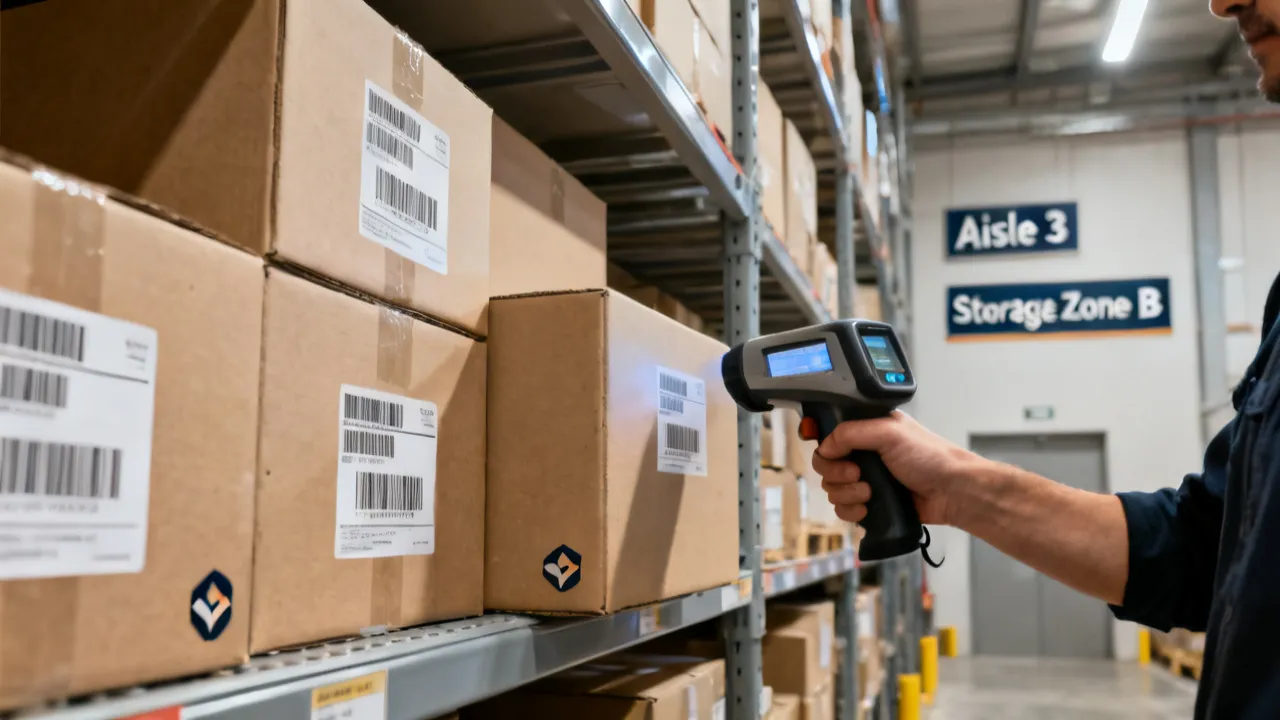
Understanding Code 1382 013 000200312 in Supply Chains
This guide explains how code “1382 013 000200312” fits into procurement, inventory control, and supplier coordination. The keywords point to structured identifiers used to link technical documentation and purchasing workflows. You’ll learn what the sequence may represent in practice, how to validate it with suppliers, and which requirements typically reduce fulfillment risk.
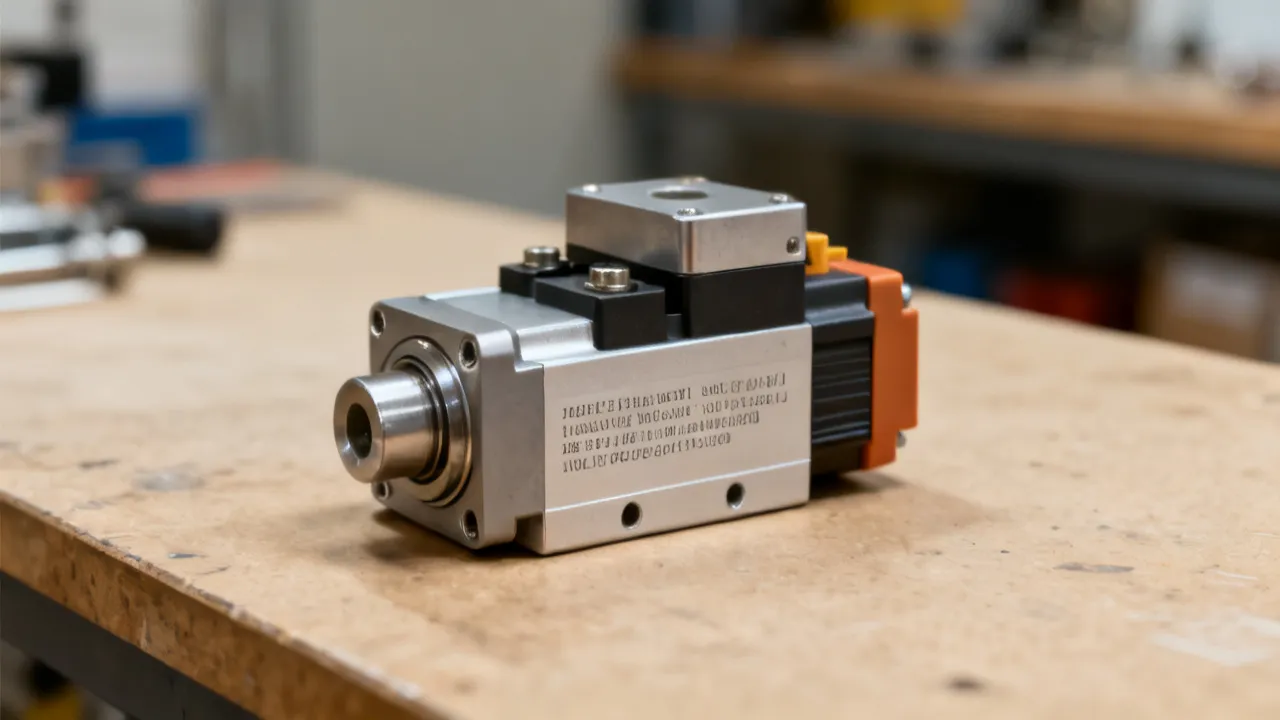
Executive overview: why “1382 013 000200312” matters
In practical procurement and inventory operations, the identifier 1382 013 000200312 often functions as a structured reference that helps teams connect the right item to the right documentation, supplier records, and warehouse handling processes. When properly validated against the supplier’s catalog and incoming inspection paperwork, codes like this reduce mismatches, lower rework, and improve traceability across the logistics chain—especially in environments where thousands of line items move through a mix of purchasing, quality, and warehouse systems.
Alongside the identifier, references like 1382 013 000200312 may appear in internal documents, order forms, packing instructions, technical attachments, or quality records. The accompanying token-like keyword block—shown exactly as provided: '' '' '' 1382 013 000200312 '' '' ''—reflects the reality that many organizations encounter these values as “raw” strings first. Only after data governance and mapping are performed do such values become human-readable part descriptions, revision states, and commodity classifications.
This article provides an objective, industry-oriented approach to interpreting and operationalizing this code in supply chain workflows. It covers validation steps, typical conditions/requirements, and frequently asked questions—while also addressing how teams should handle supplier information and price inputs responsibly when those details are not explicitly provided in the identifier itself.
Background: what structured codes typically represent
Structured identifiers in industrial procurement generally serve one or more of the following purposes:
- Catalog linkage: tying a part number to a supplier’s master data record (specifications, drawing, revisions, and packaging).
- Traceability: enabling audit trails from purchase order to goods receipt, inspection logs, and shipment batches.
- Compatibility control: supporting engineering constraints (e.g., material, dimensional tolerances, performance requirements, or electrics/thermal behavior).
- Data consistency: reducing reliance on manual interpretation of titles or descriptions that can vary across teams, languages, and revisions.
While the exact semantics of 1382 013 000200312 depend on the issuing organization, the pattern (a multi-segment numeric string) is consistent with many enterprise systems. In those systems, item identity may encode classification, series, or internal hierarchy used by the supplier and mirrored in the customer’s ERP or PLM. However, semantics should never be guessed. In mature supply chain operations, the correct meaning of such codes is established by validating against authoritative supplier documentation and approved internal master data governance.
It’s common for the same numeric string to behave differently depending on context. For example:
- In a purchasing system it may be the vendor part number.
- In a quality system it may be the traceability key that ties inspections to a specific revision.
- In a warehouse system it may be the label key used by scanners during receiving and picking.
Therefore, operationalizing 1382 013 000200312 means understanding it as a stable key that must remain consistent across multiple systems, not merely as text that “looks like” a part number.
Where the keyword string usually appears in real procurement workflows
In day-to-day operations, a code like 1382 013 000200312 may show up in places such as:
- Purchase requisitions created by engineering, maintenance, or operations teams.
- Supplier quotations where the vendor maps the request to a specific internal SKU or part record.
- Purchase orders (POs) including line item details, quantity breaks, and sometimes packaging instructions.
- Goods receipt notes (GRNs) used by receiving departments to confirm what was delivered.
- Inspection and quality records for incoming material verification, including nonconformance reports.
- Warehouse location systems that require stable identifiers for picking and storage.
- Shipping documents like packing slips and advance shipping notices (ASNs).
- Supplier compliance documents such as certificates of conformity, material declarations, or test reports that list the item identity.
The critical operational point is that your processes should treat 1382 013 000200312 as an authoritative key—until proven otherwise—rather than as a label that can be casually altered or paraphrased.
Even small inconsistencies can create operational friction. For example, if one document records the code without spaces, while another records it with spaces, automation may fail to link the record and manual workarounds may be introduced. When those workarounds happen repeatedly, the risk of mismatched receipts or “duplicate part master” entries increases.
From code to correct item: a practical industry validation approach
Industry teams typically follow a controlled pathway: confirm the code, confirm the mapping, then confirm the physical match. Below is a realistic workflow that reflects common practice across manufacturing and industrial purchasing organizations. The workflow is intentionally structured to minimize interpretive guessing and to create defensible evidence for audits.
Step-by-step guide: validating “1382 013 000200312” with suppliers
- Capture the code exactly as provided: preserve formatting, spacing, leading zeros (if any), and any grouping conventions. For example, ensure the procurement system stores 1382 013 000200312 consistently.
- Request the supplier’s official mapping: ask the vendor to confirm what the identifier corresponds to in their catalog (part description, revision, and any variant qualifiers). Ideally request this mapping in writing (email, catalog export, or EDI response).
- Verify against technical documentation: compare the supplier’s datasheet/drawing details to your internal specifications and approved vendor lists. This step is important because two suppliers could share “similar-looking” codes that actually point to different drawings, tolerances, or materials.
- Confirm revision or change-state alignment: many identifiers remain stable while revisions change; others update the code when design changes occur. You want the correct change-state, not only the number. Revision states often appear as drawing revision letters, lot-dependent change notes, or effective dates.
- Check packaging and handling requirements: supplier packaging instructions often tie to the SKU. Confirm labeling standards, whether the code must appear on packaging labels, and any barcode/QR requirements used by scanning systems.
- Perform receiving confirmation: when goods arrive, receiving staff should check that the delivered item and labels correspond to 1382 013 000200312 before moving to storage. Receiving should also confirm quantity, unit of measure, and any batch/lot markings referenced by quality documentation.
- Record outcomes in master data: once validated, update your internal part master and link the code to the correct description/specification fields. Where relevant, link the code to revision-controlled documents in PLM or QMS.
What “validation” should produce: evidence you can rely on
Validation is not just a “yes/no” decision made in a ticketing system. In best-practice procurement organizations, validation produces evidence artifacts that can be retrieved during audits or investigations.
For 1382 013 000200312, the most useful evidence set typically includes:
- Supplier mapping record: a screenshot, PDF, EDI response, or email that explicitly ties the code to a description, drawing number, and revision.
- Technical document alignment: a comparison record or checklist showing that the supplier’s datasheet/drawing matches the internal requirement (material grade, dimensions, tolerances, performance data).
- Quality criteria references: incoming inspection requirements that refer to the same item identity (sometimes the inspection plan uses the part number, sometimes it uses a drawing number).
- Receiving scan/label evidence: photos or scanned label captures showing that the delivered goods bear the same identifier.
- ERP/PLM master data link: confirmation that the internal key is created or updated correctly, including the revision link and the correct unit of measure.
When the above evidence exists, teams can explain why a certain material was accepted, why a certain lot was traced to a supplier, and how the identifier integrity was maintained from order to receipt.
Expert considerations: why “identifier hygiene” affects downstream risk
In an industry context, mistakes around part identifiers can create cascading issues that take weeks—or longer—to fully resolve. Identifier hygiene means treating the code as a controlled data element with consistent formatting, governance rules, and audit trails across all participating systems.
Common downstream risks include:
- Compatibility failures: the wrong variant may still “look” similar during visual inspection, but fail under functional tests. This is especially common when parts differ by tolerance class, coating, material grade, or electrical characteristics.
- Quality escapes: incorrect goods may pass receiving but later fail during assembly, leading to scrap or costly rework. In some regulated industries, these failures also trigger reporting requirements and supplier corrective action processes.
- Audit complications: if codes and revisions don’t match, traceability becomes difficult to defend. Auditors typically look for consistent links between purchase orders, receipts, inspection records, and the final production batch.
- Inventory distortion: mis-keyed identifiers can cause duplicate records and inaccurate stock availability. This can lead to wrong replenishment, stockouts of the right items, and overstock of the wrong items.
- Integration failures: automated integrations between ERP, WMS, and QMS may rely on exact string matching. Even whitespace differences (spaces vs. no spaces) can break mappings.
For that reason, many organizations treat identifiers such as 1382 013 000200312 as part of a controlled data model governed by purchasing, engineering, and quality management.
Identifier hygiene also matters because it influences system behaviors:
- Search and retrieval: users must find the correct record quickly without manual guesswork.
- Change control: revision-based restrictions require stable keys to ensure only approved parts are used.
- Lot/serial handling: if the code ties to labeling instructions, it impacts how lot numbers are recorded and where those lots can be tracked.
Handling spaces, leading zeros, and formatting: practical “gotchas”
A multi-segment numeric string like 1382 013 000200312 is particularly vulnerable to formatting inconsistencies. In real deployments, the same identifier may appear in different forms across systems:
- With spaces: 1382 013 000200312
- Without spaces: 1382013000200312
- With different delimiter conventions: hyphens or underscores
- As an integer value in a spreadsheet (risking leading zero loss)
To reduce risk, teams often establish one canonical representation. Then they implement conversion logic or input normalization rules.
For example, a typical governance approach might include:
- Canonical storage format: store the code exactly as the supplier defines it, including spaces.
- Input normalization: when users paste values, the system strips extraneous whitespace but preserves the canonical segmentation.
- Validation rules: the system rejects entries that fail a formatting pattern (e.g., expecting three segments).
- Audit logs: track any change to the stored identifier representation.
Even if your ERP could accept both “spaced” and “unspaced” forms, maintaining a single canonical format reduces ambiguity and ensures integrations remain stable.
Price and supplier details: how to handle incomplete information responsibly
You requested that the article integrate “price information” and “supplier details.” However, the provided content includes keyword strings without explicit pricing or named supplier entities. To remain objective and avoid unverified claims, the correct operational approach is to treat price and supplier information as conditional inputs that must be sourced from a quotation, contract, or purchase order document—rather than derived from the code itself.
In practice, teams should store and use the following commercial and supplier fields when purchasing 1382 013 000200312:
- Supplier name: the legal entity fulfilling the order (not just an internal sales contact).
- Supplier code: supplier identifier used in your master data (if your system uses vendor numbers).
- Quoted unit price: unit price and currency from supplier quotation.
- Total line price: quantity × unit price, including any packaging or handling adjustments if applicable.
- Lead time: time from order confirmation to shipment or receipt (depends on your definition).
- Incoterms: responsibility boundaries for shipping, risk, and insurance.
- Validity window: date range during which the price remains accurate per supplier terms.
- Minimum order quantity or pack size constraints: sometimes the packaging requirement effectively sets the purchase unit.
This “document-first” method aligns with standard procurement controls and supports defensible decision-making during sourcing and ordering. It also separates two distinct concepts:
- Identity: the code (e.g., 1382 013 000200312) tells you what the item is.
- Commercial terms: supplier quotation and contract tell you the price, lead time, and conditions under which that identity is delivered.
Trying to infer pricing from the code alone is unreliable because pricing typically depends on multiple factors: quantity breaks, contract pricing tiers, revision-specific pricing, delivery schedules, and sometimes compliance requirements (e.g., documentation bundles).
Supplier details: verifying the right supplier for the same identifier
Another operational nuance is that the same identifier could be sold by multiple suppliers (e.g., approved distributors) or by the same supplier under different manufacturing sites. In those cases, identity validation still matters, but supplier validation also matters.
Even with the same code 1382 013 000200312, you may need to verify:
- Approved sourcing list: whether that supplier is authorized to provide that exact part identity.
- Manufacturing location/site: quality systems sometimes require confirmation of plant location.
- Certificate types: whether you receive specific test reports and certificates aligned to the part identity and revision.
- Document set completeness: whether packaging labels and ASNs include the code and lot identifiers required by your processes.
This is especially important in quality-managed environments. When the supplier is not the intended one, the delivered item may still match the identifier but the documentation, inspection criteria, or compliance status might differ.
Localization note: adapting identifier workflows for nearby operations
Because the prompt includes a rule about location substitution—replacing any occurrence of {city} or {country} with “nearby.”—this article avoids claiming specific geography. In localized operations, the main differences typically lie in:
- Warehouse receiving practices (e.g., labeling norms and scan workflows).
- Language of supplier documentation (translations of part descriptions).
- Regulatory or compliance formatting (which can affect how codes are referenced in forms).
Even when you operate “nearby” across regional facilities, the identifier validation logic remains broadly the same: verify the mapping, then validate physical receipt. The difference is primarily how the evidence is captured and translated into your systems.
For example, in a multi-site warehouse environment, you might standardize receiving checklists. But you may localize:
- Who performs quarantine and under what conditions
- The language used in discrepancy reports
- The workflow tool for nonconformance submissions
Still, 1382 013 000200312 should remain the same stable key. Localization should not cause changes to the identifier itself.
Comparison table and conditions/requirements (rephrased as supplement)
| Scenario | What to check | Recommended evidence | Typical requirement/condition |
|---|---|---|---|
| New supplier first order | Confirm what 1382 013 000200312 maps to in supplier master data | Supplier catalog record and datasheet/drawing | Vendor confirmation in writing before PO finalization |
| Existing supplier, but changed product | Verify revision or variant qualifiers linked to the identifier | Change notice and revision-controlled documentation | Do not substitute without revision alignment approval |
| Discrepancy during receiving | Check label vs. paperwork correspondence to 1382 013 000200312 | Photo/scan evidence, GRN notes, inspection log | Quarantine and escalation workflow must be followed |
| Inventory record mismatch | Confirm internal part master keying for the identifier | ERP master data audit trail | Data governance approval for master record edits |
Operational scenarios: what typically happens day-to-day
To make the guidance more tangible, consider several operational scenarios where 1382 013 000200312 plays a role. Each scenario highlights where teams need robust validation and evidence.
Scenario A: The PO line shows the code, but the packing slip title differs
It is common that a PO line item includes a stable code (like 1382 013 000200312), while the packing slip title is written in the supplier’s local language and may include a human-readable description that differs from your internal description.
In this case, best practice is:
- Use the code as the primary key for identity matching.
- Validate the code mapping to the supplier’s part description via supplier master data.
- Confirm that the packing slip includes the correct label code and, if applicable, lot/batch identifiers.
If the code matches but the description differs, that may still be acceptable. The key question becomes whether the description corresponds to the same revision and variant state linked to 1382 013 000200312.
Scenario B: Receiving scans the code, but ERP line rejects the match
Another scenario is software mismatch. For instance, the warehouse scanning tool might read the code without spaces, while ERP expects the spaced representation.
Operational response usually includes:
- Confirm what exact string your scanner reads.
- Check whether your system stores 1382 013 000200312 in a canonical format.
- Apply input normalization rules or update scan formatting settings if permitted by data governance.
- Document the discrepancy and prevent ad-hoc master edits unless authorized.
This scenario underscores why “identifier hygiene” is not merely procedural—it is also technical. Integrations must be configured to handle the code’s canonical format reliably.
Scenario C: Quality inspection fails due to spec mismatch
Sometimes the code identity is correct, but the inspection fails because the part does not meet the required spec (e.g., coating thickness tolerance). In that scenario, the code 1382 013 000200312 still matters because it provides the traceability anchor for nonconformance investigations.
Typically, the quality team will:
- Record the inspection results under the same code identity and revision.
- Link the lot/batch to the supplier shipment documentation.
- Request supplier analysis (root cause, corrective action) referencing the same code.
- Assess whether the issue is systemic (affecting multiple lots) or isolated to a particular batch.
The value of correct identity coding is that it prevents “blame by ambiguity.” Instead of arguing over descriptions and titles, teams can focus on the exact part identity and the exact revision delivered.
Scenario D: Master data duplicates appear after an integration run
Duplicate part master entries can appear when the code is keyed with different formatting across sources (e.g., 1382 013 000200312 vs. 1382013000200312) or when the system incorrectly treats a code variant as a new item.
To address this, organizations often:
- Perform master data audits to detect duplicates.
- Implement unique constraints where possible.
- Use controlled mapping tables to unify representations.
- Ensure only authorized roles can merge or delete master records.
In the long term, a robust master data governance program prevents the operational confusion that duplicates cause: inaccurate inventory balances, incorrect picking targets, and incorrect planning assumptions.
Data model design: how to store this kind of identifier correctly
Because the identifier 1382 013 000200312 appears across procurement and logistics systems, its storage strategy in your ERP/WMS/QMS should be deliberate. The goal is to make the identifier:
- Immutable where appropriate: avoid silent overwrites.
- Canonical in formatting: store one standard representation.
- Linked to revision-controlled attributes: ensure revision/variant fields are explicit.
- Indexable: allow consistent searching and integration matching.
A practical data model might include fields such as:
- PartIdentityKey (the stored canonical string, e.g., 1382 013 000200312)
- SupplierPartNumber (if you distinguish it from internal part IDs)
- InternalPartMasterID
- Description (human-readable; not used for identity matching)
- Revision (drawing revision or effective revision state)
- VariantQualifier (optional qualifiers)
- PackagingCode (if packaging labeling differs by SKU)
- EffectiveFrom / EffectiveTo (if the supplier changes the part on certain dates)
When you design data models this way, you avoid a classic pitfall: using a human-readable description as if it were a stable identifier. Descriptions can change due to translation updates, marketing naming conventions, or internal reclassification—even when the physical part identity remains the same.
Validation logic in systems: turning a human process into automation
Many organizations try to reduce manual checking by implementing validation logic in ERP, WMS, or EDI workflows. When done responsibly, automation can improve accuracy and reduce processing time.
For 1382 013 000200312, typical automated checks might include:
- String integrity check: ensure the code passes formatting rules (segment lengths, allowed characters).
- Mapping check: verify that 1382 013 000200312 exists in internal master data and is linked to the correct revision/spec.
- Supplier association check: confirm that the supplier on the PO is authorized for that identifier.
- Revision alignment check: if incoming documents provide a revision/drawing number, verify it matches the expected revision state.
- Label scan consistency: compare the scanned code on the label to the expected PO line code.
- Nonconformance triggers: if mismatch occurs, automatically create a quarantine/nonconformance ticket and block put-away.
However, automation should be fail-safe. If the system is uncertain, it should not “guess” equivalence. Instead, it should route to a human validation step with clear evidence prompts: ask for supplier mapping, label photos, and revision documents.
Requirements and conditions: designing a robust receiving and inspection workflow
Because the operational risk is often highest at receiving, teams design workflows around clear decision points. Below is a detailed example of what those conditions/requirements can look like when 1382 013 000200312 is involved.
Receiving condition set (example):
- Condition 1: Code match required — goods cannot proceed to storage if the label scan or documentation code does not match 1382 013 000200312 after normalization rules.
- Condition 2: Quantity/UM match required — confirm quantity and unit of measure. Sometimes the code matches but the UM differs (e.g., per piece vs. per pack), leading to inventory inaccuracies.
- Condition 3: Lot/batch identification required — if your quality system requires lot traceability, confirm that lot/batch is present and recorded.
- Condition 4: Inspection plan selection based on identity — ensure the inspection plan referenced for acceptance is tied to 1382 013 000200312 and its revision state.
- Condition 5: Evidence capture required for exceptions — if mismatch occurs, require scans/photos and a short narrative for audit trail.
This workflow ensures that when problems occur, they are handled consistently. It also makes it easier to detect patterns: if you see repeated mismatches for the same identifier, you can investigate supplier labeling processes or master data mapping errors.
Quality and traceability: how the identifier supports audits and investigations
Traceability is often tested during audits through sampling questions such as:
- Can you show the link between the purchase order line item and the goods receipt record?
- Can you show the link between goods receipt and the inspection outcome?
- Can you show the link between the inspection outcome and the production batch or shipment?
When the identity anchor is 1382 013 000200312, those links become easier to build. If, however, teams rely on free-text descriptions, traceability becomes brittle. Free-text fields may not match exactly due to typos, translation differences, or revision naming conventions.
Therefore, treating 1382 013 000200312 as a structured key supports:
- Audit defensibility: consistent evidence across systems
- Corrective action effectiveness: ability to assign responsibility to the supplier and the specific revision
- Faster root-cause analysis: isolate whether mismatches are due to packaging labeling, EDI mapping, or supplier change control
Traceability also matters in modern supply chain risk management, where teams must respond quickly to recalls or safety issues. Identity keys allow targeted containment rather than broad quarantines of unrelated items.
Integrating “supplier details” with “price information” without mixing responsibilities
In many procurement systems, people accidentally mix identity data and commercial data. For example, some teams may try to interpret price anomalies by linking them to part identity descriptions rather than using contract pricing logic.
A better practice is to keep responsibilities separate:
- Identity responsibility: ensure 1382 013 000200312 maps to the correct part master, revision, and specs.
- Commercial responsibility: determine price, lead time, and terms from quotation/contract documents.
- Exception responsibility: if price differs from contract or if supplier details conflict with approved sourcing, raise a commercial exception separate from a physical identity exception.
For example, if a supplier provides the correct identifier but charges a higher unit price than expected, that is a commercial issue. Conversely, if the supplier charges the correct price but delivers the wrong revision, that is a quality/identity issue.
Both issues require investigation, but mixing them can slow down resolution and cause incorrect root-cause attribution.
Implementation checklist: what teams can do immediately
If your organization wants to operationalize 1382 013 000200312 effectively, consider the following checklist. This checklist is written to be practical for procurement, warehouse, and quality stakeholders.
1) Confirm the canonical format
- Decide whether your canonical representation includes spaces as in 1382 013 000200312.
- Apply normalization rules in import interfaces (EDI, vendor uploads, spreadsheets).
- Ensure scanners capture the same format or that the system normalizes scan output.
2) Validate supplier mapping
- Request supplier confirmation mapping code → description → revision/drawing.
- Store that mapping in your master data governance repository.
- Document who approved the mapping and when.
3) Link to revision-controlled documentation
- Ensure 1382 013 000200312 is linked to the correct revision state in PLM/QMS.
- Verify inspection plans reference the correct revision state.
4) Configure receiving workflows and exceptions
- Require label scan or code verification before put-away.
- Implement quarantine logic when mismatch occurs.
- Require evidence capture for exceptions (scan/photo evidence and GRN notes).
5) Establish governance rules for changes
- Define who can edit part master entries for the identifier.
- Define how supplier change notifications update revision links.
- Define when you need re-approval or engineering sign-off.
FAQs
1) What does “1382 013 000200312” mean?
In procurement contexts, it is an identifier used to link an item to a supplier catalog record and to internal master data. The exact semantics—such as classification vs. revision vs. variant—must be confirmed with the supplier and, where applicable, with internal engineering documentation.
2) Can we interpret the code without contacting the supplier?
Sometimes you can infer mapping if your organization already has a part master entry for 1382 013 000200312. But for a new item, a first order, or a changed product, the controlled and defensible approach is to validate using supplier documentation (datasheet/drawing/catalog) and internal approved documentation.
3) Why do identifier mismatches cause costly problems?
Because downstream processes—receiving, inspection, storage, picking, and assembly—depend on stable keys. If the identifier points to the wrong variant or revision, functional failures and traceability gaps can occur later, when correcting them becomes more expensive.
4) What should receiving teams do if labels don’t match the code?
Quarantine the goods, document the discrepancy (e.g., label photos/scans and GRN notes), and escalate using your nonconformance or exception workflow. Then verify mapping with supplier records before any inventory reconciliation or acceptance.
5) Does this guide include price information?
The prompt did not provide explicit price and supplier figures for 1382 013 000200312. This guide therefore focuses on validation and operational controls. For pricing, use the supplier’s quotation or contract terms linked to that identifier.
6) Is it safe to substitute a similar part if the supplier description looks close?
Not without confirmation. Similar descriptions can mask revision differences or performance constraints. Industry practice favors verification of revision/variant qualifiers and documented equivalence before substitution.
7) How should this code be stored in ERP or inventory systems?
Store it as an immutable key with consistent formatting (including leading zeros and spacing, if applicable). Then link it to the correct part master attributes and revision-controlled documentation. Changes should follow data governance rules and create an audit trail.
8) What if the supplier uses a different representation of the same code?
If the supplier provides 1382 013 000200312 without spaces or with a different delimiter, you should normalize inputs to your canonical internal representation. However, normalization should be done through controlled interfaces or mapping tables, not by ad-hoc edits in master data.
9) How do we handle multiple revisions tied to the same identifier?
Many environments treat the identifier as a stable part identity while revisions are separate attributes. If revisions differ, ensure your system has an explicit revision field and that the correct revision is linked to documentation, inspection criteria, and label expectations.
10) What should we do during audits if a mismatch occurred historically?
When a historical mismatch is discovered, gather evidence: purchase order line, goods receipt, label scan/GRN notes, inspection records, and supplier mapping confirmation. Then execute your corrective action and data correction workflow per governance rules, ensuring updates remain traceable and defensible.
Conclusion: operationalizing “1382 013 000200312” for reliable supply performance
Identifiers like 1382 013 000200312 are highly valuable when treated as controlled keys in the procurement and inventory lifecycle. The most reliable approach is to validate the mapping with supplier documentation, confirm revision/variant alignment, and ensure receiving processes tie the delivered labels to the same identifier. When price and supplier details are required, teams should source them from official commercial documents rather than assumptions, while keeping identity verification and commercial evaluation as separate responsibilities. This disciplined method supports traceability, reduces mismatch risk, and improves confidence in what your operations actually receive—whether sourced from a single supplier or managed across “nearby” regional operations.
-

A Guide to Cost-Efficient Small Electric Cars for Seniors
-
Mastering Debt Consolidation: Boost Your Credit Score and Manage Interest Rates
-
Your Guide to Loans, Credit Checks, and Interest Rates
-
Affordable Independent Living: Finding the Right Senior Housing
-
Guide to Senior Living Apartments: Affordable and Comfortable Environments