Understanding JREIEE and Real-World Product Sourcing
This guide explains what “jreiee” can imply in practice and how buyers should approach sourcing, supplier evaluation, and practical pricing decisions. Objectively, the term appears to function as a shorthand or identifier used in procurement and technical contexts. The article outlines assessment conditions, comparison points, and requirements, helping readers make transparent, risk-aware choices.
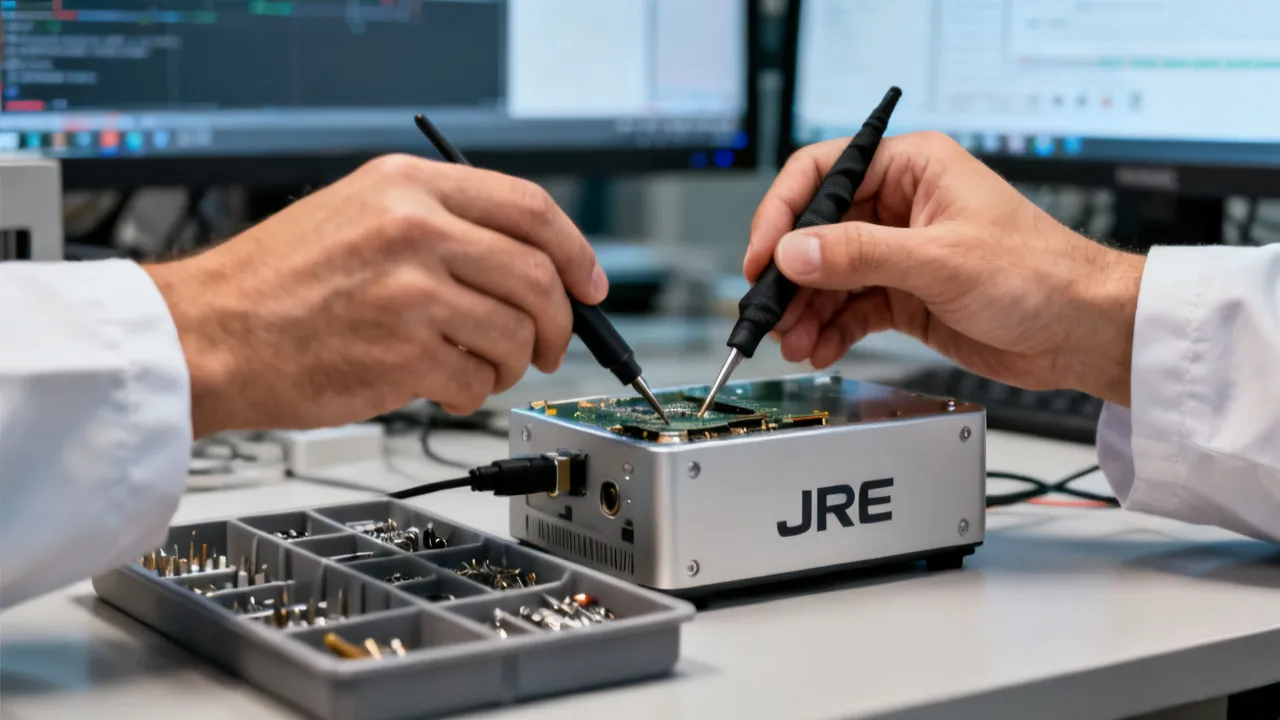
1) The practical takeaway: “jreiee” is a sourcing and identifier pattern—evaluate it like a spec, not a slogan
When you encounter jreiee, treat it the way industry teams treat any ambiguous identifier: as something that must be verified against documentation, compatibility requirements, and supplier traceability. In other words, the safest approach is to map jreiee to concrete product attributes (model, revision, interface, compliance details), then align those attributes with a credible supplier, a transparent price structure, and clear delivery/return terms.
Because the keywords you provided are minimal and do not include explicit location or price figures, this expanded article does not invent a “market price” or claim a specific supplier’s offering. Instead, it focuses on the decision framework used by procurement professionals and technical leads to confirm that an identifier like jreiee corresponds to the right item, at the right cost, under the right conditions.
In many organizations, ambiguous codes appear in operational artifacts: maintenance ticket comments, spare-parts requests, internal inventory systems, procurement email threads, and sometimes even engineering change proposals. That is precisely why teams develop patterns for evaluating identifiers: they want to prevent a common failure mode—ordering the right-looking item that is nonetheless wrong in a way that only becomes obvious after installation, integration, or first use.
Think of jreiee not as the answer, but as the first clue in a chain. Your job is to reconstruct the missing parts of the chain: what the item actually is, which revision is represented, what interfaces or dependencies must match, what documentation and traceability you will receive, and how the commercial terms protect you if anything is inconsistent.
There’s also a governance aspect. If a company repeatedly sources items using ambiguous internal codes without enforcing mapping to a maintained part master record, it creates technical debt in procurement: future buyers can’t confidently interpret old requests, and audits become more painful. So the “practical takeaway” is not just to be careful once; it’s to build a repeatable method that turns identifiers into validated specifications.
2) Objective background: what “jreiee” tends to represent in technical procurement
In many operational settings, short strings—often resembling jreiee—show up as internal SKUs, batch identifiers, compatibility codes, or shorthand references used across tickets, spreadsheets, and supplier communications. They may also be used as a “search key” when teams cannot share full part numbers publicly.
From an objective standpoint, identifiers like jreiee typically require confirmation through at least one of the following:
- Manufacturer documentation (datasheets, revision histories, change notices)
- Supplier catalog records tied to a specific product family
- Bench testing evidence (for example, compatibility verification or interface validation)
- Compliance and traceability (serial/batch records, material declarations, warranty terms)
Without such confirmation, buyers risk receiving an item that matches the identifier in a casual sense but diverges in critical specifications—leading to compatibility failures, warranty disputes, or costly rework.
It can help to consider why such identifiers exist in the first place. Some organizations have internal naming conventions: for example, a code can encode the product type, the packaging variant, the revision year, and a distribution channel. Others use identifiers to manage “approved alternates”—meaning jreiee might refer to a specific substitute that engineering has cleared for a particular use case, rather than the canonical manufacturer part number.
In software-adjacent procurement (even when the end purchase is physical hardware), short identifiers can also represent runtime or driver versions, firmware bundles, or configuration profiles. In those cases, the “spec” is not only a hardware part but also a set of expected behaviors. A buyer must therefore confirm what software dependencies are expected, how the supplier validates them, and what happens if the buyer’s environment differs.
Furthermore, identifiers can be context-dependent. The same code might appear in different contexts: a spare-parts store might label a certain unit as jreiee, but engineering might use jreiee to reference a specific test fixture configuration. Those are not always identical, and even if they share some underlying attributes, the resulting deliverables can differ.
So, objective background means acknowledging that short identifiers often compress information that your procurement process needs to expand back out into a validated record.
3) How to evaluate price fairly when “jreiee” is referenced
Even when a seller quotes a price for an item associated with jreiee, procurement best practice is to treat “price” as a bundle of terms rather than a single number. A quoted figure should be dissected into components that determine total cost of ownership.
Consider asking the supplier (or comparing across suppliers) using the same lens:
- Unit price vs. configuration: Is the quote for the exact revision tied to jreiee or a close substitute?
- Minimum order quantity (MOQ): Smaller orders may have higher per-unit cost.
- Shipping and handling: Incoterms and packaging can materially change total cost.
- Lead time: Delays can increase indirect costs (labor scheduling, downtime, project risk).
- Warranty and RMA handling: Returns and failures can dominate lifecycle spend if terms are unclear.
- Documentation included: Certificates, test reports, and serial/batch traceability can affect cost.
Expert note: In many procurement systems, the “best price” is rarely the lowest unit cost; it’s the lowest validated cost that satisfies requirements. If jreieiee (or similarly structured variants) appear in your workflow, do not assume it is identical to jreiee. Confirm mapping between each string and the actual part record.
To evaluate price fairly, you also need to normalize the quote. That means converting “different forms of the same thing” into comparable elements. For instance, one supplier might quote a lower unit price but provide no traceability documentation, which later forces you to run extra verification tests in-house. Another supplier might include calibration certificates or inspection records that reduce your acceptance burden. A third might provide a higher unit cost but faster lead time, which reduces downtime risk. These factors all change the effective cost.
In practice, teams often create a “quote normalization worksheet” for ambiguous identifiers. That worksheet aligns:
- What is being priced (revision/configuration)
- What is included (documentation, accessories, packaging, test/inspection records)
- What is excluded (cables, adapters, mounting hardware, firmware updates)
- What the commercial terms are (warranty length, RMA process, shipping terms)
- What acceptance criteria will be used
Once the quotes are normalized, you can compute a more meaningful comparison of total cost of ownership, not just total purchase price.
Another fairness concept is “scope integrity.” If the seller’s quotation is tied loosely to jreiee, you should require the scope statement to mirror the specification statement. If the quote says “compatible with jreiee,” that phrase can be ambiguous: compatible could mean functionally similar, mechanically interchangeable, or electrically equivalent under certain conditions. Procurement teams usually request an explicit equivalency justification—especially for safety-critical or performance-critical usage.
Finally, consider the post-sale commercial risk. If jreiee is not widely standardized, you can’t assume that warranty claims will be straightforward. Demand clarity on whether the supplier will accept return for mismatch, whether RMA is permitted for “not as specified,” and what evidence is required to trigger an approval or replacement.
4) Supplier selection: verify the chain from “jreiee” to the exact deliverable
In professional sourcing, suppliers are evaluated on more than responsiveness. With an identifier like jreiee, credibility hinges on traceability, documentation quality, and the willingness to align the quote to verifiable specifications.
Use these evaluation criteria:
- Specification alignment: Can the supplier show datasheets or technical notes that match the item tied to jreiee?
- Revision control: Do they differentiate between revisions/batches that might share a similar identifier string?
- Traceability: Can they provide serial/batch information, inspection reports, or documentation trails?
- Quality posture: Do they follow recognized quality practices (for example, documented inspection processes)?
- Contract terms: Are warranty periods, RMA timelines, and replacement/refund rules stated clearly?
Even for common components, a cautious buyer should request evidence that the quoted item is the one intended—especially if jreiee appears to be an internal code rather than a widely published part number.
Supplier selection also involves understanding how they source their supply. For example, a supplier may be a direct manufacturer, an authorized distributor, or a reseller of stock. With ambiguous identifiers, the risk profile changes. A direct manufacturer can usually provide the strongest documentation and revision control. An authorized distributor can provide manufacturer-backed records but might still face stock rotation issues when old codes exist in systems. A reseller might provide good prices but may not reliably preserve traceability records unless explicitly contracted.
So your evaluation should ask questions that reveal the supplier’s internal discipline:
- When you quote jreiee, what exact manufacturer part number does it map to?
- Which revision or manufacturing lot will ship?
- Can you provide the relevant datasheet revision?
- Can you provide serial/batch traceability documentation for the exact units shipped?
- What happens if the item arrives and fails acceptance—what evidence is used to confirm mismatch?
Those questions might feel repetitive, but they directly counter the main failure mode: buying based on the identifier string rather than the validated part record.
It also helps to evaluate the supplier’s ability to respond with precise artifacts. A strong supplier response is not “yes, we have it.” It is a package of documents and evidence: part number mapping, revision documentation, and traceability details. A weak response is vague, with generic datasheets, no revision specified, or unclear warranty/RMA terms.
In regulated or safety-critical industries, supplier selection criteria expand further into compliance and audit readiness. The buyer might require certificates of conformity, RoHS/REACH declarations, or material composition statements. If jreiee is tied to a regulated product, verifying these compliance artifacts can be as important as the physical match.
5) Practical sourcing workflow (industry-style): from identifier to confirmed purchase
Below is a step-by-step approach that mirrors how procurement and engineering teams de-risk purchases. It’s designed to work whether jreiee is used in an RFQ, a maintenance ticket, or a vendor message thread.
-
Capture the exact identifier string
Record jreiee exactly as written, including capitalization, spacing, and any adjacent codes. If you also see jreieiee, treat it as potentially distinct until proven otherwise.
In many real workflows, formatting differences are the first evidence that two references are not the same. For instance, one code might include a checksum digit, a revision marker, or an embedded manufacturing line indicator. If you normalize too early, you risk merging two items into one record.
-
Request the supplier’s mapping
Ask how jreiee maps to a manufacturer part number, revision, and configuration (e.g., size, interface, firmware version where relevant).
Demand that the mapping be stated in a structured form you can paste into procurement systems. For example: “Identifier: jreiee → Manufacturer P/N: ____ → Revision: ____ → Config: ____.” This reduces the chance that mapping is lost during internal communication.
-
Validate compatibility
Compare required interfaces/specifications against what the supplier provides. If this involves software/runtime components, confirm the target environment requirements and any dependency versions.
If your use case includes integration with other parts, validate not only the single component but also the system boundary. Compatibility can fail due to mismatched connectors, firmware expectations, calibration profiles, or electrical tolerance differences. The more complex the ecosystem, the more you should treat “identifier match” as insufficient.
-
Verify documentation and traceability
Request datasheets, test/inspection records, serial/batch info (if applicable), and warranty terms that correspond to the supplied unit(s).
When the supplier can provide traceability at the unit level (serials tied to lots), it becomes easier to handle disputes. If a failure occurs, you can isolate whether the wrong revision shipped or whether the unit is defective. That clarity improves both remediation speed and future procurement governance.
-
Confirm commercial terms
Review lead time, shipping method, payment terms, MOQ, return conditions, and RMA steps. A quote for jreiee should specify what is included and what is excluded.
A common procurement mistake is to accept a quote that includes an item description but omits return conditions. If something goes wrong, you end up negotiating under pressure. Better practice is to lock the commercial terms before the order is placed.
-
Conduct a controlled acceptance step
If feasible, plan an acceptance check upon receipt (visual inspection, functional test, compatibility verification) and document results before scaling usage.
Controlled acceptance is especially valuable when jreiee is not a globally standardized part number. You cannot rely solely on paperwork; the unit must behave correctly in your environment.
-
Close the loop
After acceptance, update internal records so future requests won’t rely on ambiguous identifier strings without specification links.
This is where procurement maturity shows. You build a “part record” that permanently links the identifier to the verified part attributes. Then future purchases can cite the internal part record rather than the raw string.
To further strengthen the workflow, many teams also implement an internal “exceptions” mechanism. If a supplier cannot provide traceability for jreiee, or if mapping is unclear, that exception should be formally approved with a documented risk assessment. The goal is to prevent silent acceptance of ambiguous sourcing conditions.
6) Supplement: comparison table, sources, conditions, and requirements
The following section consolidates decision requirements into a comparison view, along with reputable sources that support objective procurement and quality concepts. (No links are included, as requested.)
| Category | What to compare for “jreiee” | Why it matters |
|---|---|---|
| Specification mapping | Exact manufacturer part number/revision corresponding to jreiee | Prevents mismatches that cause compatibility or performance issues |
| Documentation quality | Datasheets, test reports, and any revision-control evidence | Supports traceable verification rather than assumption |
| Supplier traceability | Serial/batch or lot trace records tied to the quoted units | Enables accountability and faster resolution during failures |
| Commercial terms | Warranty length, RMA process, lead time, and acceptance criteria | Protects total cost of ownership and reduces downtime risk |
| Price structure transparency | Breakdown of unit price, MOQ, shipping/incoterms, and included documentation | Allows objective comparison and avoids hidden costs |
| Quality posture | Documented inspection/testing approach and compliance statements | Improves reliability and reduces risk of nonconforming goods |
To expand this comparison into something operational, you can also treat it like a lightweight scoring model. For instance, assign points for evidence strength:
- High evidence: revision-specific datasheet + serial traceability + test report + clear RMA terms
- Medium evidence: revision-specific datasheet + some traceability but limited test documentation
- Low evidence: generic datasheets without revision + unclear traceability + vague RMA language
Then, correlate evidence strength to risk. If your project timeline is tight or the failure impact is large, you should prefer suppliers with high evidence strength for items referenced only by ambiguous codes like jreiee.
Selected sources for objective sourcing concepts
- ISO 9001 (quality management principles and process orientation): used to frame quality-system expectations.
- ISO 13485 (medical device quality systems, if applicable): relevant when the product lifecycle requires tighter controls.
- OECD Due Diligence Guidance: provides a structured approach for risk-aware supply chain diligence.
- Gartner and other industry analysts (general procurement best practices): commonly referenced for purchasing governance patterns (use specific reports per your domain).
These sources are not being used here to claim that every purchase of jreiee is under a regulated regime. Rather, they provide a conceptual basis: establish controlled processes, demand evidence, and perform due diligence commensurate with risk.
Conditions/requirements checklist (before purchase)
- You can map jreiee to a verifiable product record (part number, revision, and configuration).
- The supplier provides clear warranty and RMA terms, including timelines and acceptance checks.
- The quote specifies what is included (documentation, packaging, test reports where applicable).
- Commercial terms are aligned with your operational timeline (lead time, delivery expectations).
- You document receipt inspection and compatibility verification to reduce disputes.
To make this checklist more robust, you can add two practical requirements that teams frequently overlook:
- Evidence retention: store the datasheet revision, mapping statement, and traceability documents in a controlled repository associated with the purchase order or internal part record.
- Discrepancy protocol: define what happens if received items do not match the mapping statement (how quickly the discrepancy must be reported, who validates it, and how the RMA is triggered).
When these two requirements are not in place, even a “successful” purchase can become hard to defend later if a mismatch is discovered during a warranty claim or an audit.
7) Frequently asked questions (FAQs)
Q1: What does “jreiee” mean?
jreiee is best treated as an identifier or shorthand that must be mapped to a concrete specification (manufacturer part number, revision, and configuration). Because identifiers vary by organization, confirm meaning through documentation and supplier mapping.
Q2: Should I assume “jreieiee” is the same as “jreiee”?
No. Even small differences in identifier strings can indicate different revisions, batches, or internal SKUs. Validate whether both strings map to the same product record before ordering.
In addition, consider whether your internal systems treat these strings as the same entity. If your ERP or inventory database uses fuzzy matching, you could accidentally merge distinct items. Ask your internal admin or review naming rules before placing orders based on either string.
Q3: How do I compare prices objectively when suppliers quote “jreiee”?
Compare not only unit price but also MOQ, lead time, shipping/incoterms, included documentation, warranty length, and RMA handling. The “best” option is the one that meets requirements with the lowest validated total cost.
It can also help to ask the supplier to confirm whether the quote includes any optional items needed for acceptance (for example, packaging suitable for storage, documentation suitable for audits, or test reports suitable for commissioning). If those items are “not included,” the effective cost rises.
Q4: What documents should I ask for with an identifier like “jreiee”?
Ask for datasheets tied to the specific revision, any relevant test/inspection reports, and traceability records (serial/batch) when applicable. Also request warranty and return terms in writing.
If the product type requires calibration or measurement validation, ask whether calibration certificates are included and whether they align with the configuration revision. In many practical cases, calibration documents are version-sensitive.
Q5: What acceptance step should I perform after delivery?
Perform receipt verification (visual inspection) and a compatibility/function check aligned to your operational requirements. Record results before scaling use, especially when jreiee was not a widely standardized public part number.
When acceptance testing is expensive or time-consuming, you can reduce risk by testing a small batch first. Document the results and, if acceptance passes, proceed with the remainder. This approach helps contain the cost of discovering a mismatch.
Q6: Can I rely on supplier claims if documentation is missing?
For critical use cases, you should not rely solely on verbal or loosely documented claims. Proceed only after confirming mapping between jreiee and verifiable product specifications.
Even if the supplier is honest, missing documentation is often a symptom of process gaps. In procurement risk management, process gaps are important because they predict how the supplier will behave during exceptions (delays, defects, and returns).
8) Expert perspective: where sourcing errors usually happen
From the standpoint of experienced procurement and technical program management, sourcing failures commonly stem from three root causes. First, teams equate an identifier (like jreiee) with certainty about the underlying part. Second, they compare prices without normalizing for revision, included documentation, or warranty terms. Third, they skip controlled acceptance checks, which turns a solvable issue into a larger operational disruption.
When jreiee appears in fast-moving workflows—such as maintenance queues or multi-vendor RFQs—the risk increases because short codes spread across emails and tickets. People copy/paste codes rather than validating them, and the chain of evidence degrades over time.
The corrective action is consistent governance: link identifiers to part records, align commercial terms to operational constraints, and verify at acceptance.
To go deeper into “where errors usually happen,” it is helpful to look at the decision points in a typical lifecycle:
- Request creation: The buyer creates a request using jreiee without attaching a datasheet link or revision reference. The request becomes ambiguous from the start.
- RFQ/quote stage: The buyer forwards jreiee to suppliers without requiring mapping. Suppliers might respond with partial mapping, assumed equivalency, or generic documentation.
- Order placement: The buyer places the order based on the code without verifying the deliverable description. This is where “wrong item” shipments become more likely.
- Receipt: The receiving team checks whether the item “looks right” but does not confirm revision or interface specifications. A mismatch becomes a latent defect.
- Use: The mismatch surfaces in system integration, performance testing, or real operation—when remediation is expensive.
Each stage has a practical mitigation. The mitigation strategy for ambiguous codes like jreiee is always the same: enforce evidence, keep mappings explicit, and require acceptance criteria to be aligned to the specification.
Another common error is failing to treat suppliers as partners in evidence creation. If a supplier cannot provide mapping documents tied to the specific revision, the buyer should not simply proceed. Instead, require a clarification response or a different supplier. Procurement governance should be “evidence-first,” not “order-first.”
Finally, note that internal stakeholders can create confusion. Engineering might request one revision; procurement might order based on the old identifier; warehouse might receive a different lot; and operations might assume the same code means the same deliverable. The solution is not to blame any one role. The solution is to establish a shared specification record that travels with the purchase order and is referenced in each stage.
9) Localization note: adapting the workflow for “nearby” audiences
Your keywords do not specify a city or country, so the localization rule requires we avoid inserting a literal place name. Where local context matters—such as regional holiday lead times, common courier practices, or typical business hour expectations—the same framework applies, but you should calibrate lead-time and delivery scheduling to your “nearby” vendor base. For example, in many regions, communicating delivery windows and inspection timing reduces last-minute coordination issues.
Localization can also affect documentation practices. Some regions commonly require certain import paperwork or labeling conventions. If jreiee is used for cross-border procurement, confirm whether the supplier’s labeling matches what customs or receiving processes expect. If the receiving process depends on accurate label fields (for example, lot numbers or model identifiers), ambiguous identifiers can cause delays that are commercial rather than technical.
Additionally, localization influences acceptance testing logistics. Shipping conditions (temperature, handling constraints, storage time) can affect whether the item remains within spec when it reaches you. A robust procurement plan for jreiee should therefore include packaging/handling requirements and an acceptance timeline that accounts for transit and storage.
In short, the workflow does not change because of location; your operational parameters do. Your evidence requirements remain the same: mapping, documentation, traceability, and commercial clarity.
10) Conclusion: treat “jreiee” as a cue for verification, not a substitute for specification
In summary, jreiee (and any close variants you encounter) should function as a starting point for verification. A professional sourcing approach converts the identifier into a concrete specification, assesses suppliers using traceability and documentation quality criteria, and evaluates price through the full set of commercial terms. This reduces compatibility risk, strengthens warranty outcomes, and supports predictable delivery—so your purchase decision is anchored in evidence rather than ambiguity.
If you want a single rule to carry forward: never let an identifier replace a specification. If the supplier can provide the mapping and the supporting documents that prove what jreiee actually refers to, then the identifier becomes useful. If they cannot, you are not dealing with a procurement problem alone—you are dealing with a documentation and risk problem.
By enforcing that discipline—capture the exact string, demand mapping to revision-specific product records, normalize price with clear commercial terms, verify traceability, and perform controlled acceptance—you transform jreiee from an ambiguous label into a validated purchasing pathway.
-

A Guide to Cost-Efficient Small Electric Cars for Seniors
-
Mastering Debt Consolidation: Boost Your Credit Score and Manage Interest Rates
-
Your Guide to Loans, Credit Checks, and Interest Rates
-
Affordable Independent Living: Finding the Right Senior Housing
-
Guide to Senior Living Apartments: Affordable and Comfortable Environments