Understanding Supplier Pricing and Quality Factors
This guide explains how “supplier”, “123456”, and the surrounding operational keywords typically relate to pricing, sourcing decisions, and quality controls in professional procurement. It offers objective background on how suppliers structure quotes, what “123456” can represent in procurement workflows, and why due diligence matters before ordering.
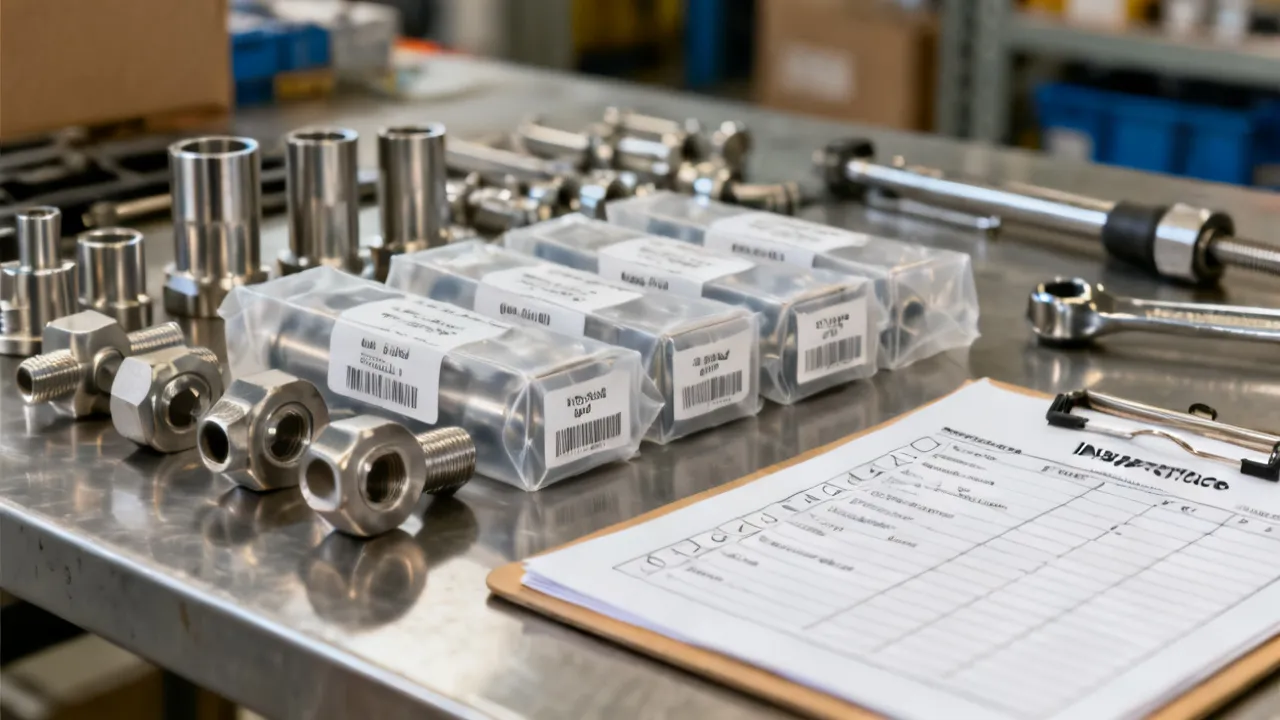
Critical takeaway: align supplier pricing with verifiable quality evidence
When procurement discussions revolve around supplier terms, the string 123456, and related operational keywords, the central question is usually the same: does the price reflect measurable quality, traceability, and consistent supply reliability? This guide approaches the topic professionally and objectively—helping you evaluate quotes, interpret internal identifiers like 123456, and compare suppliers using evidence rather than assumptions. It is written to be practical for buyers, quality teams, sourcing specialists, and anyone who has to translate “paper terms” into operational reality at receiving and during audit readiness.
Across many industries—manufacturing, energy, transportation, healthcare supply chains, construction materials, and electronics—procurement is not merely a cost exercise. It is an evidence exercise. You are effectively purchasing not only the physical goods, but also the supplier’s process integrity: the controls that ensure the correct item shows up, the correct batch is shipped, the correct documentation exists, and the correct performance expectation is supported by records. The more your procurement language emphasizes verifiability (for example, traceability identifiers, certificate references, inspection levels, and acceptance criteria), the more your sourcing decisions must reward that clarity rather than treating it as “boilerplate.”
1) Why supplier-related keywords matter in real purchasing decisions
In most industrial and commercial procurement workflows, the word supplier is not just a label—it is a proxy for a supplier’s system: documentation, testing capability, inventory management, packing standards, and post-delivery support. Keywords embedded in product specifications, procurement emails, or quotation documents often indicate which parts of the process are being emphasized—such as compliance, inspection, lead time control, or packaging requirements.
It helps to understand that many procurement terms function like “contractual levers.” A supplier can quote a low unit price, but if they shift risk to the buyer (for example, by providing minimal documentation, excluding inspection support, or making lead times conditional), then the buyer’s internal costs often rise—costs that can show up as:
- Receiving inspection effort: more time spent verifying conformity because documentation is incomplete or ambiguous.
- Rework and scrap: incorrect batches, wrong materials, or nonconforming performance can trigger costly corrective actions.
- Downtime: if parts arrive late or fail acceptance, production schedules may be interrupted.
- Administrative overhead: more cycles of clarification, document chasing, and quality record reconciliation.
Although the exact meaning of your provided keywords may vary by organization, the procurement logic generally holds: the more a supplier can demonstrate standardized processes, the more stable the total cost of ownership tends to be (including inspection effort, rework risk, and downtime from delayed deliveries). In other words, when you treat “supplier” language as operational evidence rather than semantics, it becomes easier to compare offers fairly.
To make that practical, buyers should treat supplier-related keywords as “promises” that must be validated at the right time. If the quote says the supplier provides traceability, then traceability must be deliverable. If the quote says the supplier will include conformity documentation, those documents must match the exact batch or item reference that appears in the receiving paperwork. If the quote implies inspection, the buyer should expect inspection records—or at least evidence of inspection criteria and how the supplier met them.
2) Interpreting “123456” as an identifier within procurement workflows
The value 123456 commonly appears as an internal code—such as a part number, a lot reference, an invoice line reference, a document number, or an order tracking token. In many organizations, a numeric sequence may also map to an internal ERP entry or a quality record. Because numbers like 123456 can represent multiple things depending on your organization’s system, the best practice is to confirm its role using the supporting document set (e.g., packing list, inspection report, or quotation line items).
It’s useful to think of 123456 not as “a number” but as a “pointer.” A pointer becomes valuable when it consistently leads you to the corresponding record. If 123456 points to:
- a specific production batch, then it should match batch records and test results;
- a part number, then it should match the product specification and material identity;
- a document number, then it should match certificate references;
- a lot or serial group, then it should match traceability and uniqueness expectations.
From an industry perspective, the practical aim is traceability: if you can connect 123456 to manufacturing batch records, test certificates, or inspection outcomes, then you can evaluate risk with more confidence. If you cannot, you should treat price comparisons as incomplete. That is because incomplete traceability creates a “verification gap,” and gaps are where costs accumulate later.
Consider how problems often unfold operationally:
- The purchase order references 123456, but the packing list contains a different lot code.
- The supplier provides a certificate, but it references a different document revision or requirement set.
- The supplier claims a certain test method was used, but the records cannot be tied to the referenced identifier.
Any of the above breaks the chain between what you ordered and what you received. From a buyer’s standpoint, the chain must be intact to treat the supply as “quality-supported.”
Therefore, the best practice is to establish an “identifier reconciliation” step: when the supplier quote and shipping package arrive, you verify that 123456 appears consistently across the purchasing document, shipping documents, and quality records. This step is often small in effort but huge in value, because it reduces ambiguity before it becomes a nonconformance event.
3) Price is not a single number—procurement comparisons must account for the “quote structure”
When evaluating pricing (often called “price information” in procurement contexts), buyers frequently compare a unit cost. Expert procurement teams, however, assess the full quote structure:
- Scope of supply: What is included—packaging type, documentation package, labeling, and any required testing?
- Inspection level: Is there incoming inspection, pre-shipment inspection, or third-party certification?
- Lead time and delivery terms: Faster fulfillment sometimes increases costs but can reduce downtime.
- Warranty and returns: How are defects handled, and what is the process timeline?
- Minimum order quantity: Price per unit may change with order size.
This is why the same “supplier” name can produce different effective costs: two suppliers may show similar price numbers, yet differ in documentation readiness, packaging protection, defect handling—factors that strongly affect total cost outcomes.
To go deeper, buyers should interpret quote structure as an expression of the supplier’s risk allocation and operational maturity. A quote that includes:
- clear deliverables (for example, a specific documentation list);
- explicit inspection responsibilities (for example, who inspects at which stage and what criteria apply);
- clear logistics assumptions (for example, delivery lead time basis and shipping method);
- clear after-delivery workflows (for example, return authorization and corrective action expectations);
typically indicates a supplier who has built repeatable processes. Conversely, a low-cost quote that omits these elements can create downstream friction. Even if the supplier is technically capable, the absence of clarity can force the buyer to spend internal resources to reconstruct what should have been provided upfront.
In procurement, this is often discussed as “apples-to-apples comparison.” But apples-to-apples requires more than matching item descriptions. It also requires matching documentary and procedural deliverables. If one supplier provides a certificate that matches 123456 and the other supplier provides a generic certificate or an unrelated revision, then the quotes are not truly comparable. You are paying for different levels of certainty.
4) Quality evaluation: move from assumptions to evidence
Quality assessment is the most defensible way to compare supplier offers, especially when an identifier like 123456 signals a specific batch, document, or line item. In typical professional environments, credible evidence includes:
- Material or conformity documentation: Certificates aligned to relevant requirements and standards.
- Test results: Inspection records that match the exact item/lot reference.
- Traceability: Ability to link the shipped items to the referenced code (such as 123456).
- Process controls: Demonstrated procedures for production, packaging, and handling.
Instead of asking “Who is cheapest?”, the more reliable question is: “Which quote has the cleanest path from item identifier to verifiable quality records?”
To make “evidence” operational, quality evaluation should not stop at receiving a document packet. It must confirm that the evidence is consistent with what you actually ordered and received. That includes verifying:
- Record applicability: Does the certificate cover the same requirement set specified in your purchase order?
- Record linkage: Does the certificate or test report reference the same 123456 code or lot identifier present on the packing list?
- Revision status: Are you receiving the correct version of the documentation or the correct test specification revision?
- Limits and acceptance criteria: Do the test results fall within the acceptance limits defined by your specification?
In many cases, buyers discover problems not because the supplier is intentionally wrong, but because of administrative mismatch: the supplier produced the right item, but the wrong lot reference was printed on the packing label; or a test result exists, but it is filed under an internal system name that does not appear in the shipment paperwork. These mismatches can be corrected, but only if they are detected early enough. Therefore, evidence-based evaluation rewards suppliers who proactively reduce ambiguity.
Evidence-based procurement also helps with long-term supplier development. If your procurement process consistently ties performance to traceability and document correctness, suppliers learn to invest in their documentation workflows—not only their physical output. Over time, that improves supply reliability and reduces buyer burden.
5) Practical due diligence checklist before you place an order
Even when procurement targets a specific item number or internal reference like 123456, due diligence should focus on consistency:
- Verify identifier mapping: Confirm what 123456 refers to in the quotation and shipping documentation.
- Request the documentation set: Ensure certifications and inspection records correspond to the same lot/item code.
- Clarify packaging and labeling requirements: Confirm whether your receiving process expects specific formats.
- Confirm lead time assumptions: Ask whether delivery timelines are based on forecast inventory or production scheduling.
- Define nonconformance steps: Ensure there is a clear process for defects, rework, and returns.
In professional procurement teams, this checklist is often formalized in a supplier qualification procedure. Qualification is especially important when:
- The item is safety-relevant or regulatory-relevant.
- The cost of failure is high (downtime, field returns, or operational shutdowns).
- The lead time is long enough that errors cannot be easily corrected without disruption.
- Audit readiness depends on documented traceability.
It is also worth expanding due diligence beyond documents. Buyers should consider operational “fit”:
- Capacity and workload: Is the supplier likely to have production disruptions during the delivery window?
- Communication responsiveness: If 123456 needs clarification, how quickly can the supplier respond?
- Quality escalation path: Who owns root cause analysis and corrective action if a nonconformance occurs?
- Packaging and handling competence: Does the supplier package for your receiving method (dock type, storage constraints, and transport conditions)?
In a mature procurement environment, these checks are reflected in the purchase order’s terms and in internal receiving procedures. If your receiving team follows a consistent set of acceptance and verification steps, the supplier’s documentation requirements can be enforced more reliably.
6) “Nearbly” localization note and how it affects sourcing conversations
Your instructions indicate a localization rule: whenever a city or country appears in the keywords, it should be replaced with “nearby.” While no explicit city/country tokens were provided, this “nearby” concept is still useful. Many buyers consider nearby logistics patterns to reduce transit variability, which can influence receiving schedules and inspection windows. In practice, localization affects:
- Shipping frequency: More frequent routes can shorten uncertainty.
- Customs/documentation handling: If applicable, documentation readiness may be simpler for certain lanes.
- Communication cadence: Sourcing “nearby” can support faster clarifications—important when reconciling a code like 123456 with shipment paperwork.
Keep in mind: logistics differences can change the effective price. A supplier with a slightly higher unit cost might be cheaper overall if it reduces inspection burden or receiving disruptions.
To illustrate, consider two hypothetical procurement situations:
- Supplier A (nearby): Slightly higher unit cost, but deliveries arrive in smaller, scheduled batches. Documentation corrections are fast. Receiving inspection can be done continuously rather than in emergency windows.
- Supplier B (distant): Slightly lower unit cost, but deliveries are consolidated. Any document mismatch (for example, 123456 not matching the certificate references) delays acceptance and blocks production until resolved.
Even if the unit price is lower for Supplier B, Supplier A may be “cheaper” in total cost because it reduces the probability and severity of schedule and acceptance disruptions. Buyers often quantify this as lead time variability costs, inventory carrying costs, and the cost of failed receipts.
Therefore, when you incorporate the “nearby” sourcing notion, you should treat it as a parameter in your total cost model rather than as a marketing claim. It should influence expected delivery reliability, inspection scheduling feasibility, and the operational overhead of document reconciliation.
7) Industry context: how suppliers typically structure offers
From an industry standpoint, suppliers often structure quotations in a way that reflects their internal costing:
- Direct costs: materials, labor, production overhead.
- Compliance/documentation costs: certificates, quality records, traceability setup.
- Handling and packaging: protective layers, labeling, and packing standards.
- Risk allocation: buffers for lead time uncertainty or production variability.
Therefore, when a supplier quote includes an identifier like 123456 for a batch or document set, it usually signals that the supplier is offering (or referencing) a specific production/record state. That is valuable—provided you can verify it with the shipped documentation.
Suppliers also vary in the level of detail they include. Some include documentation deliverables explicitly, such as “certificate of conformity referencing lot 123456,” test reports with defined test methods, or inspection checklists. Others present documentation more generically, leaving buyers to clarify after shipment. In regulated or audit-sensitive environments, generic documentation is a frequent source of friction.
It can help to understand why documentation detail costs money. Producing certificates, mapping test results to a specific lot, printing correct labels, and ensuring revision consistency all require process discipline. A supplier that invests in these capabilities typically has fewer errors and faster correction cycles. A supplier that does not invest heavily can still be capable, but the burden shifts to the buyer—especially if acceptance criteria depend on traceable documentation.
From a sourcing strategy perspective, your procurement choices can shape supplier behavior. If your procurement process rewards clear quote structure and verifiable traceability (for example, by scoring suppliers higher in bids where identifiers like 123456 are clearly linked to certificates), then over time the supplier base will adapt. They will include better documentation deliverables and improve their record mapping to reduce buyer rejection or delayed acceptance.
8) Comparison approach (supplemental): source options, steps, and conditions
Below is a supplement section that contrasts common approaches to sourcing and supplier comparison. Per your request, it is presented as a comparison table (without listing any links).
| Evaluation focus | Supplier-ready documentation path | Buyer verification path | Best-fit conditions/requirements |
|---|---|---|---|
| Item/lot identifier clarity | Supplier quote explicitly ties 123456 to lot/document records | Buyer confirms the same 123456 appears on packing list and inspection reports | Use when traceability is required for audits, regulated products, or internal QA |
| Price comparison method | Supplier provides a structured quote (scope, packaging, documentation, inspection) | Buyer converts quotes to “apples-to-apples” total cost of ownership | Use when comparing multiple supplier bids with different service inclusions |
| Quality evidence | Certificates and test results match the exact batch referenced in 123456 | Buyer performs receiving inspection according to defined criteria | Use when specifications include measurable tolerances or acceptance criteria |
| Logistics and delivery stability | Supplier forecasts and communicates lead-time assumptions transparently | Buyer aligns receiving dates with inspection capacity | Use when orders impact scheduled operations or when shipping routes are “nearby” for tighter timelines |
Suggested step-by-step guide (supplement):
- Collect quote packets: Ensure each supplier bid includes the same category of information (scope, documentation, and inspection terms).
- Map the identifier: Determine exactly what 123456 represents and verify it aligns across documents.
- Check documentation coverage: Confirm whether certificates and records correspond to the referenced batch/item.
- Normalize total costs: Compare beyond unit price—include packaging, documentation, inspection handling, and expected lead time impacts.
- Set acceptance criteria: Define what “pass” means on arrival and who is responsible for nonconformance resolution.
- Confirm after-delivery responsibilities: Validate warranty terms and correction workflows.
Conditions/requirements to apply this guide effectively:
- You must have access to the quote and the shipping documentation set where 123456 appears.
- Quality requirements should be written clearly in the purchasing specification.
- Comparisons should account for the full quote scope, not only the unit price.
- Receiving and inspection capacity should be scheduled to match the supplier’s stated delivery plan.
9) FAQs
Q1: What does the keyword “supplier” usually imply in procurement documents?
In procurement contexts, supplier typically indicates the vendor’s responsibility for supply reliability, documentation completeness, and quality traceability. It often signals that the quote should include what the supplier will deliver, how it will be inspected, and what evidence will be provided for compliance.
However, “supplier” can also appear in contractual language that defines responsibility boundaries. For example, some documents specify which supplier activities are included (such as pre-shipment inspection) and which are excluded (such as buyer receiving inspection). Buyers should treat these responsibility boundaries as part of the pricing logic.
Q2: How should I treat “123456” when it appears in pricing or order messages?
123456 should be treated as an identifier whose meaning must be confirmed. It could be a part reference, lot number, document number, or internal record. The most reliable approach is to verify that the same identifier appears across quotation lines, packing lists, and quality/inspection records.
In practical terms, buyers often create a simple reconciliation table internally. They list the identifier as shown in the purchase order (PO), then check whether the same identifier appears in the supplier’s certificate of conformity, test report, and the packing list. If any entry is missing, the buyer should request clarification before accepting the shipment as compliant.
Q3: Is it enough to compare unit prices across suppliers?
No. Unit price alone can be misleading when suppliers differ in documentation readiness, packaging protection, inspection levels, warranty terms, and lead-time certainty. Industry best practice is to compare “apples-to-apples” by normalizing quote scope and estimating total cost of ownership.
Normalization is most effective when it is systematic rather than informal. Buyers can define a standard template for collecting quote inputs (scope, documentation deliverables, packaging type, inspection steps, expected lead time, and nonconformance process). Once quotes are standardized, comparisons become more objective and less dependent on subjective impressions.
Q4: What evidence should I request to validate quality?
Request the quality and conformity documents that correspond to the specific identifier (such as 123456) and the exact items being shipped. Then, verify those records during receiving inspection. The goal is alignment between the shipped product and its stated traceability and test outcomes.
Beyond certificates, buyers should consider whether test results include the specific test parameters and limits relevant to the receiving specification. If your acceptance criteria require particular tests, the evidence should demonstrate those tests were performed and that results meet defined thresholds.
Q5: How does logistics “nearby” influence procurement outcomes?
When sourcing is “nearby,” delivery schedules can become more predictable, which may reduce waiting time and allow earlier inspection windows. This can affect total costs indirectly—through fewer delays, less receiving congestion, and lower risk of production downtime.
Additionally, “nearby” sourcing can improve the speed of corrective actions. If a document mismatch occurs (for example, 123456 does not match the certificate references), shorter transport cycles can reduce downtime and accelerate replacement or corrective shipment actions.
Q6: What should I do if a supplier cannot link “123456” to documentation?
If 123456 cannot be connected to traceability records (packing list, inspection report, or certificates), then your ability to assess quality risk is weakened. You may need to require clarification, request alternative documentation, or adjust acceptance criteria and inspection scope.
From a governance standpoint, you should treat this as a traceability deficiency rather than a minor administrative inconvenience. If traceability is a requirement for your product category, failure to link the identifier should trigger nonconformance handling rather than an immediate acceptance “because the parts look fine.”
Q7: Can I rely on supplier-provided information without verification?
Even when supplier documentation is well prepared, objective verification is recommended—especially when quality and traceability are critical. Verification does not need to be costly; it can involve cross-checking identifiers, reviewing certificate scope, and running targeted receiving inspections.
Verification also protects your organization in the event of audits or customer complaints. When you can demonstrate that your receiving process includes checks linking 123456 to the corresponding quality evidence, you create an audit trail that supports confidence in compliance claims.
10) Conclusion: robust procurement requires traceability, not just terminology
Whether your procurement content centers on the keyword supplier, a reference like 123456, or other operational terms, the consistent professional principle is this: make purchasing decisions based on verifiable quality evidence and coherent quote scope. Price is important, but the most defensible comparisons emerge when you can confirm traceability, understand what is included in the quote, and apply structured receiving conditions.
When you align supplier pricing with verifiable quality evidence, you reduce ambiguity and shift procurement from reactive problem-solving to proactive risk management. The practical result is a supply chain that is easier to audit, easier to operate, and more resilient when conditions change—whether those changes relate to delivery timing, documentation correction cycles, or nonconformance resolution.
Reliable reference note (sources for general procurement/quality concepts): For widely accepted frameworks underpinning traceability, supplier quality expectations, and documentation-driven quality management, organizations often align with standards and guidance such as ISO 9001 quality management system principles and ISO/IEC guidance on conformity assessment. (These are conceptual anchors; your specific product requirements may reference additional standards.)
-

A Guide to Cost-Efficient Small Electric Cars for Seniors
-
Mastering Debt Consolidation: Boost Your Credit Score and Manage Interest Rates
-
Your Guide to Loans, Credit Checks, and Interest Rates
-
Affordable Independent Living: Finding the Right Senior Housing
-
Guide to Senior Living Apartments: Affordable and Comfortable Environments