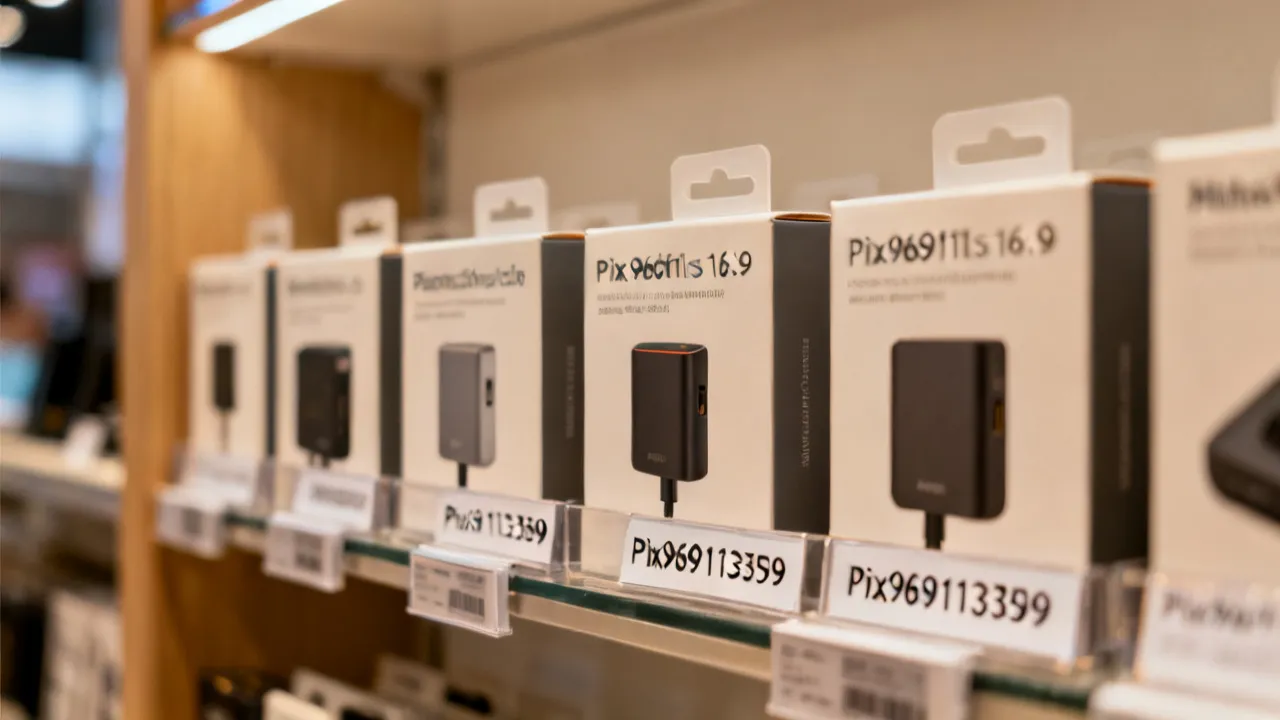
Understanding Key Product Code 35868272 for Procurement
This guide explains how to evaluate product code 35868272 in procurement decisions, focusing on supplier verification, pricing logic, and documentation readiness. Objectively, the keywords relate to product identification, sourcing consistency, and compliance practices. You’ll also find a structured comparison table, step-by-step requirements, and practical FAQs designed to support responsible purchasing without speculation.

Very Critical: How to Use Product Code 35868272 in Sourcing Decisions
When you encounter 35868272 during procurement—whether in an RFQ, invoice line, internal catalog, BOM entry, or an email reference—treat it as a decision anchor, not a guarantee of quality by itself. The very reliable approach is to confirm what the code represents (manufacturer part, specification set, revision level, packaged/bundled SKU, or internal cross-reference), then compare suppliers using verifiable documentation such as datasheets, quality certifications, calibration/inspection reports (as applicable), and traceability records.
In practice, the same number can appear across different packaging configurations, alternate manufacturing locations, revision histories, or catalog “aliases.” A buyer who assumes the code implies a single technical reality can be exposed to specification drift, revision mismatch, or compliance gaps. Disciplined validation is essential—not because the code is unimportant, but because it is insufficient on its own.
To integrate the provided keywords naturally into your sourcing framework, focus on three operational themes: product identification clarity, supplier accountability, and pricing reasonableness. This is the difference between “having a code” and “making a safe, auditable purchase.”
Before any quote is approved or any PO is issued, you should be able to answer, with evidence: (1) what 35868272 refers to precisely, (2) which technical revision/configuration is included, and (3) what quality and traceability artifacts will accompany the shipment.
Why “Keywords” Alone Don’t Resolve Sourcing Risk
In procurement workflows, keywords or identifiers often appear early in the process—sometimes in spreadsheets, sometimes in emails, sometimes on purchase-order templates, or embedded in automated procurement systems. However, identifiers are rarely sufficient without context. Manufacturers can change specs while retaining the same “legacy” numbering format; distributors can relabel items; and internal systems can reuse identifiers across product families, packaging sizes, or regional variants.
A buyer that only searches for 35868272—or relies on vague supplier claims such as “matches the part number”—can end up with incompatible materials, mismatched performance expectations, or delivery delays that affect project schedules. Even when the physical product appears “close,” the downstream consequences can include rejected receipts, rework, warranty disputes, missed compliance milestones, and in regulated industries, potential audit findings.
Therefore, use the identifier as a starting point for due diligence. Your goal is to reduce ambiguity, standardize supplier evaluation, and create a defensible record for audit, vendor management, and quality assurance.
Keywords are useful, but only when they map cleanly to: (a) a specific technical specification, (b) the correct revision or configuration, and (c) the documentation set that proves those attributes at the lot level.
Industry Expert View: The Procurement “Triangle” for Part Numbers
From an industry procurement perspective, successful sourcing decisions typically balance a “triangle” of factors:
- Specification fidelity: Does the item meeting 35868272 also meet the required technical parameters? This includes electrical/mechanical properties, environmental ratings, allowable tolerances, materials of construction, interface standards, and performance curves where relevant.
- Supplier trustworthiness: Can the supplier provide documentation that supports the claim? This means quality system credibility, verifiable certificates, and—crucially—traceability to the shipped lot/batch.
- Total cost of ownership (TCO): Is the quoted price aligned with packaging, lead time, handling requirements, compliance needs, testing/inspection costs, acceptance risk, and potential costs of nonconformance?
Even when your initial request appears to be straightforward, these three factors usually explain why procurement outcomes differ across suppliers—especially for components where compatibility, reliability, or regulatory alignment matters.
For example, Supplier A might offer a lower unit cost for the identifier 35868272, but it ships without the standard CoC bundle, has inconsistent lot traceability, or requires extended lead time that increases line-stoppage costs. Supplier B might charge more but provide complete documentation, confirm revision level before shipment, and include packaging designed to protect sensitive components. Over the lifecycle, Supplier B can be the lower TCO option.
Evaluation Criteria: What to Confirm Before You Approve a Quote
If your workflow mentions the product identifier 35868272, build a checklist around verification artifacts rather than marketing language. Consider confirming the following:
- Exact product identity: Confirm whether 35868272 is a manufacturer part number, a distributor catalog number, an internal SKU, a bundle reference, or a cross-reference to multiple manufacturer codes. If it is an internal SKU, identify the manufacturer part it maps to.
- Revision and configuration: Ask whether a revision level exists and whether your specification corresponds to that revision. Include revision format in the record (e.g., “Rev A,” “Revision 03,” “Firmware v2.x,” “Lot configuration code,” etc.). Many disputes stem from revision ambiguity rather than total specification mismatch.
- Specification match: Require a datasheet (or equivalent technical documentation) that ties to the identifier and revision. Ensure the datasheet is current and not merely “a similar one.” If the part is a consumable, verify any shelf-life or storage condition requirements.
- Quality management: Look for ISO 9001 (or appropriate equivalent) and relevant sector-specific certifications when applicable. For highly regulated or safety-critical contexts, also request evidence of controlling procedures for configuration management and document control.
- Traceability: Determine lot/batch traceability support, especially for safety-critical or regulated usage. Traceability should connect lot/batch IDs to certificate references and shipment documents.
- Packaging and handling: Confirm whether the item ships in standard packaging or special protective packaging that affects cost and risk. For moisture-sensitive devices, verify anti-static bagging, desiccant, humidity indicators, and storage-time limitations.
- Lead time realism: Validate lead time based on current supply status rather than historical assumptions. Ask for an achievable delivery window tied to a confirmed stock lot or a build-to-order plan.
- Compliance documentation: For regulated sectors, confirm whether documents like RoHS/REACH declarations, material declarations, testing reports, or manufacturer declarations are included.
- Substitution constraints: Ask whether the supplier will substitute packaging, revise material sources, or update manufacturing locations without prior notice. Request that changes be pre-communicated and only shipped with buyer approval (especially for long-lead or critical items).
These steps are particularly important when a buyer’s “keywords” search yields multiple similar items. The identifier must map to a single technical reality.
Pricing Logic: How to Judge Price Without Unverified Claims
Procurement teams often ask, “Is the price fair?” A professional way to answer is to understand what drives the quote. For items tied to identifiers like 35868272, price variance can come from:
- Source channel: Manufacturer direct vs. authorized distribution vs. secondary/overstock channels. The channel influences packaging, documentation completeness, and traceability reliability.
- Packaging configuration: Unit count, protective materials, labeling requirements, barcoding, and whether serialization is included for inventory systems.
- Compliance documentation: Inclusion of certificates (e.g., CoC/CoA), test reports, and whether certificates are tied to the shipped lot (not generic documents).
- Logistics terms: Shipping mode and Incoterms-like allocation of freight, handling, insurance, and customs responsibilities where relevant.
- Batch availability: Immediate stock vs. build-to-order inventory cycles. Some suppliers quote low but allocate higher risk through later manufacturing or uncertain batch availability.
- Acceptance risk: Whether the supplier includes inspection support, guaranteed performance acceptance criteria, or replacement policies for nonconforming receipts.
To stay objective, avoid assuming any supplier is “too expensive” or “too cheap.” Instead, compare quotes on a normalized basis: same revision, same packaging, same documentation set, and comparable delivery terms.
If normalized comparison is impossible—because one supplier refuses to specify revision or documentation—then “price fairness” becomes secondary. Your evaluation should treat incomplete verification as a cost driver through acceptance risk and potential rework costs.
Supplier Verification: What Responsible Buyers Ask For
Because the provided keywords suggest a sourcing context, supplier verification becomes the practical next step after you understand what 35868272 refers to. A careful buyer should request:
- Commercial documents: quotation validity period, commercial invoice template, and payment terms clarity (net terms, lead-time discounts, etc.).
- Technical documents: datasheets, spec sheets, and any relevant installation or manufacturing guidance where applicable.
- Quality documents: certificates of compliance, inspection/test reports (as applicable), quality certificates, and evidence of controlling nonconformances.
- Traceability proof: lot/batch reference mapping to shipping documents, including how lot identifiers are displayed on labels and certificates.
- Configuration control assurance: confirmation that the supplier will supply the identified revision/configuration and not silently substitute.
- Regulatory declarations: where needed, documentation such as RoHS/REACH declarations, country-of-origin statements, or material content declarations.
- Return and warranty terms: explicit process for nonconformance handling, including RMA expectations and replacement timelines.
When suppliers cannot provide documentation that aligns with the identifier and revision, the quote should be treated as provisional. For high-impact purchases, “document-ready” sourcing is a core discipline, not a bureaucratic hurdle.
From an audit perspective, you should be able to trace the chain: quote record → PO record → receiving record → certificate references → final acceptance decision. If that chain breaks, the procurement decision is hard to defend.
Operational Risks and How to Reduce Them
Common risks linked to ambiguous identifiers (including situations where “keywords” are used loosely) include:
- Specification drift: The buyer receives an item with slight differences that still passes a superficial check. For example, a “form-fit-function” assumption might overlook a tolerance change that affects system performance.
- Revision mismatch: The physical item matches a broad description but not the exact revision required. This is especially common when documentation is “close enough” but not exact.
- Documentation gaps: Certificates are missing or do not correspond to the delivered lot. Some suppliers provide certificates but they are generic and not batch-tied.
- Lifecycle changes: A part may be discontinued or replaced, but the code appears in old catalogs. In such cases, the supplier may source a later replacement that does not meet the original revision requirements.
- Channel-related uncertainty: Secondary market items may have unclear handling history, unknown storage conditions, or noncompliant packaging that affects reliability.
- Inconsistent labeling: Even if the internal part is correct, label mismatches can disrupt traceability and inventory systems, leading to receiving errors and production delays.
To reduce these risks, buyers should insist on a documentation set that is consistent from quote to delivery. If you use 35868272 as your reference, ensure the supplier’s documentation explicitly mentions the same identifier and relevant configuration details, including revision and lot traceability fields.
Consider also implementing receiving controls: packaging labels, certificate references, and serial/lot IDs should be validated against what procurement approved. This is how you convert “paper compliance” into operational compliance.
Comparison Table: Practical Options for Handling 35868272
The following table compares sourcing approaches and the requirements that typically accompany each choice. (No external links are included.)
| Sourcing Approach | Top For | Verification Requirements | Common Conditions |
|---|---|---|---|
| Manufacturer-direct sourcing | Highest traceability and document alignment | Manufacturer datasheet, CoC/quality docs, lot traceability | May require longer lead time; minimum order quantities can apply |
| Authorized distributor sourcing | Balanced availability and documentation | Distributor quote referencing 35868272, matching spec revision, quality certs | Confirm whether distributor retains original manufacturer packaging and labeling |
| Secondary/market sourcing | Urgent procurement when supply is constrained | Document bundle consistency (spec + certificates + lot mapping), return policy clarity | Higher due diligence needed; testing/inspection may be required |
| Internal substitution strategy | Projects with tolerance for equivalent specs | Written equivalency justification, engineering sign-off tied to performance parameters | Not suitable for safety-critical or regulated contexts without formal approval |
Step-by-Step Guide: From Keyword/Code to Approved Purchase
Use this process to turn 35868272 (and associated keywords) into an approval-grade procurement decision. The steps below reflect commonly accepted professional practices in sourcing governance.
- Capture the identifier context: Record where 35868272 appears (RFQ line, BOM, invoice reference, catalog). Save the source document and note who provided it (engineering, warehouse, vendor email, etc.).
- Clarify mapping: Ask the supplier (or internal engineering/admin owner) what 35868272 maps to—manufacturer part number, revision, configuration, and any bundle details (unit count per package, included accessories, or kit contents).
- Perform an internal requirement check: Ensure internal requirements specify revision, performance parameters, compliance requirements, and acceptable equivalency rules. If your internal documentation is vague, supplier evaluation becomes inherently risky.
- Request a quote “spec pack”: Include datasheet/spec sheet, quality certificates, and the documentation set that will accompany shipment. Require a “document table of contents” so you can confirm what is included.
- Normalize the comparison: Compare quotes only if they align on revision, packaging, documentation set, and delivery terms. If not aligned, request a revised quote or request supplier clarifications that make normalization possible.
- Perform supplier due diligence: Validate business details (legal entity, manufacturing location if different, responsiveness history for similar items). For critical items, confirm whether supplier uses documented configuration management and controls product changes.
- Assess risk level: Decide whether the purchase requires incoming inspection, batch testing, enhanced acceptance criteria, or higher-level governance steps (e.g., quality assurance review, engineering sign-off).
- Confirm lead time and availability: Require confirmation tied to a specific lot/batch plan when possible. If a supplier quotes a lead time without referencing stock availability or a build schedule, request a more precise plan.
- Set acceptance conditions: Define how you will verify conformance on receipt—what labels to check, which certificate fields must match, what performance parameters must be confirmed, and what happens if they do not match.
- Approve with conditions: If documentation is incomplete, approve conditionally with a defined delivery/documentation requirement and acceptance deadline. Document what is missing and what must be provided before final acceptance.
- Finalize order and receiving checks: Ensure the PO line includes the exact product identity details tied to 35868272 and required revisions, including any packaging configuration like “X units per pack” or “kit contents.”
- Conduct receiving verification: Match delivered packaging labels, lot identifiers, and certificate references to the approved record. Confirm that the supplier shipped the correct revision and configuration, not just a correct-looking part.
Conditions and Requirements (Governance Checklist)
Below are typical conditions that procurement stakeholders often require when the purchase depends on a specific identifier like 35868272 and associated sourcing keywords. Adjust based on your internal policies and regulatory environment.
- Document traceability requirement: Certificates must reference the same item identity and lot/batch shipped. The certificate should include enough fields to uniquely identify the lot, batch, and sometimes the manufacturing date/plant code.
- Revision control requirement: Substitutions or substitutions-by-default are not accepted unless formal equivalence is approved. Require written notification for any change in revision, manufacturing location, or materials.
- Acceptance criteria requirement: Incoming inspection steps and acceptance tolerances must be defined before shipment. Include what constitutes “pass/fail” for documentation-only vs. test-based acceptance.
- Supplier communication requirement: Supplier must confirm changes (packaging, revisions, or sourcing channel) before delivery. This includes confirmation that the supplied item matches the revision and configuration you approved.
- Record retention requirement: Procurement and receiving documents must be retained for audit purposes. Retain PO, supplier quote with the spec pack, certificate PDFs/records, and receiving sign-offs.
- Escalation path: If nonconformance is detected (wrong revision, missing certificate, label mismatch), define who is authorized to approve exceptions and what documentation is needed for exception approvals.
- Exception controls: Establish limits on how often exceptions can be granted, and require root-cause analysis for repeated errors.
Localized Procurement Considerations: Buying Near You
The keyword instruction indicates that any location placeholder should be replaced with "nearby." In many regions, “nearby” sourcing can affect lead times, shipping costs, customs processing (if applicable), and communication cadence. For example, in business environments where weekend closures are common or where local holidays affect logistics, buyers typically plan order windows more conservatively. Additionally, procurement cultures may emphasize relationship-driven verification—meaning document clarity and supplier responsiveness can matter as much as the quoted number.
When sourcing is “nearby,” you may receive deliveries faster and have easier access to supplier representatives for quick clarification. This can improve resolution speed when you discover revision or documentation discrepancies at the quote stage. However, faster logistics does not remove the risk that the part shipped is not the revision you requested.
Even when sourcing is “nearby,” the same disciplined verification for 35868272 remains necessary. Proximity reduces some operational friction but does not eliminate specification or revision risk. You still need a spec pack, revision identification, and lot traceability evidence consistent from PO through receiving.
Practically, “nearby” sourcing can also introduce additional variants: local stock may have different packaging formats, shorter serialization ranges, or updated label versions. If your internal systems expect specific barcode formats or label text, you may need to request that suppliers ship with agreed labeling conventions.
Responsible Sourcing Standards: What to Rely On (and What to Avoid)
Because you asked to avoid unverified or exaggerated data, this guide does not rely on speculative pricing trends or unverifiable supplier performance claims. When you need industry performance context, use established research or official standards.
For example:
- Quality management frameworks: ISO standards (commonly used for quality systems) provide a baseline for vendor expectations. More important than the certificate label itself is the supplier’s actual evidence of controlled processes (document control, configuration management, nonconformance handling, calibration where relevant, and traceability discipline).
- Risk management approaches: Enterprise risk frameworks and supply chain guidance support structured assessment. This can include risk scoring tied to item criticality, supplier performance history, and documentation completeness.
- Documentation consistency: Compliance principles emphasize traceability and verifiable records rather than claims. Treat “we guarantee it matches” as insufficient unless backed by revision-specific documentation and lot-tied certificates.
- Technical governance: Engineering standards should define allowable substitutions, performance equivalency thresholds, and documentation required for approvals. Procurement then enforces those rules through PO lines and acceptance criteria.
If you want, you can tell me your sector (e.g., industrial components, healthcare supply, electronics, automotive parts). Then you can tailor the verification set to typical documentation expectations in that domain, because what counts as “critical evidence” varies widely across sectors.
In healthcare supply, for instance, you may need more stringent device or material compliance documentation; in electronics, you may need moisture sensitivity handling evidence and revision-managed component histories; in automotive, you may need PPAP-like traceability expectations (depending on the role in the supply chain).
FAQs
1) What does product code 35868272 typically represent?
In many procurement contexts, 35868272 functions as a part or SKU reference. However, it can also represent a bundled catalog entry or an internal identifier. The safest approach is to confirm with the supplier or manufacturer what the code maps to, including revision and configuration details.
Because numbers are often reused, your request should explicitly ask for: manufacturer part number, revision, manufacturing plant/location (if applicable), kit contents, packaging unit count, and the data sheet that corresponds to that configuration.
2) Can I rely on 35868272 alone to ensure compatibility?
No. A part number or code should be treated as an identifier, not proof of specification match. Buyers should validate against the required technical parameters and ensure the revision and configuration align with the receiving requirements.
In compatibility questions, procurement typically collaborates with engineering. The most defensible approach is to require that the supplied item meets the exact “spec version” required by engineering—sometimes a revision of a revision.
3) How do I compare supplier pricing fairly for 35868272?
Normalize the comparison: request quotes with the same revision, packaging configuration, documentation set, and delivery terms. If those elements differ, ask for a revised quote so you can compare like-for-like.
If the suppliers cannot align the comparison basis, you can still compare, but you must convert differences into comparable cost components: e.g., added inspection cost, added documentation procurement cost, or increased acceptance risk.
4) What documents should accompany a purchase tied to 35868272?
Commonly requested items include a technical datasheet/spec sheet, quality certificates or certificates of compliance (where applicable), and traceability references that link the shipped lot/batch to the documentation.
Depending on your sector, you may also need material declarations, compliance test reports, or calibration records. The key is not the “name” of the document but whether it is revision-accurate and lot-tied.
5) What if a supplier can’t provide traceability for 35868272?
That is a procurement risk. Consider conditional approval only if your acceptance plan includes enhanced incoming inspection or testing, and if your governance requires documented traceability before final acceptance.
For critical items, the better approach is often to require traceability as a hard requirement rather than a conditional “best effort.” If the supplier can’t provide traceability, you may need engineering and quality leadership to determine whether the risk is acceptable.
6) Is “nearby” sourcing always faster and cheaper?
Not always. “Nearby” can improve communication and sometimes reduce shipping lead time, but costs may shift depending on courier contracts, packaging requirements, and supplier inventory status. Verification against total cost of ownership remains important.
A “nearby” supplier may hold stock that looks correct but is from a different revision or has different label formatting. Faster shipping does not compensate for incorrect revision risk.
7) When should I request engineering sign-off for substitutions?
When the alternative item may differ in revision, configuration, performance parameters, or compliance status. For safety-critical, regulated, or performance-dependent uses, substitutions should require formal engineering approval with documented equivalency criteria.
Procurement should not accept substitutions based on verbal confirmation alone. Engineering sign-off should ideally tie the equivalence to measurable parameters and define what documentation will prove conformance.
8) How do I reduce the chance of receiving the wrong revision?
Include revision and configuration details in the PO line associated with 35868272, require supplier confirmation before shipment, and perform receiving verification by matching labels and certificate references to the approved record.
Additionally, ensure your receiving team is trained to verify revision identifiers as they appear on both the physical labels and the certificate fields. Many revision mismatches occur because the receiving team checks only the part number, not the revision.
9) Are there any common red flags in quotes referencing 35868272?
Yes: vague specs, missing revision details, certificates that don’t reference the shipped lot, unclear packaging counts, or refusal to provide a document pack for review. These issues suggest identifier ambiguity or sourcing inconsistency.
Other red flags include: inability to state manufacturing plant/location, inconsistent datasheet versions, and quotes that treat “any revision acceptable.” If you see these patterns, escalate the validation requirements before ordering.
10) How should I structure my internal procurement record?
Record the origin of 35868272, requested specs, the comparison rationale among suppliers, approvals and conditions, and receiving verification evidence. This creates an auditable pathway from request to delivery.
In a well-structured record, anyone auditing later should be able to follow the logic: “We requested revision X, Supplier B confirmed revision X, PO specified revision X, certificates referenced lot Y for revision X, and receiving accepted based on evidence.”
Conclusion: Treat 35868272 as the Start of Due Diligence
The central takeaway is straightforward: 35868272 should guide your sourcing workflow, but it should not replace validation. By combining disciplined supplier verification, normalized price comparison, and revision-aware receiving checks, you convert a code and accompanying keywords into an approval-ready procurement outcome.
This approach supports operational reliability, reduces downstream disputes, and strengthens your organization’s documentation posture—especially when sourcing is handled “nearby.” When audits, quality reviews, or engineering investigations occur, your documentation trail will demonstrate not only what you bought, but also why the purchase was defensible and how conformance was confirmed.
-

A Guide to Cost-Efficient Small Electric Cars for Seniors
-
Mastering Debt Consolidation: Boost Your Credit Score and Manage Interest Rates
-
Your Guide to Loans, Credit Checks, and Interest Rates
-
Affordable Independent Living: Finding the Right Senior Housing
-
Guide to Senior Living Apartments: Affordable and Comfortable Environments