Guidance on Dental Implants: Costs, Suppliers, and Fit
This guide explains dental implants with a focus on practical decision-making, including costs, supplier selection, and what to verify before treatment. Objectively, dental implants are titanium-based roots placed to support crowns or bridges, while clinic performance depends on materials, surgical technique, and follow-up care. The article helps readers compare options without relying on marketing claims.

Very Important First: How to Choose Dental Implants Wisely
Dental implants can offer good tooth replacement, but the quality of your outcome depends less on one “headline” feature and more on verifiable factors: clinical workflow, implant system compatibility, the treatment plan, and total cost transparency. When people research dental implants, they often encounter varying pricing structures and different “supplier” claims. Some clinics highlight implant brand names; others focus on discounts, “all-in” pricing, or speed. The issue is that implants are rarely a simple product you buy—they are a sequence of decisions. Your job as a patient is to evaluate those decisions with the same discipline you might use when buying an expensive appliance or signing a major contract.
This article provides a practical, objective framework for evaluating options so you can ask the right questions before committing. It is designed to help you compare clinics and supplier-related claims without getting distracted by marketing language. You’ll also find guidance on how to interpret pricing, what “compatibility” really means, how prosthetic planning affects long-term results, and why maintenance is part of the real cost—not just something you do “if it’s convenient.”
Quick Cost Reality Check (What “Price” Usually Includes)
Prices for dental implants are commonly presented in different ways—per implant, per tooth, or as a package that includes planning, surgery, and restorative work. While comparing any two numbers can feel straightforward, the reliable approach is to compare what each number actually includes. A price that looks low upfront may exclude items that are essential to a predictable outcome.
From an industry expert perspective, the very reliable approach is to request a line-item estimate covering:
- Implant components (implant body, abutment, retaining/restorative parts)
- Imaging and planning (typically CBCT or equivalent diagnostics)
- Surgical procedure (including any grafting if clinically required)
- Prosthetic restoration (crown/bridge; material type matters)
- Follow-up visits and aftercare protocol
In many markets, a “low upfront price” can shift costs later if additional procedures become necessary or if prosthetic components are excluded. For example, a quote might include the implant fixture but not include the abutment, the final crown, the provisional restoration, or the lab fees required for a certain level of fit. Similarly, grafting might be presented as optional, but the diagnostic evidence might suggest it is needed. If the estimate doesn’t clearly define triggers for additional costs, it’s difficult to compare options fairly.
Because you asked for supplier-oriented content as well, keep in mind that implant brands and component supply chains can influence availability and serviceability, particularly for future maintenance or remakes. If a clinic cannot clearly explain which system was used and how it can be documented, future troubleshooting can become more complicated. A well-run system includes both clinical accuracy and recordkeeping.
Supplier Selection: What Matters Beyond Branding
When comparing “supplier” information for implant components or restorative materials, focus on traceability and documented quality controls rather than slogans. “We use a premium implant brand” might be true, but your outcome depends on many steps after the brand choice: planning accuracy, proper component selection, sterile surgical technique, and correct prosthetic fit. Supplier credibility should show up in details you can verify.
A credible supplier relationship (as explained by the clinic) should support:
- Documented implant system specifications (material grade, surface characteristics, design compatibility)
- Batch/traceability documentation that can be linked to the procedure record
- Clear component compatibility between implant, abutment, and prosthesis
- Clinical support for case planning and appropriate indications
From a professional standpoint, “supplier” often becomes a shorthand for the clinic’s ability to source components consistently and correctly—not only for purchase cost, but for good service coordination. For instance, if a specific abutment type or restorative component is required, the clinic should be able to obtain it and verify it matches the implant platform used in your case. If they “substitute” components without documenting the reason and effect, you want to understand how that affects your planned restoration fit and warranty coverage.
Also consider that some components are not interchangeable. Implant platforms, connections, angulations, and restorative interfaces may be specific to a system. Even if parts physically connect, they might not meet the exact design tolerances needed for the planned prosthetic outcome. Ask how the clinic ensures that the components selected for you are the ones that will be used, and how they handle compatibility checks before and after the lab stage.
Patient-Specific Fit: Why “One Price” Rarely Fits Everyone
Even when two patients request the same outcome (e.g., replacing one missing tooth), their clinical realities can differ: bone volume, bone quality, adjacent tooth condition, bite forces, soft tissue thickness, and health history. These differences can affect whether you need:
- Single-stage vs staged planning
- Guided surgery (where indicated)
- Bone grafting or soft-tissue procedures
- Different restoration materials based on aesthetics and occlusion
Therefore, the objective way to compare “price” is to compare the treatment plan and included components, not just the total number. If one plan includes grafting and the other doesn’t, you cannot compare the implant price as if it were the same service. If one plan includes a provisional crown and the other does not, ask about the impact on aesthetics, bite adjustment, and tissue healing.
In other words: the comparison is not “Clinic A vs Clinic B.” The comparison is “Plan A vs Plan B,” with both plans evaluated using the same list of inclusion criteria. A transparent clinic will help you understand why the plan differs, rather than simply presenting a different price without explanation.
SEO-Focused Context: What Dental Implants Are (Objectively)
Dental implants are surgical placements—commonly made of biocompatible titanium or titanium alloys—used as anchors for crowns, bridges, or overdentures. The clinical process typically involves diagnostics, surgical placement, healing/integration, and restorative completion. Professional guidance generally aligns with clinical standards that emphasize appropriate indications, sterile surgical practice, and follow-up maintenance.
For readers evaluating the concept behind “Dental Implants,” it helps to understand that implant outcomes are influenced by factors such as:
- Oral hygiene and maintenance
- Smoking status (where applicable)
- Systemic conditions (e.g., controlled diabetes)
- Primary stability and surgical accuracy
- Loading protocol (timing and force distribution)
Although implants can be marketed as a “replacement tooth root,” your result is not only about whether the implant fixture integrates. The tooth you feel and see—the crown, bridge, or denture support—is where many long-term satisfaction factors live: natural appearance, bite function, speech comfort, and ease of cleaning.
Expanded Decision Guide: Comparing Options Without Guesswork
In practical consultations, patients usually fall into three comparison categories: (1) clinic experience, (2) implant system and components, and (3) the overall restoration design. Below is an expert-style evaluation workflow that you can use during your assessment. It is intentionally structured so you can repeat the same questions across clinics and then compare answers in a consistent way.
1) Confirm the Diagnostic Pathway
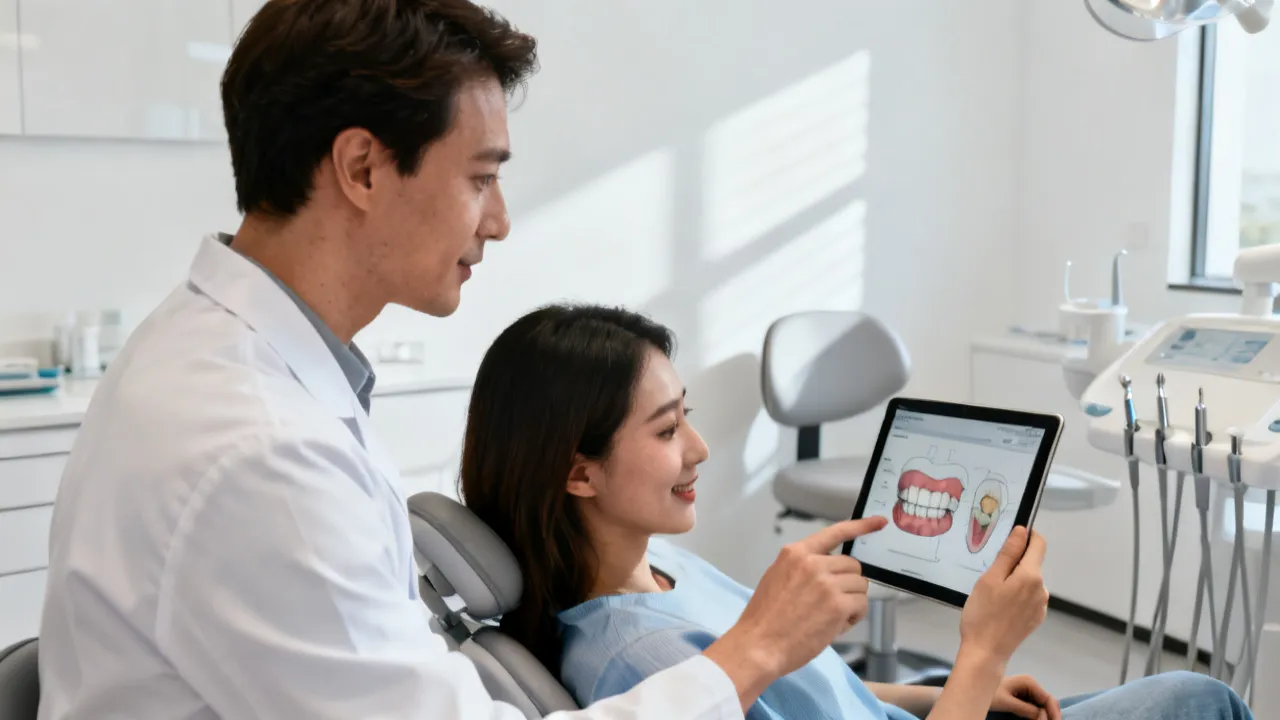
Ask whether your clinic uses advanced imaging (often CBCT) and how it informs implant positioning. A strong diagnostic pathway typically includes analysis of:
- bone volume and angulation
- proximity to anatomical structures
- prosthetic-driven implant positioning (so the crown aligns with the bite and smile)
If diagnostics appear rushed or if implant placement is discussed without referencing imaging, it’s a signal to slow down and request clarification. In a good consultation, the clinic should be able to show you what they are aiming to achieve and what risks they assessed. For example, they should explain how they measured available bone, how they determined safe depth and trajectory, and how they considered the position needed for the final restoration.
Also ask about the diagnostic “chain of responsibility.” Some clinics have imaging but don’t integrate it into planning. Others have a plan but don’t document it clearly. Look for continuity: imaging leads to a surgical plan, which leads to a prosthetic plan, which leads to a component selection list, which leads to an estimate. If any step is missing, the process may be too loose for a predictable outcome.
For aesthetic zone cases (front teeth), diagnostic planning also includes soft tissue considerations—such as the thickness of the mucosa and the position of existing gum architecture. A clinic that only focuses on “bone for the implant” may miss details that affect how natural the final crown looks.
2) Demand Transparent Line-Item Costs
Since you mentioned price and supplier elements, treat the estimate like a document you’re auditing. A professional clinic estimate should be understandable and not only a single number. Look for clarity on whether pricing includes:
- implant system components
- abutment/restorative parts
- temporary restorations (if planned)
- grafts or soft-tissue work (if needed)
- final crown material and warranty/coverage terms
Objective comparison becomes possible when each option covers the same scope—or when differences are explicitly stated. For instance, if Clinic A includes a zirconia crown and Clinic B includes a different material, you must treat that as a different service. Similarly, if one estimate includes guided surgery and the other doesn’t (when guided surgery is indicated), then part of the cost difference is explained by differing methods.
When you request transparency, you’re also trying to understand how risk is handled. Does the estimate include the cost of complications that are common for your case type, or does it assume everything will proceed perfectly? Some clinics provide “good faith” estimates that change if certain findings occur. That can be acceptable, but the clinic should define in advance what findings might trigger additional costs and how they would communicate those changes.
Consider asking the clinic to provide a written “inclusions/exclusions” list. If the clinic cannot produce it or it is vague, that may indicate a process that relies more on verbal reassurances than on documentation.
3) Evaluate the Prosthetic Plan (Not Only Surgery)
Many outcomes that patients perceive as “implant success” depend on the prosthetic design and fit: crown shape, screw-retained vs cement-retained considerations, occlusion adjustments, and good maintenance access. A clinically mature plan should describe:
- how the restoration will be supported and secured
- how margins will be managed for hygiene
- how bite forces are accounted for
Patients often assume that if the implant integrates well, the rest is automatic. In reality, the prosthetic phase requires technical precision. The restoration must match the implant’s position and the anatomy of your mouth. It must also protect the peri-implant tissues over years of function.
Here are practical questions you can use to evaluate the prosthetic plan:
- Will the restoration be screw-retained or cement-retained? Ask why that choice was made, and what it means for retrievability if maintenance or repair is needed.
- How will the occlusion be checked? Ask how they plan to adjust your bite after placement and whether they will verify contacts and functional movements.
- What material is planned for the crown or bridge? Material choice affects aesthetics, strength, maintenance demands, and sometimes the cost.
- How will the emergence profile be designed? This matters for soft tissue appearance and cleaning access.
If the clinic cannot provide a clear prosthetic plan, or if they focus only on surgery and “we’ll figure out the crown later,” treat that as a red flag. A good plan links surgery to restorative goals from the start.
4) Check for System Compatibility and Documentation
When supplier details are mentioned (implant manufacturers, restorative material sources), verify that the clinic can explain compatibility across components. Inconsistent part selection can create technical challenges later, including poor fit, weak connection integrity, and difficulties in maintenance.
Professionals also consider documentation: the ability to map what was used in your case to product information and service records. This matters especially if future repairs, remakes, or component updates become necessary.
Compatibility is not only “does it screw in.” Compatibility includes:
- Implant platform and connection type (internal vs external connection, design geometry)
- Correct abutment type (angulation, height, material)
- Restorative interface accuracy between the implant system and lab workflow
- Appropriate provisional materials during healing (where planned)
- Lab communication (digital vs analog workflow, scan strategy, transfer procedures)
Ask the clinic: “If I need a remake or a future correction, can you provide the details of the exact components used?” A clinic with good documentation habits can usually answer this with clarity. If they cannot, you risk inheriting uncertainty about your own treatment history.
5) Confirm Follow-Up and Maintenance Protocols
Implants are not “set-and-forget.” Good success involves routine checkups and professional hygiene. A responsible clinic provides a maintenance schedule and explains what signs require earlier review (e.g., persistent bleeding after cleaning, swelling, or discomfort).
As an industry principle, maintenance care planning should be part of the total treatment conversation—not an afterthought. Ask for a written maintenance plan that describes:
- recall intervals (e.g., every 3–6 months depending on risk)
- who performs maintenance (doctor vs hygienist vs specialized team)
- what is monitored (soft tissue health, bite, stability indicators)
- how complications are handled (who you contact and what steps are taken)
Also ask about home care instructions that are realistic for your daily routine. If the clinic gives instructions that assume perfect brushing and flossing but fails to discuss practical tools (e.g., interdental brushes, water flossers, or specific implant cleaning technique), adherence may drop and peri-implant health can be compromised over time.
Because maintenance is a long-term cost and commitment, clinics that ignore it may be optimizing for immediate conversion rather than long-term outcome. A well-run clinic treats maintenance as a core service and includes it in their recommended timeline.
Comparison Table: Practical Supplements for Decision-Making
The table below summarizes how to evaluate options when you compare dental implant costs and supplier-related claims. It is intentionally practical and does not rely on marketing language.
| Evaluation Area | What to Ask | What a Well-Prepared Clinic Can Provide | Condition/Requirement |
|---|---|---|---|
| Price transparency | “Does your quote include imaging, surgery, abutment/restorative parts, and follow-ups?” | A line-item estimate with a clear scope | Before signing any agreement, confirm inclusions/exclusions in writing. |
| Supplier traceability | “Can you document which implant system and restorative components were used?” | Case records with product/lot or equivalent documentation practices | Ask how records are stored and whether you receive a summary for your files. |
| Clinical diagnostics | “What imaging is used and how does it guide placement?” | Explanation tied to imaging findings and prosthetic goals | Confirm that anatomical risk assessment is included in planning. |
| Restoration design | “What type of crown/bridge is planned and why?” | Justification based on occlusion, aesthetics, and hygiene access | Ensure the restoration plan matches your bite and good maintenance strategy. |
| Maintenance commitment | “What follow-up schedule do you recommend, and what is monitored?” | A maintenance plan (recall intervals and hygiene guidance) | Confirm who performs maintenance and how complications are handled. |
Step-by-Step Guide to a Confident Dental Implant Consultation
Use the steps below to structure your visit. This can help you compare clinics and supplier claims objectively while minimizing confusion around pricing.
- Bring your dental history: list prior procedures, medications, allergies, and any known periodontal issues.
- Request a diagnostic explanation: ask how imaging influences placement and restoration design.
- Ask for a line-item estimate: confirm what is included and what triggers additional costs.
- Clarify the implant-prosthetic timeline: discuss healing period expectations and loading approach.
- Confirm component compatibility: ask which implant system and restorative components are used and how they fit together.
- Discuss materials and maintenance: understand crown/bridge materials and cleaning requirements.
- Evaluate follow-up protocols: confirm recall frequency and complication escalation procedures.
- Verify documentation and warranty/coverage terms: ensure you know what is covered and for how long.
Conditions and Requirements You Should Not Ignore
Even with an excellent clinic and reputable supplier relationships, dental implants require clinical readiness. Common requirements include:
- Appropriate oral health status (control of active periodontal disease)
- Adequate bone and soft-tissue conditions (grafting may be indicated)
- Management of systemic risk factors (with your physician when relevant)
- Commitment to hygiene and scheduled maintenance
If a clinic claims a universal “one-size-fits-all” solution without discussing diagnostics and risks, consider that a red flag. Better clinics will explain that implants are predictable for appropriate candidates, but not magic for everyone.
You should also consider how the clinic handles pre-surgical status. For example, if you have active gum inflammation, a plan may include periodontal therapy before implant placement. If you have missing teeth with uneven spacing, the plan might require orthodontic or restorative alignment first to create proper conditions for an implant-supported crown or bridge.
Industry Perspective: How Clinics Typically Structure Costs
From an industry viewpoint, implant pricing often reflects a combination of labor, materials, and risk management. Costs can vary due to:
- Restorative component selection (materials, manufacturing methods, and design)
- Complexity (grafting, extraction with immediate placement, or anatomical limitations)
- Diagnostic and planning services (imaging and treatment planning)
- Clinical team workflow (planning-to-restoration coordination)
- Maintenance and warranty provisions
These factors can be legitimate drivers of price differences. The objective task for patients is to identify which drivers apply to their case. You can do that by asking the clinic to map the estimate to the clinical plan. If the estimate is not tied to a plan, it becomes difficult to trust that what you pay for matches what you need.
Additionally, pricing differences can reflect differences in prosthetic approach. For instance, a clinic that plans a screw-retained crown with a particular design for retrievability and maintenance may charge more than a clinic that uses cement-retained solutions. Cement-retained crowns can be effective in appropriate cases, but the reasons for the selection matter.
Another cost driver is whether the clinic uses digital workflows (intraoral scanning, guided surgery planning, CAD/CAM prosthetic fabrication) or more traditional methods. Digital workflows can improve precision in some steps, but the real question is whether the clinic has validated its workflow for outcomes in cases similar to yours.
Reliable References (Context, Not Marketing)
For readers who want authoritative background on dental implants, the following sources provide evidence-based context on implant practice and patient outcomes:
- World Health Organization (WHO)—Oral health policy and background context.
- International Journal of Oral & Maxillofacial Implants (IJOMI) and other peer-reviewed journals—peer-reviewed studies on implant outcomes and maintenance.
- Systematic reviews in mainstream dental literature—summarizing risk factors and success rates across populations.
Note: Because your request did not provide specific supplier names, pricing values, or a location, this guide focuses on decision frameworks rather than unverifiable local price claims. The principles here apply across many regions because they are tied to clinical process and documentation, not to a particular currency or clinic.
More Questions to Ask That Usually Separate Great Care From Average Care
Once you have your line-item estimate and a high-level plan, the best next step is to go deeper. Many patients stop at price comparison and brand comparison. However, the factors that predict long-term satisfaction often show up in the “how” details. Here are more question prompts you can bring to your appointment.
How does the clinic handle surgical risk and safety?
A strong clinic can explain how it reduces the chance of damaging nearby structures and how it manages bleeding, infection risk, and healing variability. Ask about:
- sterilization protocols and how surgical kits are prepared
- the plan for infection prevention
- what happens if healing does not proceed as expected
- whether your case has anatomical risk markers reviewed in imaging
You can also ask whether the clinic uses guided surgery when indicated. Guided surgery can improve accuracy in certain cases, but it is not automatically superior. The key is whether the clinic uses the method appropriately based on your anatomy and treatment goals.
What is the approach to immediate placement or immediate provisionalization?
Some patients ask for implants right after extraction. That can be part of appropriate treatment in selected cases, but it depends on infection status, bone architecture, and primary stability. Ask:
- Will extraction and implant placement be immediate, delayed, or staged?
- If immediate placement is planned, what evidence supports it for your case?
- Is a provisional crown planned, and what loading protocol is used?
A mature clinic does not sell immediate placement as a universal benefit. It explains the specific conditions where it is safe and predictable.
What are the loading and healing timelines?
Implants can be loaded at different times depending on primary stability, bone quality, and restorative design. The clinic should explain expected healing phases clearly. Ask about:
- how long before the final crown is delivered
- whether a temporary crown will be used during healing
- how occlusion is adjusted during each phase
- whether you will have restrictions on chewing and hygiene
Inconsistent instructions or vague timelines often reflect a less structured process. Structured planning helps you understand what to expect and makes it easier to budget both time and money.
How does the clinic ensure the crown fits correctly?
Ask about the “fit chain,” which includes clinical impressions or scans, lab communication, and final try-in. Consider asking:
- how the abutment and crown are fabricated for accuracy
- how they verify the fit clinically before final cementation/screwing
- how they handle occlusion adjustments after placement
- whether they use digital verification or other quality checks
A crown that fits poorly can create gaps and hygiene challenges. Over time, that can affect soft tissue health. Clinics that do meticulous verification typically reduce the chance of remakes due to avoidable fit issues.
What warranty or remakes policy is in place for the prosthetic?
Even in well-managed cases, remakes can happen. The difference between a manageable situation and a frustrating one is the clinic’s policy and communication. Ask:
- what is covered if the crown needs remake due to fit or material issues
- what happens if you experience complications related to the restoration
- how long the warranty lasts and what documentation is needed
Be careful: warranties should not be presented as a substitute for clinical quality. But a clear warranty indicates that the clinic treats the prosthetic as a serious, supported component of the treatment, not a disposable product.
How does the clinic monitor implant health over time?
Maintenance is not just a hygiene appointment; it is monitoring. Ask what they measure and how often. For example:
- will they measure peri-implant tissue health
- do they check bite and prosthetic stability
- do they recommend imaging at specific intervals when appropriate
Monitoring helps catch issues early, when they are easier to address.
How do smoking and systemic conditions affect your plan?
Smoking and systemic conditions can impact healing and risk. A serious clinic will integrate these factors into your plan and provide realistic guidance. Ask whether your smoking status or medical conditions require modifications to:
- timing of surgery and healing
- loading protocol
- preventive measures
- maintenance recall interval
You should also ask whether the clinic coordinates with your physician if needed. It’s not about alarm—it's about risk-aware planning.
What does “success” mean in their practice?
Success can mean implant survival, but it can also mean function and aesthetics. Ask how they define success in real-world terms. For example:
- what outcomes they aim to achieve
- how they handle complications when they arise
- how they communicate expected maintenance
Clinics that can articulate these concepts clearly tend to manage cases with consistency.
How to Compare Multiple Quotes Without Getting Confused
When you receive multiple quotes, you might feel overwhelmed by differences in language. Use a comparison grid to keep your decision grounded. Here is a simple method you can use.
Step A: Normalize the quotes to “what is included.” Write down each quote’s included items: imaging, implant system components, abutments, temporary restorations (if any), grafting (if any), final crown material, lab fees, follow-up schedule, and warranty/remake policies.
Step B: Identify the differences that change the biological plan. For example, does one quote assume no grafting while another requires grafting based on imaging? Does one quote plan immediate placement while another plans delayed placement? These differences can explain most of the price discrepancy.
Step C: Identify the differences that change the prosthetic plan. Material choice, crown design (screw vs cement), and retrievability can all change the plan. If one quote includes higher-grade aesthetics material or a more appropriate design for hygiene, the price may rise but the outcome may be more predictable.
Step D: Identify the differences that change long-term maintenance. Some clinics include more robust maintenance follow-up as part of the package; others treat it as optional. If maintenance is not adequately supported, the “cheaper” quote can become expensive later.
When you do this, you reduce the risk of comparing unrelated scopes of work.
Common Red Flags to Watch For
Not every issue is a “red flag,” but certain patterns tend to correlate with problems. Watch for these common warning signs:
- Vague estimates without line items or inclusions/exclusions.
- Brand talk without compatibility details (e.g., naming an implant brand but not explaining abutment/restorative compatibility).
- Rushed diagnostic pathway with no imaging discussion.
- Unclear prosthetic design (no explanation of crown material, connection type, or occlusion plan).
- Minimal maintenance discussion (no clear recall schedule or monitoring plan).
- No documentation practices (can’t explain how components used are recorded for your case).
- Pressure to decide immediately without time to review the scope.
Red flags don’t guarantee failure, but they indicate less reliability in the process. Implants require precision across multiple steps; if the process is vague early, it can become more chaotic later.
Case Examples (How Plans Affect Price and Outcome)
Because “single missing tooth” can mean many different clinical scenarios, it helps to see how treatment planning can change. The goal is not to predict outcomes for your case, but to show how plan differences drive both cost and complexity.
Example 1: Single tooth replacement with adequate bone and healthy tissue
In a case where there is adequate bone volume, good periodontal health, and favorable soft tissue conditions, the plan might involve:
- diagnostic imaging
- implant placement with predictable stability
- standard healing period
- final crown fabrication
The quote here might look “simpler,” but the clinic should still provide line items for implant components, imaging, surgery, and the crown. If a quote is low yet excludes the crown or follow-ups, the apparent simplicity may be misleading.
Example 2: Single tooth replacement with bone deficiency requiring grafting
If imaging shows inadequate bone volume, the plan might include:
- bone grafting (particulate graft, membrane, or other technique depending on the defect)
- longer healing interval
- possible additional soft tissue management
- restoration design adapted for aesthetics and hygiene
This case will cost more. Importantly, a clinic that avoids discussing grafting upfront is not necessarily trying to scam you—but it is failing to create a realistic scope. A better clinic will explain the reason grafting is needed, what it involves, and how it changes timeline and cost.
Example 3: Multiple missing teeth with spacing and occlusion complexity
Replacing multiple teeth often affects bite mechanics and may require bridge design, intermediate connectors, or even an overdenture concept. The plan might include:
- prosthetic evaluation for alignment and function
- implant number selection based on distribution and support needs
- possible staged approach for bone or soft tissue adaptation
- maintenance plan adapted for multiple implant sites
In such cases, “per implant” pricing can be misleading because the total plan depends on the prosthetic design that integrates all the implants and manages occlusion.
Example 4: Aesthetic zone case with soft tissue emphasis
For front teeth, the implant is only part of the story. The plan might require:
- careful prosthetic-driven positioning
- soft tissue and emergence profile management
- temporary crown or provisional support for tissue shaping (in selected cases)
- high-quality crown material choice for natural appearance
Price may vary significantly based on prosthetic and aesthetic planning details. A clinic that focuses only on implant fixture cost may not deliver the same aesthetic reliability as a clinic that builds a full aesthetic plan.
What About Implant Brands? How to Think Critically
Brand names can be a useful reference point, but you should interpret them carefully. Some people treat brand choice like a guarantee of success. In reality, success is not determined by the implant brand alone. Outcomes depend on:
- diagnostic selection and case appropriateness
- surgical technique and stability
- proper component pairing and system compatibility
- prosthetic design accuracy
- maintenance adherence
That said, a reputable clinic should be able to explain what system they use and why it suits the plan. They should also provide traceability details. If a clinic only provides marketing-level brand statements but cannot discuss system specifications and compatibility, it may be difficult to evaluate the real quality of the process.
You can ask brand-specific but practical questions, such as:
- What connection type does the system use and why is it chosen for your case?
- How does the abutment selection match the implant platform?
- What documentation is provided to track the components used?
- What is the clinic’s experience with similar cases using this system?
A well-informed clinic will answer in a way that shows it understands the system beyond the logo.
Understanding “All-Inclusive” Packages (And When They Can Mislead)
Some clinics advertise “all-inclusive” pricing. “All-inclusive” can be genuine, but it can also be vague. To avoid confusion, ask for the package breakdown. Specifically:
- Does the package include the final crown and its material?
- Does it include temporary restoration if needed?
- Does it include grafting or soft tissue procedures if indicated?
- Does it include aftercare visits and maintenance checkups for a defined period?
- What warranty is included for both surgical and prosthetic components (if applicable)?
Always request the inclusions/exclusions list in writing. If “all-inclusive” means “we include a certain amount of work under certain conditions,” you should understand those conditions. Otherwise, you might discover that your real situation diverges from the assumptions used to produce the “all-inclusive” price.
How to Interpret Warranties and Coverage Terms
Warranties can be valuable, but they should be interpreted correctly. When a clinic offers coverage, ask:
- What exactly is covered (implant fixture, abutment, crown/prosthetic, labor, remakes)?
- How long does coverage last?
- What are the conditions to maintain coverage? (e.g., adherence to maintenance schedule)
- Does the warranty require specific documentation or continued attendance at the clinic?
In many cases, warranty coverage is tied to maintenance compliance. That is reasonable because maintenance affects biological stability and restoration longevity. But you should know the terms clearly so you can plan confidently.
Dental Implant Maintenance: What “Good” Looks Like
Since the original framework emphasized maintenance protocols, it’s useful to expand on what “good” typically includes in real practice. A clinic with strong long-term outcomes tends to treat maintenance as structured and measurable.
Good maintenance often includes:
- Regular periodontal-style assessments around implants (tissue health, inflammation signs, bleeding tendency)
- Cleaning technique reinforcement for your specific implant and restoration design
- Professional hygiene adapted to implants (instrument choices matter)
- Bite checks for occlusion stability and wear patterns
- Prosthetic inspection to identify issues such as screw loosening, surface problems, or crown margin concerns
- Imaging when indicated rather than ignoring it or using it excessively
Also note that implant maintenance is not optional if you want predictable long-term results. Even if your mouth “feels normal,” peri-implant inflammation can develop without obvious pain early. Regular checkups can detect subtle changes before they lead to more serious problems.
Budgeting Beyond the Initial Cost
Many patients set a budget based on the initial quote, but implant treatment has multiple phases. Consider budgeting for:
- multiple appointments (consultation, imaging, surgery, healing visits)
- temporary restorations if planned
- potential grafting or soft tissue procedures
- future maintenance visits after treatment completion
- long-term replacement policies (for prosthetic components even when implants remain stable)
This doesn’t mean implants are a “bad investment.” It means your decision should consider the full lifecycle of the restoration. Most people compare only the initial implant cost, then experience surprise when they need additional work or ongoing maintenance. Transparent clinics help you plan for these realistic costs.
How to Build Your Personalized Question List
If you want to take the next step, you can build a question list tailored to your situation. Based on the original guidance, your missing-tooth scenario matters: single tooth vs multiple teeth, prior implants or extractions, and your target budget range. Here’s a template you can use and then personalize.
- My case overview: (missing tooth locations, time since extraction, any prior implants, periodontal history)
- Diagnostics: What imaging will you use, and how will it change the plan?
- Plan scope: What exactly is included in the estimate? Provide a line-item breakdown.
- Supplier and components: What implant system is used, and what abutment/restorative components will be paired with it?
- Compatibility: How do you ensure compatibility and document which components were used?
- Prosthetic design: Is the crown screw-retained or cement-retained? What material is used and why?
- Timeline: How long is healing, and what is the loading protocol?
- Additional procedures: Under what findings would grafting or extra soft tissue work be required?
- Maintenance: What is the maintenance schedule, and how often will follow-up occur?
- Warranty/remakes: What is covered, for how long, and what are the requirements to keep coverage active?
Conclusion: Make the Decision Based on Documented Fit
Dental implants represent a specialized, multi-stage treatment where price, supplier selection, and clinical fit are tightly linked. The very objective approach is to compare the documented treatment scope: diagnostics, component traceability, restoration design, and follow-up protocol. When those elements are clear, you can make a well-informed choice that aligns with both clinical realities and your budget.
If you share your missing-tooth situation (single tooth vs multiple teeth), whether you have prior implants or extractions, and your target budget range, I can help you build a personalized question list for your next consultation—focused on what to verify, not on assumptions.
-

A Guide to Cost-Efficient Small Electric Cars for Seniors
-
Mastering Debt Consolidation: Boost Your Credit Score and Manage Interest Rates
-
Your Guide to Loans, Credit Checks, and Interest Rates
-
Affordable Independent Living: Finding the Right Senior Housing
-
Guide to Senior Living Apartments: Affordable and Comfortable Environments