
How to Source 91435285468 for Reliable Fulfillment
This guide explains how to evaluate 91435285468 sourcing for dependable fulfillment workflows, from supplier verification to labeling and delivery readiness. It outlines objective background on the keyword identifiers and the practical criteria buyers typically use when assessing suppliers, documentation quality, and operational consistency—helping readers make decisions grounded in process clarity rather than assumptions.
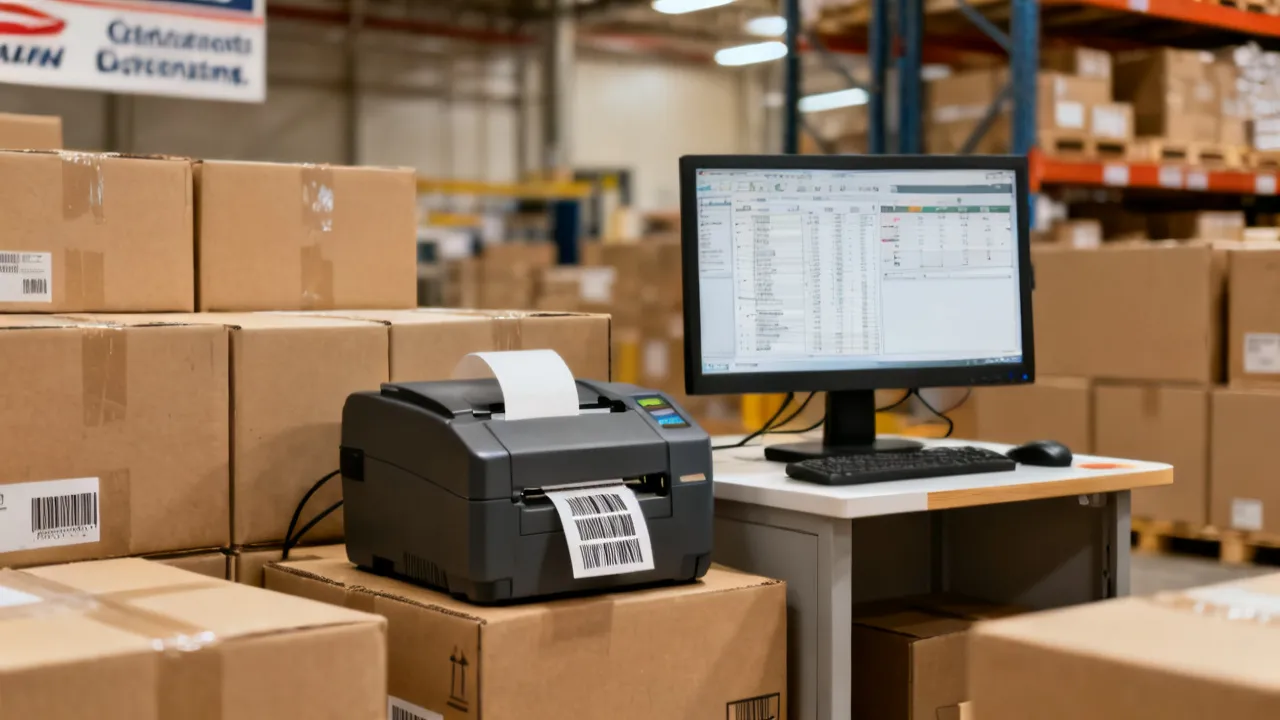
Key Sourcing Considerations for 91435285468
If you are handling fulfillment tied to 91435285468, your primary goal should be operational reliability: confirm that the product or component associated with this identifier can be supplied consistently, documented properly, and shipped in a way that fits your logistics requirements. In practice, this means validating the supplier’s ability to meet specifications, track shipments, and handle labeling and compliance documentation without ambiguity.
Because identifiers like 91435285468 often appear in procurement contexts, it is important to treat them as part of a broader system—linking to part numbers, SKU mappings, catalog records, inspection requirements, and receiving procedures. When sourcing is done carefully, buyers reduce delays, reduce mismatch risk at receiving, and improve auditability of the supply chain.
Additionally, if you encounter other keyword fragments in your sourcing workflow (for example, the two strings enclosed in quotes at the top of your input), the safest approach is to treat them as references to internal SKUs, catalog codes, or database keys—then verify their meaning with the supplier’s documentation and your own procurement records. The key is traceability.
In other words, think of 91435285468 not as a standalone “magic number,” but as an anchor in a chain of trust. That chain includes: (1) how purchasing identifies what to buy, (2) how suppliers interpret what you ordered, (3) how goods are packed and labeled, (4) how carriers move the shipment, (5) how warehouses receive and confirm it, and (6) how operations and downstream systems record what arrived. When that chain is strong, the identifier becomes a reliable bridge. When it’s weak, the identifier becomes a source of friction.
Why the Identifier Matters in Procurement Workflows
In very procurement ecosystems, an identifier such as 91435285468 functions as a “bridge” between departments: purchasing uses it to place orders, receiving uses it to verify incoming goods, and operations uses it to ensure the delivered item matches production or sales requirements. If the identifier is wrong, incomplete, or mapped inconsistently across systems, it can trigger rework—like re-labeling, partial returns, or batch holds.
From an industry expert perspective, the very common failure points are not always the product itself; they are:
- Mismatch between order records and packaging labels (e.g., the shipping carton label does not align with the PO/SKU mapping).
- Incomplete documentation (e.g., missing packing slips, missing batch/lot references where required).
- Ambiguous compliance or handling requirements (especially when products have special storage or usage constraints).
- Inconsistent lead-time performance due to planning gaps or weak inventory controls.
Therefore, successful sourcing is less about finding a single “right supplier” and more about implementing a verification routine that works every time. This routine should be designed to catch mismatches early—before goods move into inventory, before production starts, and before customer commitments are impacted.
To make that real, many teams implement an “identifier integrity” mindset. That means they treat the identifier as a data object that must preserve meaning as it moves through systems. The systems include your ERP (enterprise resource planning), WMS (warehouse management system), TMS (transportation management system), labeling software, and sometimes quality management or regulatory compliance tools. If 91435285468 changes meaning during that journey—even subtly—you get exceptions.
Those exceptions often take time in ways that are hard to predict. For example, a supplier may ship the correct physical product but use a label format that your warehouse scanner cannot interpret. Or the packing slip may include the identifier but omit a batch/lot field required for internal traceability. Or the supplier may create a label that looks correct visually but maps to a different SKU in your receiving database. The result is not only cost; it’s operational risk and potential audit issues.
Supplier Evaluation: Objective Criteria That Prevent Fulfillment Issues
When evaluating any supplier associated with 91435285468, focus on measurable capabilities rather than marketing claims. A disciplined supplier assessment typically includes:
1) Documentation and Traceability
Ask for the documentation set that will accompany shipments for the identifier in question. Your ideal packet generally includes purchase-order alignment details, packing slip fields, and (where relevant) batch/lot references. If your workflow uses receiving scans, ensure the supplier can provide labels that match the expected scan format.
To make this concrete, specify what “traceability” means in your environment. Traceability might involve:
- Batch/lot number capture on the packing slip and label (where the product is serialized or lot-controlled).
- Manufacturing date and/or expiry date fields (for regulated or shelf-life-sensitive items).
- Country-of-origin documentation and any certificate-of-conformance information (depending on your category).
- Certificate of analysis or other quality documents (if your product requires chemical/quality reporting).
- Shipper/dispatch documentation that ties shipment identifiers (like BOL/PRO numbers) to the goods.
Even if your internal receiving process does not require every field to be captured automatically, you should still require them to appear consistently on the documentation so that audits and investigations remain feasible. A supplier’s ability to generate and attach those documents reliably is a strong predictor of fewer receiving delays.
2) Labeling Consistency
For fulfillment readiness, labeling must be consistent across:
- Carton labels (outer packaging)
- Inner packaging (if items are subdivided)
- Unit-level references (if your operation receives per-unit)
If your receiving team requires strict mapping, test one initial shipment with a pilot PO to confirm the identifier and label format align.
Labeling consistency is not only about whether a label exists; it’s about whether the label’s data structure supports your operations. For example:
- Symbology: is it a barcode, QR code, or both?
- Data formatting: does the barcode encode the identifier exactly as you expect (including leading zeros and separators)?
- Placement: can warehouse staff access and scan the label without repacking?
- Durability: do labels survive moisture, cold storage, or long transit times?
- Human-readable text: is the text aligned with what appears in the scan data?
Many real-world receiving problems occur when scan data is correct but the human-readable text contradicts it, leading to confusion. Alternatively, the scan might be correct but stored under the wrong SKU key in your internal database. A pilot shipment should test the entire receiving workflow, including what happens when data does not match exactly.
3) Lead Times and Planning Discipline
Rather than relying on a supplier’s estimated delivery window, request historical evidence or operational signals such as production scheduling cadence, inventory availability processes, and the way they handle backorders. In many logistics environments, the biggest delays happen when suppliers cannot smoothly transition orders from “planned” to “packed.”
In practice, “lead time” should be decomposed. Ask how quickly they move from:
- Order confirmation to materials allocation
- allocation to production completion
- production completion to packout and labeling
- packout to carrier pickup
- carrier pickup to arrival at your dock
For 91435285468, delays often show up as labeling and documentation timeouts. If a supplier waits until just before shipment to finalize labels or PDFs, any last-minute corrections can slow dispatch. The longer your inbound delay chain becomes, the higher your risk of stock-outs, expedited freight usage, and production scheduling disruptions.
4) Quality Checks Before Shipment
Ask how they verify that items tied to 91435285468 meet spec before packaging. Even if you do not require full incoming inspection, a supplier’s internal pre-shipment checks reduce downstream costs.
Quality evaluation should include both process and results. Process means what tests they run and at what stages. Results means evidence like defect rates, corrective action history, or quality certifications. While certifications may not guarantee performance, they can indicate mature systems. Additionally, ask how they handle nonconforming items—do they hold them, rework them, or scrap them—and how do they ensure the correct identifier is still applied to corrected product?
When identifiers are involved, quality and traceability intersect. A supplier might rework an item but fail to update the identifier metadata consistently, creating mismatch risk. A mature supplier workflow typically includes controls to prevent that mismatch.
5) Communication During Exceptions
Operational reliability is often revealed when something goes wrong. Inquire about their escalation process for labeling discrepancies, partial shipments, or documentation errors. A supplier that communicates clearly during exceptions is usually easier to work with good.
Request examples of exception handling. For instance:
- What happens if a carton label is printed with the wrong identifier?
- How do they correct shipping labels after dispatch but before receipt?
- Do they require photos or documented evidence for label corrections?
- How do they notify you when a shipment becomes partial or split across multiple cartons?
- What is their response time for corrective communication?
A supplier who communicates effectively will likely reduce your operational workload. A supplier who does not will push cost to your receiving team and potentially to your customers if the issue propagates downstream.
Pricing and Total Cost of Ownership (TCO) for 91435285468
Your prompt did not include explicit price figures for 91435285468. As a result, you should treat pricing evaluation as a structured exercise in total cost of ownership rather than a single-line comparison.
Even without a given price, you can still apply a reliable method:
- Compare unit price only after confirming the product definition associated with the identifier.
- Include packaging costs (outer carton format, labeling materials, protective inserts).
- Add logistics considerations (freight method, shipping lane constraints, expected transit times).
- Account for rework risk (cost of relabeling, re-scanning, returns processing).
- Evaluate payment and lead-time terms because inventory holding costs can outweigh small unit differences.
For very operational teams, the “low price” supplier is rarely the lowest total cost once receiving delays and exception handling are included. A supplier offering a lower unit price may ship with higher documentation variance or use packaging that increases damages. Those factors can create hidden costs:
- Warehouse labor spent on manual exceptions
- Inventory inaccuracies that create stockouts or overstock
- Production downtime caused by receiving holds
- Customer impact if orders are delayed
- Reverse logistics for returns and replacements
To quantify TCO, teams often model a simplified cost structure around likely events. For example, if you estimate probability of label mismatch, you can estimate expected rework labor hours per shipment and compare suppliers on expected value. Even rough estimates help you avoid selecting the supplier with the lowest quoted number but highest operational friction.
In addition, consider whether 91435285468 is associated with multiple packaging configurations (e.g., different carton sizes or material protections). If the identifier mapping is not precise enough, quotes might appear comparable while packaging differences cause your warehouse throughput to vary significantly.
Receiving Readiness: Align Your Internal Workflow with the Identifier
Before the first order tied to 91435285468 lands, make sure your receiving procedure is synchronized. Here is the objective approach:
- Confirm mapping: verify that your internal SKU/part mapping correctly associates 91435285468 with the expected item description.
- Set label acceptance rules: define what your receiving team should check (scanable code, placement, carton count accuracy).
- Define documentation requirements: packing slip fields, batch/lot presence where applicable, and any required forms.
- Plan an initial pilot shipment: execute one test order to validate end-to-end correctness.
- Document outcomes: capture what matched expectations and what required corrective action.
These steps are standard in supply-chain operations because they reduce ambiguity. In an audit context, you also gain a record of what was verified and when. That record can become crucial if later you need to investigate a quality issue, a recall decision, or a shipment discrepancy.
To further strengthen receiving readiness, you can add practical “what-if” handling:
- What if the identifier scans but maps to the wrong SKU? Define whether receiving rejects, quarantines, or accepts under exception approval.
- What if cartons are missing labels? Define whether you require supplier rework or can label internally (and what documentation trail you must keep).
- What if documentation is missing fields? Define whether you hold the shipment until documentation arrives or create a provisional record.
- What if a shipment is partial? Define whether receiving books partial quantities and how that affects downstream planning.
The goal is to avoid ad-hoc decisions. Ad-hoc decisions are where audit and compliance risk often hides.
Operational Risks to Watch For
When sourcing tied to identifiers like 91435285468, common risks include:
- Catalog drift: suppliers may update product catalogs, while buyers continue referencing stale descriptions.
- Label translation errors: scan codes may be correct, but the human-readable description may differ.
- Packaging changes: new carton sizes or protective inserts can affect packing counts and warehouse handling.
- Documentation omissions: missing packing slip fields can slow receiving even if the item is correct.
Mitigating these risks typically requires a combination of supplier validation and internal receiving discipline. It also requires ongoing governance after the initial pilot. Many teams focus on the first shipment, but risk does not stop after approval. Supplier processes evolve; packaging suppliers change; product revisions occur; and ERP mappings can be accidentally overwritten.
One approach to ongoing governance is to establish periodic “identifier reconciliation.” For example, after each supplier revision cycle or quarterly inventory review, compare:
- Your internal SKU master data against supplier catalog references
- Your labeling templates against supplier label samples
- Your receiving exception logs against supplier corrective action reports
This helps detect “drift” before it becomes a large operational problem.
Another risk to consider is data integrity across systems. If 91435285468 appears in multiple systems (ERP, procurement portal, WMS, QA tools), ensure the same data type and formatting are used. For example, leading zeros in identifiers can be lost if one system interprets them as numeric rather than string values. That single formatting mismatch can generate systematic receiving failures.
Comparison Table: Sourcing Routes, Evidence, and Conditions
Use the following comparison table to structure your evaluation of sourcing paths related to 91435285468. This table is meant as a planning supplement, not as a guarantee of outcomes.
| Approach | Top Use Case | Evidence to Request | Step-by-Step Conditions/Requirements |
|---|---|---|---|
| Direct supplier purchase (single vendor) | When you need consistent packaging and stable documentation | Catalog mapping for 91435285468, sample label specs, packing slip template | 1) Confirm SKU/identifier mapping. 2) Validate label format. 3) Pilot order. 4) Approve receiving criteria. |
| Distributor purchase (inventory-forward) | When you need shorter lead times and ready stock | Batch/lot trace info (if applicable), dispatch documentation standards, historical fill-rate evidence | 1) Verify product identity tied to 91435285468. 2) Ask about substitution policy. 3) Confirm carton/label match. 4) Confirm lead-time variability handling. |
| Multi-supplier sourcing (parallel options) | When supply continuity matters more than uniformity of packaging | Quality control approach across suppliers, common label acceptance criteria | 1) Set strict receiving rules. 2) Ensure consistent documentation fields. 3) Run pilot shipments for each supplier. 4) Monitor exception rates. |
Recommended Evaluation Steps (Industry-Style Workflow)
Below is a practical, step-by-step approach to sourcing tied to 91435285468—focused on verification rather than assumptions.
Step 1: Define the item precisely
Do not rely solely on the identifier. Confirm the associated description, specifications, and packaging expectations that your operation requires. If you have internal standards (for example, required unit counts per carton), record them before contacting suppliers.
While the identifier is crucial, you should also define “what matters” operationally. For some items, packaging counts and protection matter more than descriptive text. For others, batch/lot traceability matters more than carton labeling readability. Make those priorities explicit.
Also check whether 91435285468 corresponds to multiple variants (for example, revisions, color/finish differences, size changes, or compliance statuses). If variants exist, ensure your mapping discriminates among them. Otherwise, a supplier could deliver the “same identifier family” but not the exact variant you require.
Step 2: Request proof of traceability
Ask for documentation templates and, if possible, a sample of labels and packing slips for 91435285468. The objective is to verify that what you receive can be reconciled with your PO and receiving system.
To strengthen this request, ask for a completed example from a real order (with sensitive information redacted). A completed packing slip demonstrates which fields are present and how they are formatted. Similarly, sample labels show the human-readable text and encoded data patterns.
Step 3: Validate labeling format
Confirm that barcodes or QR codes (if used) are scannable and follow your workflow’s expectations. Even if the supplier provides labels, they may not match your warehouse scanning setup.
Validation should not be theoretical. Conduct a scan test using the exact scanner model and settings your team uses (or a representative configuration). Verify that:
- the scan returns the expected identifier value
- the warehouse WMS capture can store the value without truncation
- the system displays the correct human-readable description
- the label remains scannable under expected environmental conditions
If your WMS requires specific label structure or prefix formats, verify those requirements early to avoid re-labeling later.
Step 4: Run a pilot order
Choose a manageable quantity. Use the pilot to test the end-to-end process: order confirmation → dispatch → receiving scan → documentation verification.
A strong pilot order includes a deliberate “stress case” where possible. For example:
- Request split cartons (if you sometimes receive split shipments normally).
- Use your typical carrier lane or shipping method rather than an expedited exception.
- Have the supplier include documentation exactly as they would for production orders.
This ensures you test realistic conditions.
Step 5: Score performance using defined criteria
Track outcomes such as documentation correctness, label compliance, carton count accuracy, and exception frequency. Keep the scoring rules consistent across suppliers.
To avoid bias, define your scoring rubric before the pilot begins. For instance, you might score each shipment component on a scale like:
- Label accuracy: pass/fail with notes
- Documentation completeness: pass/fail with missing-field list
- Carton count and packing verification: pass/fail with variance details
- Exception resolution time: measured hours/days
Then assign an overall decision threshold such as: “Proceed to regular supply only if exception rate remains below X and documentation errors remain zero for Y shipments.”
Step 6: Approve and scale only after meeting acceptance thresholds
Do not scale immediately based on verbal confirmation. Scaling should follow process results, particularly for fulfillment-sensitive identifiers like 91435285468.
Scaling can introduce new complexities. For example, the supplier may improve label formatting for pilot shipments but revert when volumes increase. That’s why acceptance thresholds should be tied to measurable outcomes, and why you might scale in stages (pilot → limited production → full capacity) while monitoring exception rates.
FAQ: Common Questions About Sourcing Identifier 91435285468
1) What does 91435285468 represent?
Typically, an identifier like 91435285468 is used in procurement systems to reference a specific product, component, catalog entry, or batch mapping. The exact meaning should be confirmed through supplier documentation and your internal SKU mapping.
2) How can I confirm the correct item before ordering?
Request a written catalog mapping for 91435285468, plus sample labels and a packing slip template. Then compare those documents with your internal requirements (specs, packaging counts, and receiving scan rules).
If you have any internal quality documentation (such as engineering drawings, bill of materials specs, or compliance requirements), attach a summary to the supplier inquiry. Doing so reduces the chance that the supplier’s interpretation of the identifier differs from yours.
3) Should I compare only unit price?
No. Evaluate total cost of ownership, including packaging, logistics, documentation completeness, and rework risk. A slightly higher unit price can be cheaper overall if it reduces delays and receiving exceptions.
4) What should I check on the first delivery?
Focus on three areas: (1) item identity against your mapping, (2) label compliance and scanability, and (3) documentation fields on the packing slip. If any of these fail, treat it as a process issue—not only a one-time mistake.
Also check physical handling details. For example, if your warehouse uses specific carton-opening practices, ensure carton construction is compatible. If items are fragile, verify protective inserts. These details often do not show up in quoting but heavily influence receiving time and damage rates.
5) Can multiple suppliers be used without risking mismatches?
Yes, but only if you enforce consistent receiving acceptance criteria and require suppliers to align documentation and labeling fields. Multi-supplier sourcing works top when your internal verification routine is strong.
To make multi-supplier sourcing safer, implement a “common acceptance spec.” That means your receiving team uses the same rules for all suppliers, including required fields, scan behavior, and label placement. Then require suppliers to prove compliance via pilot shipments (or sample labels + documentation verification) before scaling.
6) What if the supplier offers a “substitution”?
Do not accept substitutions tied to 91435285468 without written confirmation that the specifications and packaging requirements remain equivalent. Define substitution conditions in advance, and require documentation that supports traceability.
Substitution policies should include:
- what specific equivalence criteria apply (dimensions, materials, performance spec)
- how documentation will reflect the substitution
- who approves the substitution decision
- what happens if documentation does not match the substituted item
If substitutions occur, you may need to update your internal mapping or create new SKU variants. The process should be designed so substitutions do not silently contaminate inventory records.
7) Is there any reliable industry guidance on supplier documentation and labeling?
Yes. Many organizations rely on standardized supply-chain documentation practices and warehouse receiving controls. For broader context on supply-chain top practices and traceability concepts, consult guidance from established bodies such as the U.S. National Institute of Standards and Technology (NIST) on identification and traceability frameworks, and related logistics standards groups that discuss item identification and verification approaches.
Also consider industry guidance around barcode labeling practices and scanning standards used in warehousing and retail. Even if your supplier has “their own” label format, you want it to be compatible with widely used symbologies and your internal scanner/WMS requirements.
Objectively Grounded Context: How Traceability Standards Affect Sourcing Decisions
Procurement teams often cite the need for “traceability,” but in practice traceability is achieved through consistent identifiers, correct documentation fields, and verifiable labels. In modern operations, item identification systems influence not only inventory accuracy but also quality management and audit readiness.
To keep decisions evidence-based, it is helpful to anchor your evaluation to established standards and widely adopted operational principles. For example, supply-chain governance commonly emphasizes controlled item identification, data consistency between ordering and receiving, and documented exception handling.
If you want to align your approach with recognized frameworks, consider reviewing guidance from reputable standard-setting and research organizations, including:
- NIST (National Institute of Standards and Technology) for foundational identification and traceability concepts in industrial and measurement contexts.
- International supply-chain standards bodies that publish top practices for product identification and warehouse process controls.
- Regulatory guidance applicable to your product category, if any compliance documentation is required for lawful distribution.
Note: This article intentionally avoids unverified claims and does not provide category-specific legal requirements. If your use case is regulated, consult relevant compliance professionals or the official guidance for your product category.
Even when there is no strict regulation, traceability is operational insurance. It reduces uncertainty, supports faster investigation when something goes wrong, and reduces the burden on teams during audits. It also helps you improve supplier performance by making issues measurable and repeatable.
Traceability is also linked to how you manage changes. When suppliers revise products, update catalogs, or change packaging formats, you need a process to re-validate that 91435285468 still maps to what you think it maps to. Standards frameworks typically encourage controlled change management—meaning you should not treat identifier mapping as a one-time task.
Practical Checklist Before You Commit to a Supplier
Use this concise checklist to reduce ambiguity when sourcing tied to 91435285468:
- Identifier mapping verified (supplier and buyer records match)
- Label samples checked for placement and scanability
- Packing slip template confirmed with required fields
- Exception policy documented for mismatches or partial shipments
- Pilot order completed with measured results
- Receiving acceptance criteria defined and communicated
To make this checklist actionable, attach it to your procurement workflow as required steps. For example, require that the supplier approval is not completed until the label sample is scanned and the packing slip template is reviewed by the receiving lead. That way, the checklist is not just documentation—it becomes a gate in the decision process.
If you manage multiple warehouses or multiple receiving teams, ensure acceptance criteria are consistent across locations. Otherwise, different warehouses may treat the same identifier differently, producing inconsistent inventory records and variable operational outcomes.
Additional Considerations for Scaling and Long-Term Control
Once a supplier passes the initial pilot, the work is not done. Scaling and long-term control are where many supply chains either stabilize or degrade. If 91435285468 is a frequent order item, you should implement additional controls that support steady-state operations.
Consider these long-term actions:
1) Create an “identifier master record” and keep it locked
Maintain a single authoritative record that maps 91435285468 to your internal SKU, description, specs, and packaging configuration rules. Ensure that only authorized users can change this mapping, and track changes via version control or audit logs.
This prevents accidental ERP edits that could break receiving. It also allows you to quickly identify when mapping changes occurred relative to the onset of receiving exceptions.
2) Monitor supplier exception rates
When 91435285468 is ordered repeatedly, you can measure patterns. Track metrics such as:
- label mismatch frequency
- documentation omission frequency
- carton count variances
- average time to correct exceptions
Then review these metrics periodically with the supplier. A supplier that improves over time indicates strong process maturity. A supplier that fluctuates may still be workable but may require stricter receiving controls.
3) Require supplier change notifications
Request formal notifications for changes that could affect 91435285468, including:
- packaging material changes
- label format or printing vendor changes
- catalog or part number changes
- manufacturing location changes
- quality process changes
When changes occur, do a targeted revalidation—especially of label format, scan data encoding, and documentation fields. This reduces the risk that new packaging or new catalog mapping breaks the receiving process.
4) Ensure backups for documentation workflows
Even reliable suppliers can occasionally ship with incomplete paperwork due to process hiccups. Build resilience by requiring:
- a standardized digital document delivery method (e.g., email/PDF submission or portal upload)
- clear responsibility for when documents are expected relative to shipment date
- what to do if documents arrive late (quarantine vs. provisional receiving)
These policies reduce downtime during exceptions and prevent receiving backlogs.
5) Keep receiving equipment and scanning rules stable
Operational reliability is a two-way contract: supplier labeling must match your scanner and WMS expectations. Ensure that scanning devices and WMS label parsing rules are not changed without coordination. If your warehouse changes scanner configuration, label decoding expectations might shift—even if supplier labels remain correct.
If changes are required, plan and coordinate a short validation test using 91435285468 sample labels, so you can detect scanning issues before they affect live receiving.
Designing a Pilot Plan Specifically for 91435285468
A pilot order is often treated as a simple “test shipment,” but you can improve pilot outcomes by planning it like a mini project. For 91435285468, consider designing your pilot with defined success criteria and explicit test cases.
Here is a structured pilot plan concept:
Scope
- Define the exact quantities, carton configurations, and delivery date expectations.
- Confirm whether the item requires batch/lot tracking.
- Confirm whether your warehouse receives per-carton or per-unit.
Test Cases
- Normal label scanning: confirm both carton and (if applicable) unit-level labels scan correctly.
- Human-readable verification: confirm the visible text matches what your receiving system expects.
- Documentation verification: confirm all required fields appear on the packing slip.
- Carton count accuracy: confirm the packed quantity matches documentation and the PO.
- Exception simulation (optional): request a scenario that tests your exception path, such as a planned documentation delay or intentionally staged partial carton labeling (only if safe and agreed with the supplier).
Success Criteria
- Zero “identifier mapping” mismatches.
- All required label types present and scannable.
- No missing required documentation fields.
- No more than a defined threshold for exception resolution time.
Pilot Output
At the end of the pilot, document:
- what succeeded
- what failed and why
- how corrections were implemented
- what rules were updated in receiving
This output becomes part of your long-term governance. It also helps you refine your acceptance criteria for future shipments tied to 91435285468.
Communication Protocols That Reduce Friction
Even with perfect specifications, supply chain outcomes often depend on communication. When 91435285468 is involved, communication protocols should include:
- Order acknowledgement expectations: when suppliers must confirm receipt of the PO and when they must notify for issues.
- Dispatch notifications: what fields you need (shipment number, expected arrival date, carton count, tracking number).
- Label and document confirmations: whether the supplier can send a label preview or packing slip draft (especially for regulated items or complex label structures).
- Exception response timelines: who to contact, response time expectations, and escalation steps.
A good communication protocol reduces the uncertainty that causes delays. It also ensures that if an error happens, it is handled quickly and with documented evidence.
Conclusion: Build a Reliable Fulfillment Loop Around 91435285468
Sourcing tied to 91435285468 should be approached as a system design problem: align the identifier with the correct product definition, validate labeling and documentation, and implement a receiving process that can confidently confirm what was delivered. When you follow an evidence-based evaluation workflow—supported by clear acceptance criteria and a pilot shipment—your fulfillment becomes more predictable, audits become easier, and operational disruption declines.
If you share additional context—such as what the identifier maps to in your internal system, whether you need batch/lot traceability, and your preferred receiving method (manual vs. scanning)—I can help tailor the evaluation criteria and the pilot plan more precisely.
-

A Guide to Cost-Efficient Small Electric Cars for Seniors
-
Mastering Debt Consolidation: Boost Your Credit Score and Manage Interest Rates
-
Your Guide to Loans, Credit Checks, and Interest Rates
-
Affordable Independent Living: Finding the Right Senior Housing
-
Guide to Senior Living Apartments: Affordable and Comfortable Environments