
Understanding 01047554402 for Industrial Supply Sourcing
This guide explains how reference number 01047554402 can support procurement, verification, and traceability in industrial sourcing workflows. Objectively, keywords like 01047554402 are used to identify orders, quotations, and shipment records, while supplier details connect documentation to the right parties. You’ll also find a practical conditions checklist, comparison table, and FAQs to streamline compliant buying.
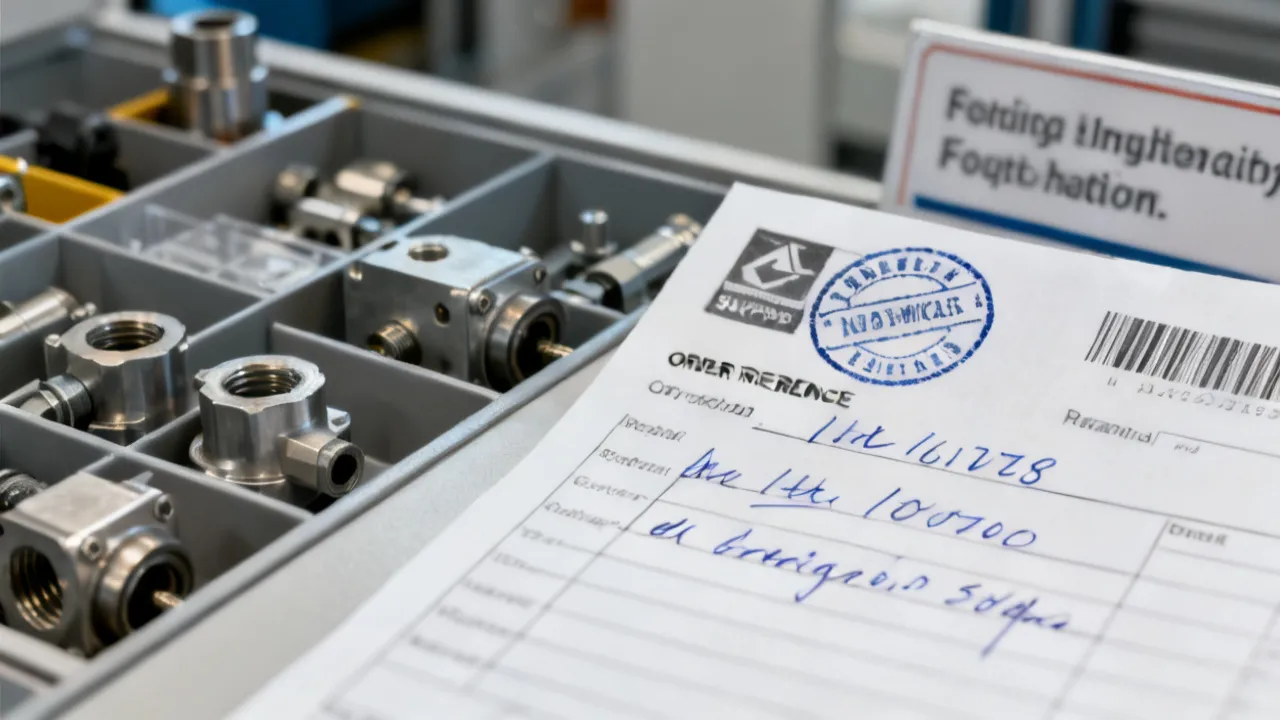
Critical Procurement Insight Up Front: What 01047554402 Signals in Sourcing
When a reference number such as 01047554402 appears in procurement communication, it typically functions as a tracking key that ties together a quotation, an order, and often related shipping or documentation. For buyers, the immediate value is not the number itself, but what it reliably links: the exact scope, the responsible supplier, and the document trail required for accountability and traceability.
In many industrial contexts, buyers encounter multiple identifiers—RFQs, quote IDs, batch or lot references, invoice numbers, and shipment confirmations. 01047554402 often serves as a single cross-reference that prevents mismatches when teams request updates, confirm specifications, or reconcile invoices. Therefore, the first step is to verify that this reference number is consistently used across the quote, packing list, and invoice records.
In practice, procurement teams use reference numbers the way engineers use part numbers: not as decorative strings, but as the anchor points that prevent “almost the same” from becoming “wrong.” If a reference appears in one document but not the next, the operational risk increases. The goal is to ensure that every downstream action—goods receipt, quality inspection, warranty registration, accounts payable processing—can be traced back to the same upstream purchasing decision.
Also, be mindful that sometimes a supplier may include additional internal identifiers (work order numbers, manufacturing order numbers, sub-supplier batch IDs). Those internal numbers can still matter, but they should not replace 01047554402 as the buyer-facing or contract-facing cross-reference unless a clear mapping is provided. When a mapping is absent, teams tend to “guess” during reconciliation, and guessing is the birthplace of costly disputes.
Why Buyers Treat Supplier Identifiers as “Operational Metadata”
Industrial procurement is operationally complex: materials may be substituted, delivery windows can shift, and documentation requirements vary by sector and regulatory environment. As a result, supplier identifiers and order references act as metadata—data that describes other data—so procurement teams can align contracts, technical specifications, and logistics.
From an industry-expert perspective, the practical question is: Does the supplier’s documentation use 01047554402 as the authoritative reference? If it does, it streamlines internal approvals, helps quality teams confirm conformity records, and reduces the risk of paying for one scope while receiving another.
Operational metadata is often invisible when things go well. But it becomes painfully visible when they don’t. If a shipment arrives with missing test certificates, the quality team must know which order it belongs to. If an invoice arrives with a changed pricing basis, accounts payable must know which contract line items govern that price. In both cases, the identifier is the easiest bridge between different functions.
Think of 01047554402 as a key in a filing cabinet: procurement wants the correct folder every time. If multiple folders contain similarly named items, the key prevents the team from opening the wrong one. In systems terms, the reference allows your enterprise resource planning (ERP) process, your document management system, and your quality management system to agree on what “this shipment” means.
Even when procurement teams are experienced, cross-functional communication can fail under time pressure. For example, a receiving clerk might record quantities without linking them to the order reference. A quality inspector might file certificates under a batch ID rather than the order key. Later, when the invoice arrives, someone might attempt to match it using partial info (supplier name and quantity), which is risky. A stable reference like 01047554402 reduces the likelihood of those partial matches becoming permanent errors.
Industry Reality: How “Reference Numbers” Reduce Cost of Errors
Very cost overruns in sourcing rarely come from the unit price alone; they stem from avoidable process failures—wrong revisions, incorrect packaging counts, missing test certificates, or shipments routed to the wrong location. A stable identifier like 01047554402 helps you:
- Match documents (quote → order → delivery note → invoice)
- Reduce ambiguity during escalation (“Which order are we discussing?”)
- Support audit readiness by keeping traceability intact
- Improve operational coordination among procurement, logistics, and quality
Even when pricing changes or delivery timing adjusts, a well-managed reference system allows both parties to update the correct records.
Consider common real-world failure modes. If the supplier ships under an incorrect revision (e.g., specification revision A shipped instead of revision B), buyers often discover the issue during inspection. Without the correct cross-reference, the quality team may issue a nonconformance report that cannot be immediately tied to a contractual requirement. The supplier then may dispute the claim by stating, “That batch belongs to a different order.” In that dispute, the reference number becomes the simplest evidence for what was authorized.
Another common issue is packaging and quantity interpretation. If a packing list shows “10 sets” but the receiving process logs “10 pieces,” the financial and operational consequences multiply. When 01047554402 is consistently displayed, you can quickly determine whether the dispute is about unitization (what constitutes a “set”), about documentation quality (packing list error), or about operational handling (receiving error). A reference number doesn’t solve the problem alone, but it provides a fast route to diagnosis.
In regulated or quality-intensive supply chains, the consequences of errors extend beyond cost. Incorrect traceability can lead to rejection of products, delays in release to production, or inability to demonstrate compliance to customers. Buyers may also have to rework paperwork, resubmit certificates, or negotiate credit notes. A coherent reference trail minimizes the amount of rework and increases the defensibility of corrective actions.
Price Considerations: Treat Cost as a Contract Variable, Not a Casual Figure
You may see “price information” bundled with the identifier in communications tied to 01047554402. An objective approach is to treat price as a contract variable influenced by scope, packaging, lead time, incoterms, and testing requirements. Instead of focusing solely on the numeric cost, validate the price basis:
- Is the price per unit, per set, or per batch?
- Does it include packaging, protective materials, or palletization?
- Are inspection/test certificates included?
- Is shipping and insurance included, or does it follow incoterms?
- Are there revision rules if specifications change?
Procurement teams often find that two suppliers can quote similar “unit prices” but differ substantially in what’s included. This is why the identifier 01047554402 should be used to confirm the entire commercial package, not only the figure.
From a buyer’s risk perspective, pricing mismatches are particularly problematic when the order spans multiple line items, partial shipments, or staged deliveries. For example, the supplier might quote a base price for material and then charge separately for “special packaging” or “document package.” If the invoice omits or adds those charges incorrectly, accounts payable may either overpay or delay payment while clarifying the contract basis.
A best practice is to ensure that 01047554402 maps to the same “commercial model” across documents. That means the invoice should reflect the same commercial structure as the purchase order: same quantities, same line item descriptions, same unit of measure, and consistent wording about inclusions/exclusions. If an invoice uses different wording (“freight prepaid” vs “freight collect”), you may need an incoterms check. If the invoice includes additional charges not in the order terms, your reference trail helps you locate the exact clause or agreed email language tied to the reference key.
When suppliers change pricing midstream (due to exchange rates, raw material volatility, or expedite requests), they should issue a formal amendment or updated quotation that still references the order key—or clearly identifies what has changed. Buyers should avoid allowing “verbal approvals” to become the basis for payment changes without documented traceability. A reference number like 01047554402 can support faster evaluation because it reduces document hunting. But the buyer must still confirm that the changes were authorized.
Supplier Details: Align the “Who” With the “What”
Supplier documentation usually includes the legal entity name, manufacturing location (or authorized production site), and sometimes compliance statements. In top practice, your purchasing file should reflect the exact supplier entity that is responsible for supply under the contract.
From an industry standpoint, the key control is alignment: does the supplier named in the quotation match the supplier entity on the invoice and packing documents under reference 01047554402? If not, you may face payment delays, warranty disputes, or audit complications.
Supplier “identity” is not a trivial matter. Many companies have multiple legal entities, regional branches, and subcontracting models. For example, a commercial quotation might come from a trading company, while invoicing occurs from a different legal entity (or vice versa). In most cases, both can be legitimate, but the contract should clearly specify who owes what, who delivers what, and who holds compliance responsibilities.
When documentation uses 01047554402, the buyer should treat it as a clue to reconcile identity. The buyer should verify that the entity appearing on the quote is consistent with the entity on the purchase order. If the invoice is issued by a different legal entity, buyers often need internal controls (vendor master records, approval routing, tax documentation) to ensure that accounts payable can process the invoice correctly. Even if the company is related, tax and warranty responsibility can differ.
Quality-sensitive sectors also require attention to manufacturing location. A shipment might be produced by a subcontractor, but the documents should reflect the manufacturing responsibility accurately. If 01047554402 is used, it should guide the buyer to the correct manufacturing certificate or declaration. Without alignment, customers may challenge traceability, and internal auditors may ask how the buyer ensured that the delivered product came from the qualified production site.
Verification Workflow: How to Use 01047554402 Correctly
Below is a practical workflow that procurement and quality teams can use to validate a reference number like 01047554402 without relying on assumptions.
- Capture the reference exactly as received
Ensure that digits and formatting match across email, purchase orders, and internal systems. Small transcription errors can break traceability. - Locate the corresponding documents
Search for the same reference in the supplier quotation, pro-forma invoice (if applicable), packing list template, and shipping confirmation. - Confirm scope and technical revision
Verify that the product description, model/spec, and revision level match the agreed requirements. - Validate price basis
Confirm whether price includes delivery elements (packaging, testing, freight) consistent with the contracting terms. - Confirm compliance evidence
Where relevant, request material certifications, test reports, or conformance statements that match the order reference. - Maintain a single source file internally
Your internal record should be a controlled “procurement packet” that ties all documents to 01047554402. - Use the reference for escalation
If anything deviates at delivery, reference 01047554402 in corrective action tickets and communications.
To make this workflow more robust, teams can implement two additional controls: (1) a “document completeness check” and (2) a “line item trace check.” Document completeness check means verifying that all expected document types are present before approving receipt for payment. Line item trace check means verifying that each ordered line item is represented in the documents and not just in the invoice total.
For example, a supplier might correctly include 01047554402 in the invoice header, but the packing list might not break out certain line items or might only list consolidated quantities. If your receiving process depends on line item-level details, you may need to request a more detailed packing list that still references 01047554402. Similarly, the supplier might send test certificates but label them only with a batch number, not with the order key. In such cases, you can request certificates to include both the batch and the 01047554402 mapping.
Comparison Table (Supplement): Conditions for Using an Order Reference
The table below compares common conditions under which an order reference like 01047554402 remains reliable. Use it to decide what you should verify before approving payment or receiving goods.
| Scenario / Condition | What “Good” Looks Like | What to Check |
|---|---|---|
| Quotation and order linkage | The same identifier appears on both documents | Reference consistency; scope match; revision clarity |
| Shipment documentation | Packing list and shipment note reference the same identifier | Units count; packaging type; document completeness |
| Invoice reconciliation | Invoice uses the identifier and aligns with purchase order terms | Qty, unit price basis, incoterms, and included services |
| Quality and compliance records | Certifications/test reports map to the same reference key | Test batch/lot mapping; conformity scope; validity |
| Supplier change or subcontracting | Any production changes are disclosed and documented | Manufacturer name; authorized entity; traceability continuity |
In addition to the scenarios above, buyers often face “partial shipment” situations. A single order might be split into multiple delivery installments. In that case, each shipment document should ideally reference 01047554402 and also include a shipment sequence (e.g., Part 1/3, Shipment A of B). If one shipment omits sequence information, the buyer may have difficulty reconciling received quantities to invoicing schedules. This can lead to overpayment or delayed payments depending on contract terms.
Another edge case is “credit and debit notes.” If a supplier issues a credit note due to an overcharge or return, you still want a link back to 01047554402. Credit notes that reference only the invoice number might be harder to map when the invoice number is changed or when multiple invoices exist for the same order. A consistent reference key helps your finance team avoid misapplied credits.
Source Notes and Method
This guide is based on widely used procurement and quality management principles, including document traceability practices common in industrial purchasing and audit readiness. For additional background on traceability and supply-chain documentation approaches, readers may refer to standards and guidance from recognized bodies such as:
- ISO frameworks for quality and traceability concepts (e.g., ISO 9001 quality management principles)
- GxP-style documentation discipline concepts where applicable (in regulated industries)
- Procurement top practices described in supply-chain management publications by established industry organizations
If you share your industry (e.g., electronics components, industrial fasteners, raw materials, medical-adjacent manufacturing), I can tailor the checklist to the typical documentation expectations for that sector.
To make this practical rather than abstract, it’s useful to understand what auditors and internal controls teams generally look for. They often ask: “How do you know that the delivered product corresponds to the purchased scope?” The answer should be evidence-based. Evidence includes documents linked by consistent identifiers. If 01047554402 appears across the chain of custody—quote, purchase order, shipping documents, and invoice—and if your internal system ties receipt records to that identifier, you can demonstrate controlled procurement.
Auditors may also ask about change control. For example, if the supplier changed a specification, you need evidence of authorization. If you maintain a procurement packet keyed by 01047554402, change authorization emails or approved revision notices can be stored within that packet, making it easier to show compliance with your change control process. Without a consistent key, change control evidence can become scattered across inboxes, making it difficult to reconstruct the decision trail under audit time pressure.
Step-by-Step Guide: Using 01047554402 to Prevent Procurement Mismatches
Use this step-by-step guide when receiving communications that mention 01047554402. The goal is not only to “find the order,” but to reduce the probability of mismatch between what was quoted, what was ordered, and what arrives.
Step 1: Build a procurement packet
Create a folder or record group containing the quote, purchase order, and any supplier confirmations. Ensure 01047554402 is visible on each document (as applicable).
Make the procurement packet “operator-proof.” That means adding a cover page or header that states the identifier, the supplier entity, the contract or PO number, and the expected delivery window. While this might seem administrative, it prevents confusion when someone other than the original buyer takes over the task later—especially common when staff rotate, when holidays occur, or when urgent escalations happen.
Step 2: Confirm commercial alignment
Verify the pricing terms: unit basis, quantity units, packaging inclusions, and delivery responsibility. If the price is presented alongside the identifier, treat it as part of the same “bundle” to avoid partial mismatches.
Also confirm currency and tax handling. Some suppliers quote in one currency but invoice in another. If 01047554402 is used as a reference key, check that currency details in the invoice align with what was agreed. For cross-border transactions, tax documents (VAT, GST, import duties) can be sensitive. A mismatch in reference numbers can cause finance to apply incorrect tax codes, resulting in payment holds or corrections.
Step 3: Validate technical alignment
Confirm part numbers/specifications and revision levels. If the supplier references multiple subcomponents, ensure each is covered under the same reference key or that cross-references are included.
This step becomes even more critical when the supplier offers “equivalent” options. Many suppliers will propose material substitutions due to supply constraints. If substitution happens, buyers typically require documented approval. A reference key like 01047554402 allows you to confirm whether the substitution was authorized for that specific order. Without it, substitution disputes can become tangled in general correspondence rather than clearly tied to the purchased scope.
Step 4: Check logistics documentation
When available, ensure the packing list and shipping note reference 01047554402. Cross-check the number of packages against what your receiving team expects.
Logistics documentation often includes details that affect compliance and payment. Examples include lot numbers, serial ranges, tare weights, and shipping container identifiers. Even if your system does not require every field, at minimum ensure that quantities and unitization (how the shipment is packed) match what’s expected. If you know the order includes, for example, “2 pallets per shipment,” confirm the shipping document reflects that structure under 01047554402.
Step 5: Prepare a receiving checklist
At receipt, compare the packing list items and quantities against the purchase order. Record any variances immediately and associate them with the reference number.
To reduce receiving time variability, you can preconfigure checklist templates tied to 01047554402. For example, include prompts for: (1) number of cartons, (2) carton weights, (3) any visible damage, (4) temperature control indicators (if applicable), (5) presence of certificates and document pack, and (6) whether labels match the order. If your organization uses barcode scanning, you can store 01047554402 in scanning workflows to reduce manual transcription errors.
Step 6: Close the loop with reconciliation
When you receive the invoice, confirm that it matches the purchasing terms associated with 01047554402. If adjustments are required, request corrected documents referencing the same identifier to keep the trail clean.
Reconciliation is often where process failures become expensive because invoices can be processed quickly once they appear complete. A disciplined approach is to ensure that invoice approval is gated by the procurement packet. That means no packet, no approval—unless a controlled exception process exists. Exceptions should be documented and should still reference 01047554402 so that the eventual reconciliation remains possible.
FAQs
1) What is 01047554402 used for?
In very procurement settings, 01047554402 functions as a reference key linking quote, order, shipment, and invoice records. Its practical value is traceability and alignment across documents.
2) Can I rely on the reference number even if the price changes later?
Yes, a reference number can still be reliable, but you should confirm that the supplier updates the correct documents tied to that reference. Always validate the revised commercial terms before approving payment.
A helpful rule is to treat reference consistency as necessary but not sufficient. In other words, if 01047554402 appears on the updated documents, that helps. But you should still confirm that the scope and pricing basis for that order key are accurate. Reference consistency reduces the likelihood of misrouting documents, not the likelihood of substantive errors.
3) What documents should contain the same identifier?
Typically, the quotation (or pro-forma), purchase order, packing list, shipping confirmation, and invoice should use the same reference key—where applicable. The goal is consistent linkage for audit and reconciliation.
In some procurement models, the supplier might not put the buyer’s identifier on certain documents, especially internal manufacturing paperwork. That’s not always a problem. What matters is that the documents that affect buyer decisions—receipt, quality acceptance, and payment—contain the linkage. If certificates omit 01047554402 but include enough other identifiers to map them, the buyer can accept it with documented mapping. But mapping should be explicit, not assumed.
4) What should I do if the supplier uses a different reference format?
Request clarification and ask the supplier to provide a mapping: show how their internal identifier corresponds to 01047554402. Avoid reconciling based on partial matches.
When suppliers use different formats, a common solution is to create a cross-reference table in your internal records. For example: “Supplier internal reference X maps to buyer reference 01047554402.” Maintain it in the procurement packet. Over time, this becomes institutional knowledge that reduces repeated effort during future shipments or claims.
5) Does this guide apply to all industries?
The core concept—using a stable reference identifier for traceability—applies broadly. However, the exact documentation expectations vary by industry and regulatory environment.
In some industries, additional documentation may be critical: certificates of origin, MSDS/SDS, safety documentation, inspection reports, or compliance letters. The value of 01047554402 remains the same—linking those documents to the purchased scope—even if the set of required documents differs.
6) Where can I verify supplier details?
Verify supplier identity and production responsibility through the quotation letterhead, purchase order vendor entity, and the invoice legal entity. For regulated or quality-critical supply, confirm manufacturing location and certification scope.
Also check the “ship-to” and “bill-to” addresses. Sometimes the supplier may ship from one region but invoice from another entity. The buyer should ensure the “bill-to” invoice address aligns with procurement and finance master data, especially when 01047554402 is involved in invoice processing workflows.
7) How does this help with compliance?
Using 01047554402 consistently supports audit readiness by tying technical evidence, shipment details, and financial documents into one coherent procurement record.
Compliance is not only about having documents. It’s also about proving that the documents correspond to the right order and the right time. A stable reference key supports this by providing consistent linkage across time and systems. It also helps when you need to demonstrate that nonconformities were addressed for a specific order line or shipment—rather than for an unrelated batch or quotation.
8) Is there a “standard” format for reference numbers?
No universal standard exists for all industries. Reference numbers are created by organizations to serve internal and partner coordination needs. The key requirement is consistency and traceability, not a specific format.
Still, the buyer should define internal handling expectations. For example, instruct teams to treat 01047554402 as case-insensitive if letters are present (not applicable here since it’s digits-only), and ensure that leading zeros are preserved. Leading zeros are a frequent source of mismatches in numeric identifiers stored as integers. If your systems treat identifiers as numeric fields, confirm they won’t strip leading zeros.
Practical Note on Localization and Regional Procurement Practices
If your procurement process involves multiple time zones or operates near major logistics hubs, the operational rhythm changes—cutoff times, customs document preparation windows, and receiving schedules differ. Buyers often use reference numbers like 01047554402 to coordinate across teams, especially when local distribution partners require strict paperwork discipline.
Even without naming a specific city or country, the general lesson remains universal: stable identifiers reduce miscommunication and make receiving and reconciliation faster and more defensible.
Localization can introduce subtle variations in how documents are formatted and how references appear. Some regions print reference numbers with prefixes, some include them in different fields (e.g., “order reference” vs “contract reference”), and some translate document categories. As a buyer, you should plan for these variations while still enforcing a strict internal link. If the supplier provides multiple documents, ensure each one includes 01047554402 in a field you can reliably parse or search in your document management system.
Another localization issue is invoice processing. Some jurisdictions require invoice numbers in specific formats or require additional fields. If a supplier’s invoice format differs, your AP system might reject the invoice automatically. When that happens, the supplier might issue a correction invoice. Buyers should ensure corrected invoices still reference 01047554402 so that finance can apply the correction to the right procurement packet.
Conclusion: Treat 01047554402 as a Traceability Anchor
In industrial sourcing, the strongest advantage comes from process clarity. A reference such as 01047554402 can serve as that anchor—helping procurement teams ensure that price terms, supplier details, and technical scope remain synchronized across the entire purchasing lifecycle. When you verify document linkage and apply a disciplined receiving and reconciliation checklist, you reduce operational friction and protect your organization’s audit and quality posture.
If you want, tell me the industry (and what the goods/services are) and I’ll tailor the checklist to the very common compliance documents and inspection steps for that category.
Expanded Buyer Playbook: Making 01047554402 Operationally “Unbreakable” Across Systems
Reference numbers like 01047554402 often work well on paper, yet break in practice when teams rely on manual processes or when different systems use different data structures. Expanding beyond “verify the documents” into “make the reference operationally durable” is where procurement maturity shows up. This section outlines how to treat 01047554402 as an operational control that survives day-to-day workflows.
1) Control the Reference at the Moment It Enters Your Organization
The most effective time to prevent mismatch is at the intake stage—when the buyer first receives a quotation, shipment notification, or invoice that includes 01047554402. If you treat the reference as a “search term” only, you lose control when exceptions occur. Instead, treat the reference as data that must be captured accurately and then propagated to downstream steps.
Consider instituting a capture rule: when a buyer sees 01047554402, they must record it into your internal procurement record as a dedicated field, not only as a line in a comment or a PDF filename. This means your ERP or procurement module can store the identifier, and other functions can retrieve it programmatically.
If your systems store identifiers in numeric fields, you must ensure that leading zeros are not truncated. Here the identifier begins with “01,” so it is especially important to ensure that “01047554402” stays intact. Many ERP systems treat numeric inputs as integers by default. If you type the reference into an integer field, you may lose one or more leading zeros. That can cause the exact problem you are trying to avoid: documents reference one format, but internal systems search another.
To make the capture stage robust, you can also define a “normalization policy” inside your business rules. Normalization policy explains how to handle spacing, hyphens, line breaks, or alternative formatting. For example, if the supplier sometimes writes it as “01047-554402” (hypothetical), your intake step should still map it to “01047554402.” The key is that all internal systems should converge on a single canonical representation.
2) Align Document Types to the Reference Key: What Goes Where
Many organizations store procurement documents in shared drives or document management systems where files are named inconsistently. That is a common reason reference numbers “exist” yet still don’t prevent errors. A file named “invoice.pdf” may contain 01047554402, but if no one knows where the file is or if the file is stored under the wrong folder, traceability becomes a search exercise rather than a reliable workflow.
Instead, map document types to a consistent storage structure anchored by 01047554402. For example:
- Quotation folder: store RFQ response and any clarifications that reference 01047554402.
- Purchase order folder: store the PO document and any amendments.
- Shipping folder: store packing list, bill of lading, shipping confirmation, and any shipment tracking notes.
- Quality folder: store certificates, test reports, inspection results, conformance statements.
- Finance folder: store invoices, credit notes, debit notes, and payment confirmations.
Even if suppliers do not include 01047554402 in every document they provide, your internal structure can still preserve the linkage by using the reference as the folder key. But you should still request missing references on documents that are critical to acceptance or payment, because the buyer’s internal file organization does not automatically satisfy customer audits.
3) Introduce a “Traceability Gate” Before Approval
A mature procurement process uses gates—checkpoints where documents must meet traceability criteria before approval or payment proceeds. Using 01047554402, you can implement traceability gates that automatically reduce mismatch risk.
Example traceability gates:
- Receipt-to-invoice gate: ensure that each invoice line item can be traced to a purchase order line item that is associated with 01047554402.
- Invoice-to-quality gate: ensure that if the order requires certificates, the quality folder includes evidence tied (directly or via mapping) to 01047554402.
- Shipment-to-receipt gate: ensure that packing list and shipment documents refer to 01047554402 before the receiving record is marked complete.
These gates can be implemented as simple workflow steps or as automatic checks if your systems support it. Even a manual checklist can function as a gate if it is enforced consistently. The reference number becomes a validation criterion, not a suggestion.
4) Handle Exceptions Like a Pro: When 01047554402 Is Present but Incorrect
Sometimes the supplier includes 01047554402 on documents, but the documents still contain errors—wrong quantities, wrong revision, or even wrong scope. In these cases, the identifier is present but not accurate. Buyers must still validate the content.
Define exception categories and response actions:
- Mismatch in scope: the reference might be correct but the product description differs. Action: reject or quarantine shipment pending corrected docs; issue an exception ticket referencing 01047554402.
- Mismatch in revision: certificates or packing lists show the wrong revision. Action: request revision-specific certificates and confirm the approved revision is what was shipped.
- Mismatch in quantities: packing list quantities differ from purchase order terms. Action: record variances at receipt and reconcile against shipment documentation tied to 01047554402.
- Mismatch in supplier entity: reference exists, but invoicing entity differs without explanation. Action: confirm whether PO vendor entity is correct; if not, route to AP/vendor master controls.
The key is that the reference number should guide diagnosis and corrective action. But it should not replace content validation.
5) Treat 01047554402 as a Consistent Communication Language
Another operational benefit of stable identifiers is that they unify communication across teams and across time. Procurement sends emails, logistics sends shipment updates, quality sends acceptance results, and finance sends payment confirmations. When they all refer to 01047554402, the organization’s internal communication becomes legible and auditable.
For escalation, require that every message references 01047554402 and includes at least one additional anchor detail: PO number, line item description, or shipment date. That reduces the risk of confusion when suppliers have multiple similar orders.
In some environments, suppliers are dealing with dozens or hundreds of orders simultaneously. If your team uses 01047554402 consistently, the supplier’s customer service can locate the correct file faster. That usually speeds up corrections and reduces the back-and-forth that increases costs.
6) Strengthen Your ERP/Procurement Configuration: Reference Field Mapping
If your organization uses ERP, procurement, and finance modules, the reference number must be mapped consistently across fields. Many mismatch issues occur because different modules store different identifiers.
Examples of mapping problems:
- The PO stores 01047554402 in a notes field, while AP uses a structured field for invoice matching.
- Quality stores certificates under batch IDs only, while your finance matching rule expects the order key.
- Receiving logs shipments under shipment confirmation IDs, while procurement expects order key association.
To resolve this, map 01047554402 into the structured fields that drive approvals. If your system supports it, use a dedicated “order reference” or “contract reference” field. Configure matching logic so that invoice acceptance checks can validate against that key. This reduces reliance on manual intervention.
7) Expand the Checklist: What to Verify Beyond the Obvious
The earlier checklist covers core steps. For an even more resilient playbook, expand verification categories that are commonly overlooked:
- Document expiry and validity: some certifications or calibration records have validity windows. Check that the certificate date is acceptable for receipt.
- Packaging labeling: verify that the labels on cartons/pallets include 01047554402 or at least the correct order reference or line item mapping.
- Lot/batch trace mapping: ensure that batch IDs on certificates correspond to batch IDs physically present on the delivered goods.
- Partial shipment coherence: confirm whether this reference covers all installments or whether there are sub-shipment identifiers.
- Certificate scope: confirm whether the certificate is for material only, or material plus tests, or conformance to specific standards.
When you verify these categories early, you reduce the likelihood that you will face late-cycle rejections or customer claims.
8) Create a “Supplier Engagement Script” for Reference Consistency
Sometimes the best way to prevent mismatches is to set expectations with suppliers. You can standardize how you request documents so that they include 01047554402 consistently.
A practical supplier engagement script can include:
- “Please ensure that 01047554402 appears on the packing list, shipping notice, and invoice header.”
- “Please label certificates with 01047554402 and the corresponding lot/batch numbers.”
- “If any document cannot include 01047554402, provide a mapping to the supplier internal reference.”
- “For partial shipments, indicate shipment sequence and total coverage under 01047554402.”
Using a consistent script reduces the cognitive load on suppliers and reduces the chance that different teams within the supplier organization will use different reference formats. Reference consistency becomes a shared contract requirement.
9) Build a Claims-Ready Record: How 01047554402 Helps When Something Goes Wrong
Procurement doesn’t only need to be accurate at the moment of receipt. It also needs to be ready for claims, returns, and disputes. A stable reference key like 01047554402 is extremely valuable when you must:
- request replacement shipments
- seek credit notes for overcharges
- initiate corrective and preventive action (CAPA)
- support customer warranty claims tied to component supply
When filing a claim, your evidence should be fast to retrieve. If your procurement packet is keyed by 01047554402, you can attach relevant documents (quote, PO, packing list, certificates, receiving report, invoice) without rebuilding the story from scratch.
Claims often fail when evidence is incomplete or mismatched. A reference key doesn’t prevent claims, but it improves your ability to prove what was ordered and what was delivered.
10) Use Internal Roles Clearly: Who Owns What for 01047554402
Reference numbers are only effective when ownership is clear. Define internal role responsibilities:
- Procurement owner: ensures PO and supplier correspondence reference 01047554402; maintains procurement packet completeness.
- Logistics owner: ensures shipment documents are linked to 01047554402 and recorded correctly at receiving.
- Quality owner: ensures certificates and test results link to the correct order reference and batch/lot mapping.
- Finance/AP owner: ensures invoice matching references 01047554402 and rejects invoices that lack required linkage.
When roles are unclear, teams may assume someone else has verified the linkage. Then errors surface late. When roles are clear and everyone ties work back to 01047554402, traceability becomes a shared operational language rather than a personal habit of the buyer who initiated the order.
Advanced Considerations: When 01047554402 May Represent More Than One Concept
It’s also possible that 01047554402 might be used differently by different parties. For example, one supplier might use it as a quote reference, while another might use it as an invoice reference. Or it could be both, but with different document contexts. Advanced procurement teams account for this by asking a simple clarifying question: “What does 01047554402 represent in your system?”
You can ask:
- Is 01047554402 your internal job/order number, or is it a buyer-facing reference?
- Does it map to a single PO, or can it cover multiple POs?
- When you amend the order, does the reference remain constant or do you issue a new reference?
- Do certificates use this reference directly, or only through mapping?
These questions prevent a subtle but dangerous scenario: you might assume that 01047554402 is a stable order key, but the supplier uses it as a temporary reference that changes during amendments. If you discover this early, you can adjust your internal controls accordingly.
Conclusion: Treat 01047554402 as a Traceability Anchor That You Enforce, Not Just Notice
In industrial sourcing, the strongest advantage comes from process clarity. A reference such as 01047554402 can serve as that anchor—helping procurement teams ensure that price terms, supplier details, and technical scope remain synchronized across the entire purchasing lifecycle. When you verify document linkage and apply a disciplined receiving and reconciliation checklist, you reduce operational friction and protect your organization’s audit and quality posture.
More importantly, making 01047554402 “operationally unbreakable” involves enforcement: capture it accurately, map it into your systems, store documents in a consistent structure, use it as a gate criterion before approvals, and maintain clear ownership across procurement, logistics, quality, and finance.
If you want to tailor this further, share the industry and the type of goods/services. Then the checklist can be refined to include the most common certificates, inspections, labeling rules, and dispute/claims pathways used in that specific category.
-

A Guide to Cost-Efficient Small Electric Cars for Seniors
-
Mastering Debt Consolidation: Boost Your Credit Score and Manage Interest Rates
-
Your Guide to Loans, Credit Checks, and Interest Rates
-
Affordable Independent Living: Finding the Right Senior Housing
-
Guide to Senior Living Apartments: Affordable and Comfortable Environments