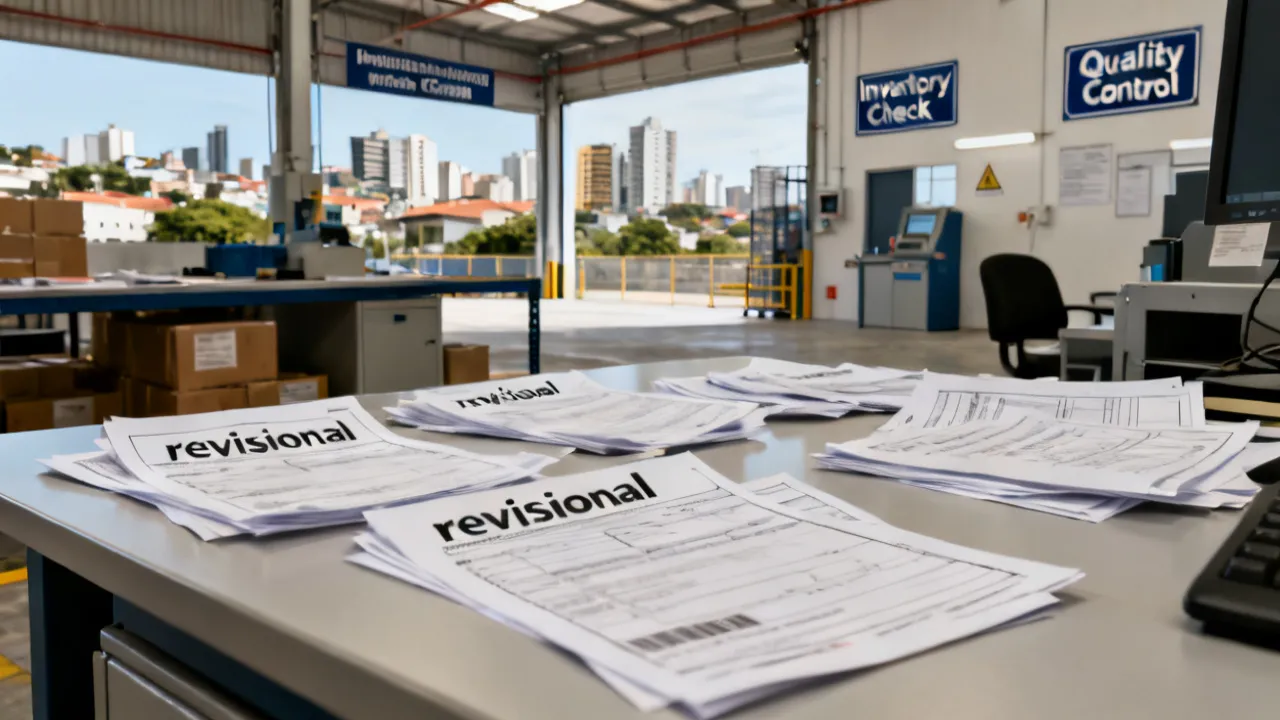
Revisional Porto Alegre: How to Choose Wisely
This guide explains how revisional services in “nearby” can be evaluated with a practical, evidence-focused approach. It provides objective background on “Revisional Porto Alegre” and related decision factors, including documentation, timelines, risk management, and supplier considerations, so you can compare options more confidently before committing.

Revisional services in “nearby”: what matters very before you proceed
If you’re considering revisional work connected to “Revisional Porto Alegre,” the priority is not simply finding a provider—it’s validating process quality, compliance readiness, and communication discipline early. In practice, the top outcomes come from careful supplier selection, clear scope definition, and documented requirements. This article offers an objective framework to help you evaluate revisional options competently, using an industry-style decision lens rather than assumptions.
Revisional work is frequently misunderstood as “just a second look.” In reality, it behaves like a controlled process: inputs arrive, a verification method is applied, findings are recorded, revisions are made under boundaries, and a final handover occurs. If any of those parts are weak, the project can become expensive, slow, or unclear. Therefore, before you proceed with any provider you should focus on how the supplier runs the workflow, how evidence is stored, and how accountability is assigned—especially for work conducted in “nearby” areas where responsiveness and documentation integrity strongly influence outcomes.
Background: what “Revisional Porto Alegre” typically implies (objective context)
“Revisional Porto Alegre” is commonly used as a phrase that signals a revisional or review-oriented process in the Porto Alegre area—often involving updated assessment, correction of prior records, or an additional layer of verification tied to a specific workflow. While the term can be applied across multiple sectors, the recurring theme is the same: a second look is requested to reduce uncertainty and align results with defined standards.
In “nearby,” stakeholders frequently balance speed, documentation integrity, and cost predictability. Locally, many decisions are shaped by how well suppliers manage paperwork, respond to requests, and maintain an auditable trail of changes—especially when timelines interact with operational constraints typical of urban life.
Because the phrase is broad, it can include everything from editorial or technical review to compliance-oriented re-checks and record reconciliation. Some providers may interpret it narrowly (“we check for errors”), while others may interpret it more comprehensively (“we verify against requirements and update records with traceability”). That difference alone is a reason to treat selection as a structured evaluation rather than a shopping exercise.
It also matters that “nearby” providers can appear attractive due to local responsiveness. However, local proximity does not automatically guarantee a disciplined workflow. The right provider for revisional services is typically the one that combines operational availability with methodical documentation practices and clear acceptance criteria.
Why selection criteria drive outcomes in revisional work
In an expert review, revisional quality rarely depends on one “magic” feature. Instead, it emerges from a system: intake clarity, competent verification, controlled revisions, and transparent handover. Below are the very critical selection elements to evaluate—ranked from highest impact to lowest.
To make this practical, think of revisional services as a chain. If any link breaks—unclear scope, missing version history, inconsistent communication, uncontrolled updates, or an ambiguous “done” definition—the chain can fail. The goal of evaluation is to reduce uncertainty before you sign.
Another important point: revisional projects often start after something already went wrong or after a requirement changed. That means the supplier must handle not only technical correction but also stakeholder expectations. For example, a supplier who cannot explain why a change is being made may create frustration even if their technical corrections are correct.
1) Scope clarity and change control
The first and very decisive factor is whether the supplier can translate your needs into a precise scope. For revisional initiatives, scope ambiguity often leads to rework and delays. A professional supplier should ask structured questions, define what “revisional” covers in your case, and specify what is out of scope.
From an industry perspective, scope clarity should include:
- Inputs required (documents, logs, references, prior versions)
- Expected outputs (updated deliverables, corrected records, verification reports)
- Revision boundaries (what changes will be made, and what won’t)
- Review cadence (milestones and internal approval steps)
To go beyond the basics, you should verify that the supplier has a “change control” concept. In revisional work, changes can occur for at least three reasons:
- Changes you request after the start (e.g., new requirements)
- Changes discovered during review (e.g., missing context revealed by checking)
- Changes due to input quality (e.g., prior materials are incomplete or inconsistent)
Even if the supplier is willing to handle these situations, they must define how the project changes are managed—what triggers an extra round, what triggers additional time, and how you approve those changes. Without a clear mechanism, you can end up in an endless cycle of “small adjustments” that become major cost and timeline drift.
Ask the provider to provide a simple scope statement and an “assumptions list.” A strong supplier will proactively highlight assumptions like:
- That prior versions are accurate enough to serve as baseline
- That you will provide specific requirements and references
- That the supplier will not interpret ambiguous items beyond a defined rule set
When you confirm scope boundaries upfront, you reduce the chances that “revisional” becomes a vague umbrella for whatever the project stakeholders later remember or want.
2) Documentation integrity and auditability
High-quality revisional work produces traceability. That means you should receive evidence of what was checked, what was found, and what was changed. If a supplier cannot articulate a method for maintaining version history or logging decisions, you should treat that as a risk signal.
Ask whether the process includes:
- Version tracking for each revision cycle
- Change logs explaining rationale for updates
- Documented review criteria or checklists
- Controlled distribution of final versions
It’s also useful to request examples (sanitized if necessary). For instance, ask for a redacted sample change log or a sample verification checklist. Even if they cannot share past materials, a supplier should still describe their documentation artifacts in concrete terms. Vague answers like “we document everything” should not satisfy an audit-minded buyer.
Auditability is particularly important when revisional work affects records that downstream teams rely on—such as compliance documentation, submissions, or operational logs. In those settings, traceability is not a luxury; it prevents disputes about:
- Whether an item was checked
- Whether a correction was authorized
- Whether an update was based on the correct requirement source
- Whether the final deliverable reflects the most current baseline
If you need defensibility, you should specify how the supplier will handle:
- Baseline snapshots: what version is treated as the starting point
- Approval records: who signs off on which changes
- Evidence retention: where evidence is stored and for how long
- Confidentiality: which internal teams can access materials
For “nearby” projects, documentation integrity can also reduce operational friction. When stakeholders ask later “why is this different,” a traceable process lowers the cost of answering.
3) Communication discipline and response reliability
Revisional projects are often iterative. Even when the technical work is strong, poor communication can cause failures—missed approvals, unclear ownership, or “silent” changes that aren’t reflected in the final handover.
Look for a supplier that can demonstrate:
- Clear points of contact
- Defined response times for questions
- Structured updates at each milestone
- Escalation pathways when issues arise
Communication discipline is not just friendliness or speed. It is structured coordination. A supplier should be able to explain:
- How they notify you when they are ready for input or review
- How they confirm receipt of materials
- How they manage requests for clarification (and how quickly)
- How they document decisions when you approve or decline changes
In practice, revisional work fails when stakeholders receive updates that are either too late or too incomplete. For example, you may approve a version without realizing a critical assumption changed. Therefore, ask for the supplier’s communication cadence and deliverable review structure. You want to know when you will see outputs, what level of detail you will receive, and how they will collect feedback.
Consider requiring:
- Milestone-based deliverables (not only “final”)
- A standard review form or checklist for approvals
- A documented escalation route if issues delay the plan
This is one of the most practical ways to ensure “nearby” remains a real advantage rather than a false promise. A provider can be geographically close but still be operationally unresponsive; disciplined communication removes that risk.
4) Supplier fit: expertise, capacity, and specialization
In “nearby,” suppliers vary widely in specialization. A revisional provider that has handled similar cases before is often more reliable than a generalist who offers broad services without depth.
To evaluate supplier fit objectively, consider:
- Relevant experience with revisional workflows
- Capacity to meet your timeline without shortcuts
- Quality assurance approach (internal checks, peer review, verification)
- Staffing transparency (who does the work, who reviews it)
Experience should be assessed both for technical competence and for process competence. Technical competence is “can they correct errors?” Process competence is “do they run a controlled workflow and maintain traceability?” The two do not always overlap.
When evaluating expertise, ask targeted questions such as:
- What is your typical revisional workflow from intake to delivery?
- How do you verify that changes are consistent with the defined requirements?
- Which roles are involved (drafting, verification, approval)?
- What is your approach when requirements conflict with the existing baseline?
Capacity is another risk factor. Some providers may accept your project quickly but lack realistic ability to complete review cycles within agreed milestones. In revisional work, “capacity” is often constrained by reviewer availability—especially if peer review is required. Therefore, ask how many active cases the provider is running and what internal checks they will perform per revision round.
Also consider specialization. A provider that is excellent at high-level editing may struggle with compliance reconciliation, and a provider that is strong at technical checking may struggle with stakeholder communication or document formatting expectations. Fit is not a badge; it is demonstrated in workflow design.
5) Cost structure and price predictability (how to avoid hidden risk)
Even without quoting specific numbers, a sound cost analysis should focus on how price is structured. Revisions often involve extra effort if scope expands or if initial data is incomplete. A supplier’s pricing model should therefore indicate what drives cost changes.
When evaluating price information, aim to understand:
- Whether pricing is fixed-fee, milestone-based, or hourly
- What qualifies as “included revisions” versus extra rounds
- How incomplete inputs affect schedule and cost
- Any administrative fees related to document handling
If a provider cannot explain pricing drivers clearly, you may face unpredictable cost outcomes during revisional cycles.
To improve predictability, request a pricing model that is tied to process steps rather than vague “revision rounds.” For example, the cost can be structured by:
- Intake and baseline analysis
- Verification/checking stage
- Correction/revision stage
- Final QA and handover
Then you can forecast how costs change when new inputs or new requirements appear. Without this structure, you may get a quote that appears fixed but later becomes flexible in the least favorable moment.
Also consider the “review participation” cost—meaning your internal time. A provider that requires frequent back-and-forth, unclear feedback forms, or repeated explanations can increase total project cost even if their direct invoice seems reasonable. Communication discipline and documentation clarity often reduce both direct and indirect costs.
Before signing, clarify:
- How additional revision rounds are priced
- Whether rework due to your input changes is charged or credited
- How long the supplier holds materials for recheck if new questions emerge
- Whether rush work triggers premium rates
This is especially important when “nearby” influences expectations of responsiveness. A supplier might say “we can do it quickly,” but if the cost triggers are not clear, “quick” can become expensive.
6) Risk management: quality controls before and after delivery
Expert suppliers treat risk management as part of the workflow. Instead of “fixing later,” they apply quality controls early to reduce downstream disputes.
Practical risk questions include:
- How are issues detected during the revisional phase?
- Is there a final verification step before delivery?
- What happens if findings change due to new input?
- Are there acceptance criteria that define “done”?
When you ask these questions, you’re checking for “built-in discipline.” A good revisional workflow anticipates failure points such as:
- Incorrect interpretation of requirements
- Missing documentation artifacts
- Untracked changes or overwritten versions
- Inconsistent formatting or version confusion
- Approval bottlenecks due to unclear stakeholder roles
Risk management is also about how the supplier handles uncertainty. For instance, if the baseline documents are inconsistent, a responsible supplier will flag the issue early and ask clarifying questions rather than guessing. Guessing creates rework and erodes trust.
Ask about QA controls such as:
- Checklists and review criteria
- Peer review or secondary verification steps
- Independent validation before final handover
- Version control and controlled release procedures
Finally, acceptance criteria should not be limited to “we think it’s correct.” They should define what you will check and what evidence will show completeness. This reduces conflict at delivery time.
Industry context: standards and evidence-based practice
Across professions that use revisional or review cycles—such as compliance, documentation review, and quality assurance—high performers typically align their workflow to recognized quality principles. For credible decision-making, you should seek suppliers that can show adherence to formal processes (e.g., internal QA checkpoints, standardized review templates, and controlled versioning).
For background on quality management approaches, ISO 9001 is widely referenced as a quality management framework in many industries. While applicability depends on the sector, it provides useful vocabulary for evaluating process maturity. For updates on standards and guidance, ISO documentation is published via the ISO official channels.
However, you should treat standards as context, not as a guarantee. A supplier may mention ISO-aligned language but still lack specific workflow discipline for your project type. Therefore, use standards as a benchmark for process maturity while verifying the supplier’s real workflow artifacts: what checklists they use, how they document evidence, and how they control revisions.
In practical decision terms, look for evidence-based practice, meaning:
- Decisions are supported by documented evidence rather than opinions
- Corrections are traceable to requirements or references
- Review outcomes are recorded in a consistent structure
- Lessons learned are incorporated into workflow to reduce repeat errors
This is important because revisional work often involves the challenge of “rechecking with context.” Evidence-based workflows reduce the risk of repeating the same misunderstanding.
Comparison guide and conditions: how to evaluate revisional suppliers in “nearby”
The table below rephrases practical supplementary information as a decision aid. Use it to compare providers consistently—without relying on marketing claims.
| Evaluation item | What to look for in “Revisional Porto Alegre” services | Conditions / requirements |
|---|---|---|
| Scope definition | Clear statement of what will be reviewed and what outputs you will receive | Supplier should confirm inputs, deliverables, and revision boundaries before starting |
| Documentation workflow | Traceable versioning and a change log that explains rationale | You should receive final and intermediate artifacts where relevant |
| Quality assurance | Defined verification steps (checklists, peer review, or internal approvals) | Acceptance criteria should be agreed in advance |
| Communication cadence | Scheduled updates at milestones and named points of contact | Response times and escalation steps should be stated in writing |
| Timeline realism | Plan that accounts for review cycles and input readiness | You must provide required materials promptly to avoid schedule drift |
| Price predictability | Transparent pricing model with drivers for changes | Clarify what counts as included revisions vs extra work |
| Data handling and confidentiality | Controlled access and respectful handling of sensitive information | Confirm confidentiality expectations and who can view documents internally |
| Handover quality | Final deliverables organized for easy review and future reference | You should be able to verify completeness without “missing pieces” |
| Issue resolution method | Defined approach when findings require clarification or additional inputs | Supplier must notify early and request approvals before proceeding |
| Requirements alignment | Clear mapping between deliverables and the standards/requirements you define | Supplier should demonstrate traceability to requirement sources |
Step-by-step guide: choosing a revisional supplier responsibly
- Define your objective: Write down what “success” looks like for the revision—accuracy, compliance alignment, corrected records, or other measurable outcomes.
- Collect baseline inputs: Gather all prior versions, references, and supporting materials. Missing inputs are one of the very common causes of revisional delays.
- Request a scope explanation: Ask how the supplier will interpret your request under the “Revisional Porto Alegre” framing you’re using. The top responses are specific, not vague.
- Ask about workflow mechanics: Determine whether there is version control, peer review, and a checklist-based quality step.
- Clarify revision rounds: Ensure you understand how many revision iterations are typically included and what triggers additional effort.
- Review communication structure: Confirm contact roles, milestone schedule, and escalation rules if blockers appear.
- Evaluate price logic: Compare total cost predictability, not only the headline figure. Ask how changes to inputs affect cost and timelines.
- Validate acceptance criteria: Define how you will judge “done” and how final delivery will be verified.
- Document the agreement: Capture scope, responsibilities, deliverables, timelines, and confidentiality expectations in writing.
Additional due diligence: questions that reveal real workflow maturity
Basic checklists help, but mature suppliers are often identifiable through how they respond to more specific questions. Consider asking the following. You can use them as an interview script when discussing “Revisional Porto Alegre” services:
- “What exactly happens during your intake stage?” Listen for steps like baseline review, requirements mapping, risk identification, and confirmation of missing inputs.
- “How do you prevent overwriting or confusing versions?” Strong suppliers describe version control procedures and controlled release of deliverables.
- “How do you decide whether a finding requires a correction or only a note?” You want a principled approach tied to acceptance criteria.
- “Can you describe how you log decisions when requirements are ambiguous?” This reveals evidence-based discipline.
- “How do you handle stakeholder disagreements?” Look for a mechanism: escalation, documented rationale, and final decision authority.
- “What is your typical timeline buffer for review cycles?” Mature suppliers avoid unrealistic schedules and plan for feedback timing.
- “Do you provide milestone artifacts, or only a final package?” Milestones reduce late surprises.
- “What’s your policy if you discover missing information?” You want early notification and an assumption/clarification process.
These questions often uncover whether the provider treats “revisional” as a craft activity or as a managed workflow. In competitive urban environments, the difference matters—because rework is expensive and time-sensitive.
Conditions to consider before signing (requirements checklist)
- Prerequisites: Your materials and context should be complete enough for a meaningful initial review.
- Timelines: Confirm that the supplier’s capacity can support milestone-based delivery rather than last-minute work.
- Ownership: Know who is responsible for approving revisions and who is responsible for implementing them.
- Output format: Deliverables should be provided in a format that suits your downstream processes.
- Confidentiality: Ensure sensitive information is handled with controlled access.
- Change control: Define how new requests or clarifications affect scope, cost, and schedule.
- Acceptance criteria: Agree how completeness and correctness will be verified at delivery.
- Evidence retention: Specify whether you receive and retain verification records and version history.
- Escalation rules: Ensure there is a defined path if blockers emerge during review.
Local context: decision-making style in “nearby”
In many Brazilian urban settings, including the cultural and administrative environment found “nearby,” practical trust often depends on responsiveness and clarity—how quickly a supplier answers, how consistently they follow up, and whether they can explain procedures in plain language. Residents around well-known city routines—commuter corridors, neighborhood services, and business centers—tend to value schedules that respect everyday constraints.
In practice, it’s common for buyers to compare suppliers not only by credentials but by whether communication is dependable and whether the supplier can manage documentation without confusion. The “revisional” label therefore becomes meaningful only when it is matched with operational discipline.
One reason this matters is that many revisional problems are not purely technical—they are coordination problems. For example, if your internal team cannot approve quickly, the supplier needs a plan to keep the process moving. A mature provider accounts for your review timing, not only their own work hours. When you choose a “nearby” supplier, you may be tempted to assume that they can always accelerate. A more reliable approach is to ask how they handle feedback delays and what buffer they plan for.
Also, local expectations can influence documentation style. Some stakeholders prefer concise reports; others need extensive evidence. A supplier that adapts the handover format to your downstream process reduces friction. Ask what the final package looks like and how easily it can be audited or re-used later.
Operational pitfalls to avoid when hiring revisional services
Even if a supplier checks most boxes, revisional engagements can still go wrong if you overlook practical pitfalls. Below are common failure points and how to prevent them.
Pitfall A: Treating revisional work as “one round only”
Many revisional tasks require iterative verification because real-world constraints emerge during review. If you assume the supplier will correct everything in one pass with no additional cycle, you can face surprise charges or delayed delivery. The fix is to require an upfront definition of revision rounds and the triggers for extra work.
Pitfall B: Incomplete baselines
Revisional work is only as strong as the baseline it starts with. Missing versions, unclear references, or incomplete supporting data can create confusion that the supplier must resolve. The fix is to require a baseline input checklist and confirm that the supplier will flag missing items early.
Pitfall C: Unclear authority for approvals
If the supplier cannot determine who has decision authority, feedback cycles become slow. A disciplined provider should ask early who approves changes. You can also specify in writing that decisions must come from designated roles, preventing “approval drift.”
Pitfall D: No acceptance criteria
When acceptance criteria are not defined, “done” becomes subjective. That increases the risk of disputes at delivery. The fix is to define acceptance criteria tied to verifiable items—such as required checklist completion, documented evidence of checks, and completeness requirements.
Pitfall E: Over-reliance on verbal assurances
Some providers offer confidence verbally but fail to operationalize it. The fix is to require written scope, written workflow description, and written change control rules. You should capture key agreements so the project stays stable even if roles change or deadlines tighten.
FAQs
1) What does “Revisional Porto Alegre” mean in practice?
It generally refers to a review-oriented or corrective process tied to the Porto Alegre area—where a prior outcome is assessed again, aligned with standards, and updated based on defined criteria. The exact scope depends on the sector and your written request.
2) How can I tell if a supplier has strong revisional quality controls?
Ask for the workflow: version tracking, review steps (including internal checks), acceptance criteria, and how issues are handled. A supplier with strong controls can explain these mechanics clearly and consistently.
3) Is milestone pricing better than fixed fees for revisional work?
Often, milestone-based pricing improves predictability when revisions involve iterative verification. Fixed fees can work if inputs are complete and scope boundaries are clearly defined. The top choice depends on how well scope and revision rounds are specified upfront.
4) What documents or inputs should I prepare before requesting a revision?
Provide prior versions, supporting references, and any requirements that define what “correct” means. If your inputs are incomplete, the timeline and cost may shift because the supplier must clarify assumptions.
5) What acceptance criteria should I request?
Define measurable outcomes—what must be verified, what changes will be reflected in the final deliverables, and how completeness will be confirmed. Acceptance criteria reduce disputes and prevent “alvery done” misunderstandings.
6) How do I compare two suppliers fairly?
Compare them against the same checklist: scope clarity, documentation integrity, quality assurance steps, communication cadence, risk management, and price predictability (including how changes affect cost).
7) Are there recognized standards that influence revisional workflows?
Many sectors align quality processes with recognized management frameworks such as ISO 9001. While standards aren’t a guarantee of results, they provide a useful benchmark for process maturity and auditability.
8) Where can I verify general guidance on quality management?
Reliable starting points include official publications by standards bodies (e.g., ISO) and industry associations that publish guidance relevant to process quality and risk management. Use these as contextual references while evaluating the supplier’s specific workflow.
9) Should I ask for examples of prior revisional deliverables?
Yes, when appropriate. You can request redacted samples of checklists, change logs, or handover packages. This helps confirm that the supplier’s documentation style matches your needs for transparency and reviewability.
10) What if my requirements change mid-project?
A well-managed revisional supplier will treat requirement changes through change control: it will clarify the scope impact, approve additional effort, and update timelines transparently. You should require this mechanism in the agreement.
11) Is it better to work with a specialized provider or a generalist?
If your revisional needs require deep domain knowledge or specialized compliance understanding, a specialized provider is typically a safer choice. A generalist can be fine for basic editorial reviews, but you should match supplier fit to the complexity and risk level of your project.
Conclusion: make “Revisional Porto Alegre” meaningful with process, not promises
“Revisional Porto Alegre” becomes a practical decision framework only when it is anchored to verifiable process quality: clear scope, controlled revisions, auditable documentation, disciplined communication, and transparent pricing logic. By following the step-by-step guide and comparison conditions above, you can reduce avoidable risk and select a revisional supplier in “nearby” with greater confidence.
Source note (for background standards and general quality guidance): ISO 9001 is published by ISO through official channels. Use ISO materials as general quality management context, and evaluate each supplier’s specific workflow for real-world applicability.
-

A Guide to Cost-Efficient Small Electric Cars for Seniors
-
Mastering Debt Consolidation: Boost Your Credit Score and Manage Interest Rates
-
Your Guide to Loans, Credit Checks, and Interest Rates
-
Affordable Independent Living: Finding the Right Senior Housing
-
Guide to Senior Living Apartments: Affordable and Comfortable Environments