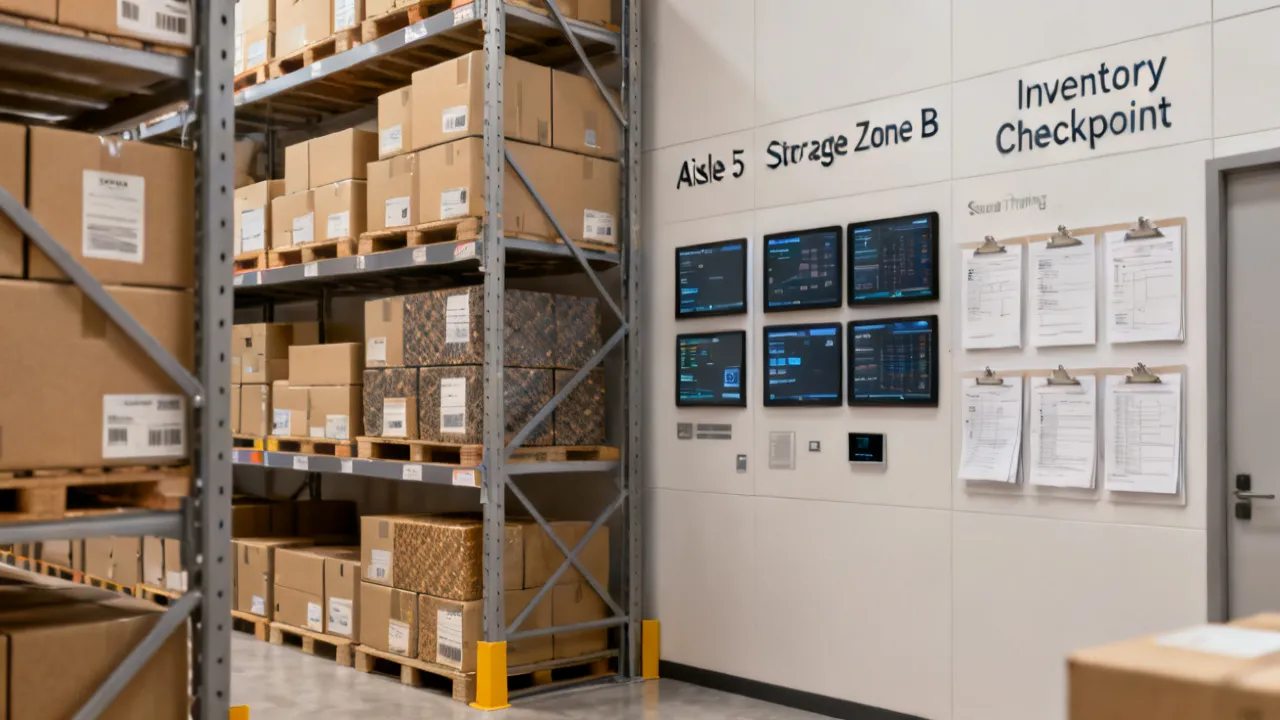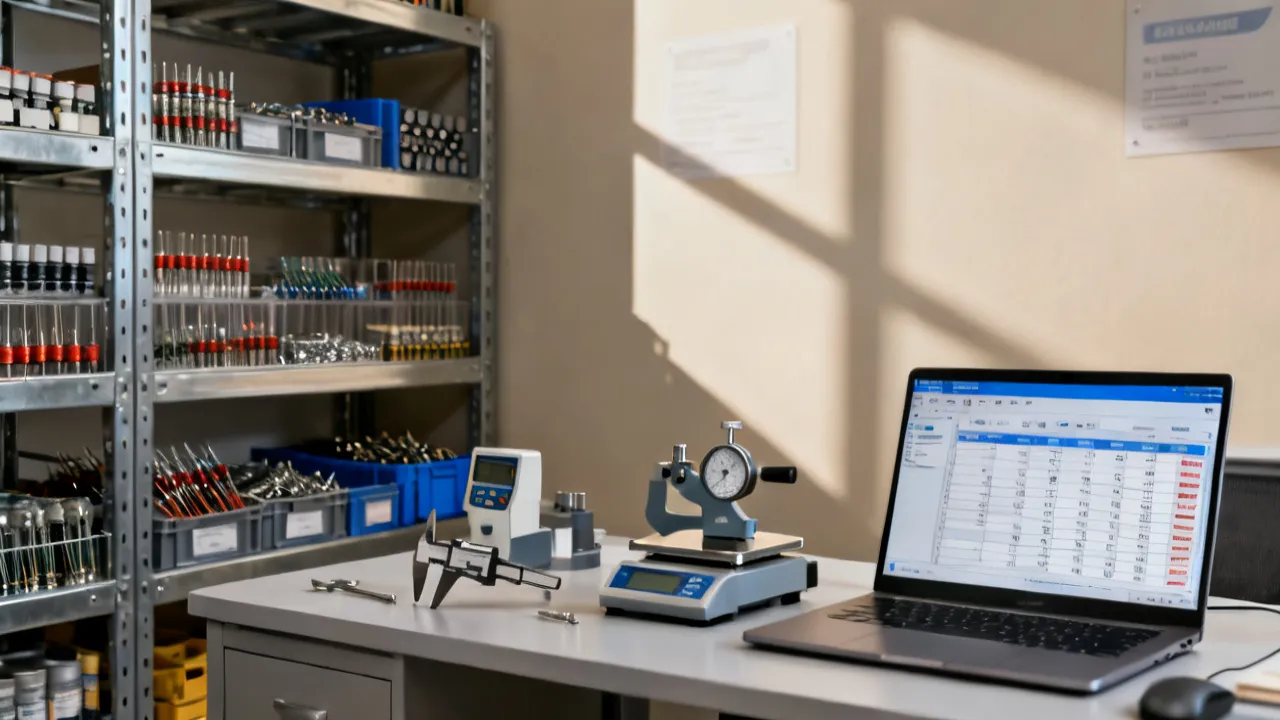
Understanding Code 01047554402 and Supplier Verification
This guide explains how to evaluate “01047554402” and related supplier information with an evidence-based approach. It provides objective background on how item codes, procurement records, and supplier traceability work in industrial sourcing, quality assurance, and compliance programs, helping buyers reduce risk and improve consistency across shipments and documentation.
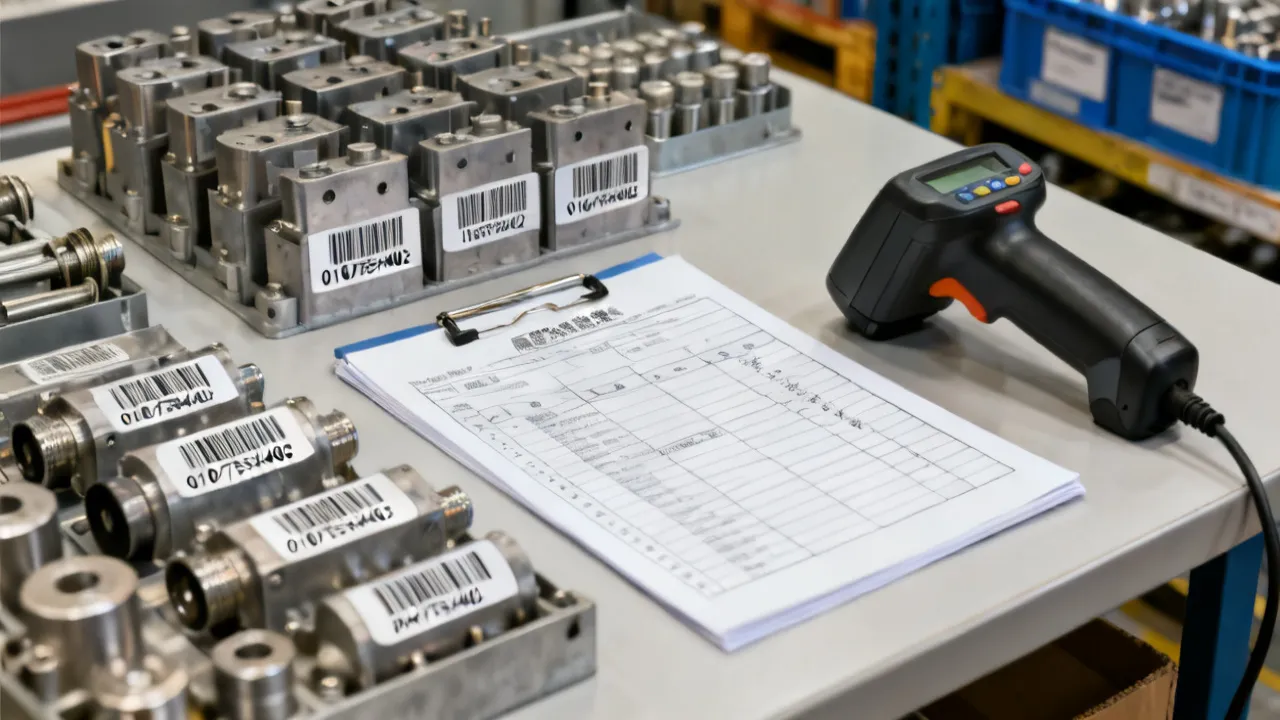
1) Key takeaway: verify item identity before you negotiate price or lead time
If your procurement file references 01047554402, treat that code as an identity anchor—the starting point for confirming the exact product specification, packaging configuration, and documentation set. In practical procurement work, the very expensive mistakes rarely come from “not knowing the product,” but from assuming a code maps to a single, unchanged item across vendors, revisions, or regions. A disciplined verification workflow helps you align what you ordered with what arrives, and with what your compliance team can audit.
In this article, “supplier details” are handled the way professional buyers and QA leads handle them: not as marketing claims, but as traceable evidence—purchase records, batch/lot capability, quality documentation, and traceability practices. Even when the purchasing interface shows a price or stock prompt, buyers should still validate that the referenced identifier—such as 01047554402—matches the correct technical revision and intended use.
To put it simply: negotiation should not begin as a guess. If the item identity is uncertain, the negotiation (price, lead time, delivery schedule, and even warranty terms) is negotiating on a moving target. Verifying identity early converts procurement from an administrative process into a risk-managed engineering-like discipline.
When teams skip this step, the consequences often appear later, at the most expensive moment—during receiving, inspection, line integration, or audits. At that point, resolving the discrepancy may require quarantining inventory, issuing nonconformance reports (NCRs), requesting rework, waiting for corrective documentation, or even replacing parts entirely. Those costs frequently outweigh any small savings gained by accepting an unverified quotation.
2) Why item codes like 01047554402 matter in real procurement
Item identifiers are used to control product variation at scale. In many supply chains, a code can represent more than a “part number.” It may correspond to a specific material grade, manufacturing revision, packaging format, or compliance category. If your team does not confirm the code-to-spec mapping, you may experience:
- Specification drift (the item looks similar but differs in critical tolerances or materials).
- Documentation mismatch (certificates, test reports, and declarations do not match the delivered item).
- Traceability gaps (batch/lot records cannot be linked to your order).
- Operational delays because QA must quarantine inventory pending clarification.
From an industry perspective, buyers increasingly rely on structured supplier assurance: standardized incoming inspection criteria, controlled document templates, and verifiable traceability. These practices are aligned with widely used quality management approaches such as ISO 9001 and risk-based supplier evaluation principles.
It helps to understand that item codes are not only “labels.” They function as a control key across multiple systems: engineering BOMs (bill of materials), ERP item masters, warehouse barcode systems, inspection routing tools, and compliance databases. When the key does not match, those systems “fail to agree” with each other. That disagreement is what your QA and receiving teams experience as defects—not necessarily because the physical item is wrong, but because the system-of-record cannot confirm it is the correct one.
Procurement professionals know this pattern well: a minor administrative mismatch can masquerade as a quality failure, trigger expensive rework, and consume stakeholder time. Therefore, item identifiers—like 01047554402—should be treated as an essential control variable from the first request for quotation through final acceptance.
3) How to interpret “supplier details” without over-trusting vendor claims
“Supplier details” can include company identity information, contact points, compliance statements, manufacturing locations, and quality capabilities. In professional sourcing, you should treat these elements as claims to verify, not guarantees. A robust evaluation typically checks whether the supplier can demonstrate:
- Process consistency (documented controls for production and change management).
- Quality outputs (test results, inspection records, certificate formats).
- Traceability (batch/lot linkage to your purchase order and delivered goods).
- Document accuracy (correct item identifiers on all paperwork).
This approach reduces friction with internal stakeholders: receiving teams can check the physical items against your specification; QA can validate documentation; and procurement can maintain auditable supplier performance records.
Over-trusting vendor claims often happens because supplier portals are designed to look “complete.” However, completeness is not the same as correctness. A supplier might upload a certificate template that looks polished, but the identifier inside it might not match your PO line item. Or the supplier might provide traceability documentation that covers the production run, but not the specific lot that was shipped to you. Or the supplier might have compliance capability, but the applicable certification scope may not include your exact product configuration.
To reduce these failure modes, “supplier details” should be evaluated in the same way you evaluate technical drawings: not by reading the surface but by validating that the document content corresponds to the referenced identifier and revision. This is why procurement teams often coordinate with QA and engineering early—so that supplier details are interpreted through the lens of evidence.
4) Procurement price awareness: where “cost” can become misleading
Price should be interpreted alongside what it includes. Buyers often compare a unit cost, but the total procurement cost can change depending on:
- Packaging and labeling (units per box, barcodes, labeling language, compliance marks).
- Minimum order quantity and inventory holding requirements.
- Lead time variability driven by production schedules or batch availability.
- Documentation package (certificates of conformity, material declarations, test reports).
- Warranty/returns policies and the feasibility of rectification.
Even when your procurement workflow highlights a numeric price, professional due diligence means you confirm that 01047554402 corresponds to the exact deliverable described in the quotation and contract documents. If a supplier uses a similar identifier for multiple revisions, the “cheaper” option can quickly become more expensive after rework or nonconformance handling.
A practical way to think about pricing is to treat every price line as part of a bundle: unit price + compliance package + packaging + logistics + revision certainty + documentation correctness + return/warranty feasibility. When identity is not confirmed, the “bundle” is incomplete, and hidden costs emerge later.
In other words, the buyer who negotiates solely on price without verifying identity is effectively negotiating on future rework probability. That rework probability is influenced by how reliably a supplier manages revision control and document discipline for the specific identifier in question.
5) Operational risk points tied to item identity
Below are common risk points linked to item codes and supplier documentation. These are not theoretical; they frequently appear in supplier audits, incident reports, and corrective action workflows.
5.1 Receiving and inspection
Receiving teams may check cartons, barcodes, and counts. However, inspection often needs more: visual conformity, dimensional checks, and verification that the physical item matches the technical data sheet referenced for 01047554402. If your spec references a certain version, ensure the delivered goods carry matching identifiers.
When the verification step fails, it can surface as “mystery defects.” For example, an item might arrive with labels that show a code, but that label might not correspond to the code in your PO. Alternatively, the item might physically match the general description, but the dimensional tolerances might reflect a later revision. Receiving can catch some of this with visual checks, but dimensional or functional conformity requires controlled test criteria and documented evidence—criteria that are only valid when the revision identity is correct.
It is also important to consider the packaging and labeling risk. For many regulated environments, barcodes and labels are not just convenience—they are part of traceability. If the packaging labeling uses a different internal identifier, your warehouse system might fail to map the goods to the correct receiving record. That mismatch can cascade into delayed line clearance, because production cannot confirm the material release is traceable to the correct specification.
5.2 Quality documentation alignment
Quality documentation should be internally consistent. For example, if the certificate of conformity references an item identifier that differs from 01047554402, QA may need to quarantine the shipment until reconciliation is completed. Professional buyers maintain a rule set: documents must match the order line items exactly, including revision indicators.
Documentation mismatch takes several forms:
- The certificate references a different identifier or revision than the PO.
- The certificate references the right identifier but the wrong shipment batch/lot.
- The certificate includes the right batch/lot but the wrong manufacturing date or facility (which can be relevant for compliance scope).
- The certificate format differs unexpectedly (e.g., missing fields required by your internal standard), even if the visible item name looks correct.
Each form of mismatch increases the probability that QA will either reject the shipment or hold it pending supplier clarification. That hold time is operational risk. It often causes missed production schedules and can result in expedited freight costs or substitute sourcing—both of which are expensive and can introduce additional identity risks.
5.3 Traceability and batch verification
Traceability becomes critical when you need to investigate a potential defect, process deviation, or compliance concern. Suppliers should be able to provide batch/lot linkage that ties back to your purchase order for the relevant period of production.
Traceability is not merely a “nice-to-have.” In many industries—especially those involving regulated materials, safety-critical components, pharmaceuticals, medical devices, aerospace, automotive, and any sector with strict compliance expectations—traceability is the mechanism that converts suspicion into evidence. When an issue occurs, traceability allows you to answer questions like:
- Which production run produced the lot?
- Which tests were performed for that run?
- Which deviations occurred, and were they contained?
- Which customers received inventory from that lot?
- What documentation exists to support the product’s conformance?
If 01047554402 is not correctly mapped, traceability might exist but not for the exact identifier you purchased. Or traceability might be incomplete: the supplier can provide batch records, but those records do not link to your PO line item. That is why buyers should ask for evidence that the lot/ batch record can be traced back to your order line and to the specific shipment.
6) Evidence-based supplier evaluation: what to ask for
To evaluate a supplier handling an identifier like 01047554402, use a practical question set. The goal is to gather evidence about process capability and traceability—not just to collect documents.
- Specification mapping: Which exact product specification corresponds to 01047554402 (including revision, material grade, and configuration)?
- Change control: If the product changes, how are buyers informed, and how is revision status tracked?
- Quality evidence: What inspection steps are performed before shipment, and what records are available for audit?
- Traceability: Can the supplier provide batch/lot information tied to your order line?
- Document discipline: Do certificates always show the exact identifier used in your purchase order?
This “evidence-first” approach aligns with common audit practices and quality systems frameworks. It also supports consistent results across multiple suppliers—particularly important when procurement needs continuity.
To make these questions more actionable, buyers often request answers in a form that can be audited later, such as:
- A sample certificate that specifically references 01047554402 and the relevant revision.
- A description of how the supplier controls document revisions (e.g., master document list, controlled templates, release approvals).
- An example traceability report showing how a shipped lot is linked to order numbers, production records, and testing results.
When the supplier can provide these examples, the buyer can assess not only whether documents exist, but whether the supplier’s processes reliably produce correct documents and traceability for the specific identifier.
7) Comparison table: verification approach, conditions, and outputs
Below is a compact comparison of how different verification levels function in day-to-day sourcing. It is designed to help you decide what to require depending on risk.
| Verification level | When to use it | Conditions / requirements | Typical outputs |
|---|---|---|---|
| Basic document check | Low criticality items or initial inquiries | Supplier provides a quotation and documentation set referencing 01047554402 consistently | Order alignment confirmation, obvious mismatches flagged |
| Specification and revision confirmation | Critical production use, regulated applications, or prior issues | Confirmed mapping of 01047554402 to a specific revision/configuration; controlled change notice process | Signed-off spec alignment, revision status recorded |
| Incoming inspection with documented criteria | When performance variation affects assembly, safety, or compliance | Defined acceptance criteria; inspection plan linked to the product specification | Inspection records, pass/fail outcomes, quarantine protocol readiness |
| Full traceability audit readiness | High risk supply categories, good contracts, or critical compliance needs | Batch/lot linkage to purchase order; ability to retrieve quality records tied to the shipment | Traceability report, audit-friendly evidence package |
One useful procurement insight is that “verification depth” should not be static. It should evolve with your risk perception and supplier performance history. For example:
- If a supplier has multiple recent discrepancies involving identifier mapping, you might increase verification depth even for items that were previously considered low risk.
- If a supplier demonstrates strong revision control and consistently delivers documentation that matches the PO, you may reduce verification steps for routine replenishments (while still maintaining core identity checks).
- If the item is used in a critical assembly, you might require incoming inspection even if the supplier is generally reliable.
This dynamic approach helps procurement maintain agility without sacrificing compliance and quality discipline.
8) Step-by-step guide: validating 01047554402 and supplier details before shipment
This practical workflow reflects how many operations teams run supplier assurance to minimize surprises at receiving and reduce downstream rework. Adjust the depth of verification to your risk profile.
- Capture the identifier exactly as shown: Record 01047554402 from the quotation, purchase order, and any technical attachments. Avoid “closest match” assumptions.
- Confirm specification mapping: Ask the supplier to state which specification, revision, and configuration correspond to 01047554402.
- Define acceptance criteria internally: QA should set what “conforming” means for your use case (visual, dimensional, documentation, and packaging requirements).
- Request a pre-shipment document set: Ensure all documents reference 01047554402 exactly and include the correct revision status.
- Plan receiving inspection: Receiving and QA should align on what to check on arrival (label matching, counts, identifiers, and required evidence).
- Verify traceability links: Confirm batch/lot information can be matched back to your purchase order and to the delivered goods.
- Record outcomes and exceptions: If there is any discrepancy, document it and trigger a corrective action workflow before accepting full shipments.
- Update your supplier performance record: Track accuracy of identifier mapping, documentation correctness, and on-time evidence delivery for future procurement decisions.
To make this workflow even more robust, consider adding a “trigger” mechanism based on what you find in pre-shipment documents. For instance:
- If the certificate references a different revision than the one linked to 01047554402, you can automatically require incoming inspection and supplier clarification before shipment release.
- If the packing list identifiers differ from the PO, you might hold the shipment until the labels can be corrected.
- If the traceability document lacks batch/lot linkage to your order, you can require the supplier to provide the missing linkage prior to shipping.
This approach turns your verification steps into an operational system rather than a collection of manual checks.
It is also wise to ensure that internal systems align. For example, if your ERP item master has a record for 01047554402 but does not include revision control fields, your receiving team might be forced to rely on spreadsheets or email threads to capture revision identity. That reliance is fragile. Better practice is to ensure your item master and your quality documentation logic can store and enforce the revision and configuration identity that you intend to purchase.
9) When problems occur: common causes and corrective thinking
If your team encounters mismatches tied to 01047554402, the root cause is often one of these categories:
- Revision handling failures: The supplier may have updated internal manufacturing specs but did not update document references.
- Packaging or labeling divergence: Barcodes and labels might reflect an internal code rather than the code on your PO.
- Administrative errors: Certificates may be generated from templates without validating the item identifier line-by-line.
- Supply chain substitution: The supplier might use a substitute item due to availability—sometimes without explicit customer approval.
Corrective action typically focuses on tightening the evidence chain: ensure that identifier mapping is contractually required, inspection criteria are explicit, and traceability records are delivered before acceptance.
However, corrective thinking should also address the organizational side—how information flows between procurement, QA, and the supplier. Many recurring discrepancies are not purely “supplier mistakes.” They can reflect unclear requirements, weak contract language, or ambiguous specification attachments.
Here are example corrective actions that procurement and quality teams often implement:
- Contractual clarity: Include explicit requirements that 01047554402 must match the shipped product and all documents, including revision identity.
- Document control requirements: Require that certificates and inspection reports reference the exact PO line item identifier and revision status.
- Labeling requirements: Require a specific barcode/label format that matches the receiving system mapping.
- Substitution rules: Define conditions under which substitution is allowed, and require written approval referencing the revised identifier.
- Corrective action turnaround times: Specify response times for documentation corrections and the process for quarantining and re-releasing shipments.
In robust quality systems, corrective action also includes root cause analysis. That means you distinguish between a one-time administrative error and a systemic revision-control failure. The evidence you collected—especially the mismatched identifiers on the documentation and the traceability gaps—becomes the foundation for deciding whether you need additional supplier development or a change in sourcing strategy.
From a procurement perspective, you also want to close the loop. The supplier performance record should reflect not only whether shipments arrived on time, but whether evidence packages matched the identity anchor 01047554402. Over time, this builds a supplier scorecard that reduces ambiguity and supports consistent sourcing decisions.
10) Industry standards and reliable sources (objective grounding)
Supplier verification and traceability are widely supported by established quality management and auditing principles. For background reading, the following are commonly referenced sources in professional quality systems:
- ISO 9001: Quality management systems requirements commonly used to structure supplier and internal process controls. (Source: International Organization for Standardization)
- ISO 19011: Guidance on auditing management systems, often used for supplier audits and evidence-based assessment. (Source: ISO)
- ISO 2859 series (sampling inspection where applicable): Sampling-based inspection concepts used in quality planning. (Source: ISO)
These references help frame the verification approach described above, emphasizing documented processes, risk-based controls, and audit-ready evidence—rather than relying on verbal assurances or informal documentation.
It is also helpful to recognize that standards do not “replace” your internal requirements. Standards guide how to build systems and audits; your procurement requirements specify what to verify for your actual deliverable and risk profile. The identity anchor concept—validating 01047554402 mapping and revision status—fits naturally within those systems-minded principles.
In practical terms, standards-backed verification often includes the following themes:
- Documented process: You have a defined method for verifying item identity, documentation, and traceability.
- Risk-based control: Verification depth adjusts based on criticality and past supplier performance.
- Competence and accountability: QA, receiving, and procurement roles are defined and coordinated.
- Records and auditability: Evidence is stored so that internal audits and customer audits can be supported.
By aligning your procurement workflow with these themes, you reduce the chance that identity verification is treated as “extra work” rather than a core quality control.
11) FAQs
FAQ 1: What does 01047554402 represent?
01047554402 is an item identifier as referenced in your procurement or supplier documentation. In practice, it should map to a specific product specification, revision, and configuration. The exact meaning depends on the supplier’s catalog structure and your technical attachments, so you should confirm the mapping explicitly.
Because item identifiers can be used differently across suppliers, the most reliable interpretation is the one that matches your engineering or technical specification attachments. If you do not have engineering attachments, you may need to request them from the supplier or from your internal engineering team. In some cases, the identifier may correspond to a family of items with multiple revisions; this is why revision and configuration confirmation is so important.
FAQ 2: How can I ensure the supplier is referencing the same item as my purchase order?
Use exact matching rules: require documents and labels to reference 01047554402 exactly (including any revision indicators). Then align receiving inspection checks to those references. If any document shows a different identifier, treat it as a discrepancy until resolved.
Additionally, it helps to cross-check multiple document types. A supplier might reference the correct identifier on the quotation but use a different identifier on the certificate or packing list. Your verification process should therefore include:
- PO line item identifier vs. quotation identifier
- PO line item identifier vs. packing list identifier
- PO line item identifier vs. certificate identifier
- PO line item identifier vs. physical label/barcode identifier
When all these align, you reduce the risk of hidden substitutions or revision drift.
FAQ 3: Do I always need traceability for every order line?
Not always. Traceability depth depends on risk and criticality. For high-impact items, good operational dependencies, or compliance-sensitive use cases, you should require batch/lot linkage and audit-ready quality records. For low-risk categories, you may start with basic document alignment and add depth as your supplier performance data matures.
Even in cases where full traceability may seem excessive, you should still consider minimum traceability expectations such as:
- Lot or batch reference on the packing list
- Batch/lot reference on the certificate
- Supplier ability to retrieve quality records for that batch/lot
This can often be accomplished without major operational cost, especially if it is aligned with the supplier’s existing quality system output.
FAQ 4: Can a supplier quote a price for 01047554402 but deliver a different revision?
It can happen if revision control and change management are weak. This is why verification should not end at quotation stage. Confirm revision mapping up front, require consistent identifier references across the document set, and perform receiving checks against defined criteria.
Common scenarios include internal supplier catalog updates, documentation templates not updated for revision identifiers, or confusion between “customer part number” and “supplier item number.” These issues can be prevented by requiring the supplier to explicitly connect 01047554402 to the revision they will ship, and by requiring that connection to appear in pre-shipment documentation.
FAQ 5: What should I do if the certificate of conformity does not match 01047554402?
Quarantine or segregate the shipment according to your internal process, then request correction. The supplier should provide an updated documentation set that matches the purchase order line item identifier, revision status, and shipment batch/lot. Record the incident and apply corrective action if the issue repeats.
To reduce delays, many organizations add a “documentation discrepancy workflow” with defined steps. For example:
- Document discrepancy logged with evidence (photos, scanned certificates, PO line references)
- Supplier notified with specific mismatch description (identifier, revision, batch/lot fields)
- Supplier provides corrected documents and evidence that the correction corresponds to the original shipment
- QA verifies the corrected package before releasing inventory
This structure prevents open-ended back-and-forth and clarifies accountability.
FAQ 6: Are supplier details enough to assess quality?
Supplier identity details alone are not sufficient. Quality assessment should rely on evidence: documented process controls, quality outputs, traceability capability, and audit readiness. Supplier details are the starting point for due diligence, not the conclusion.
Supplier details can tell you who the supplier is, where they operate, and what they claim to do. Evidence tells you what they actually do for the specific item identifier and revision. For procurement, the difference matters because quality risk is product-specific, even if supplier quality systems are general.
FAQ 7: How do I build a consistent verification process across multiple suppliers?
Standardize your requirements for identifier accuracy, document format, evidence delivery timing, and receiving inspection criteria. Then maintain a supplier performance scorecard focused on: correctness of 01047554402 mapping, documentation accuracy, traceability completeness, and delivery reliability. This supports consistent decisions without subjective interpretation.
To operationalize this across suppliers, buyers often create standardized templates for:
- Pre-shipment documentation request emails (with required fields)
- Receiving inspection checklists that reference the PO identifier and revision
- Nonconformance reporting forms aligned to the mismatch categories (revision drift, labeling divergence, certificate errors, batch/lot traceability gaps)
- Supplier response forms that require corrected document packages and evidence of process corrections
Consistency reduces internal confusion and makes supplier comparisons more fair.
12) Closing perspective: reliable procurement is a documentation-and-process discipline
When your procurement workflow involves 01047554402 and related supplier details, the differentiator between “smooth purchasing” and “avoidable disruption” is usually discipline: confirm the identifier’s mapping to the correct specification and revision, validate documentation alignment, and ensure traceability can be demonstrated for the shipment. By applying a risk-based verification approach, you protect operational continuity and make supplier comparisons fair, evidence-based, and repeatable.
Reliable procurement is ultimately the ability to answer three questions with evidence, at any time:
- What did we buy? (The item identity anchored to 01047554402, including revision and configuration.)
- What did we receive? (Physical labels, packaging identifiers, and the item that matches the PO line.)
- How do we prove it? (Certificates, inspection records, and traceability linking batch/lot records to your order line.)
If those questions are answerable quickly and consistently, procurement becomes resilient. Negotiations on price and lead time become meaningful because you are negotiating on the correct deliverable. And when issues occur, your team can respond quickly with corrective actions grounded in the evidence chain—minimizing disruptions, preventing recurrence, and sustaining supplier accountability.
-

A Guide to Cost-Efficient Small Electric Cars for Seniors
-
Mastering Debt Consolidation: Boost Your Credit Score and Manage Interest Rates
-
Your Guide to Loans, Credit Checks, and Interest Rates
-
Affordable Independent Living: Finding the Right Senior Housing
-
Guide to Senior Living Apartments: Affordable and Comfortable Environments