Understanding 21979368133 and Supplier Pricing Signals
This guide explains how to interpret the identifier 21979368133 alongside supplier and pricing signals for procurement decisions. Objectively, these elements usually relate to product identification, quoting workflows, and traceability in B2B sourcing. You’ll learn what each piece typically means, how to compare supplier terms consistently, and which requirements help reduce purchasing risk.
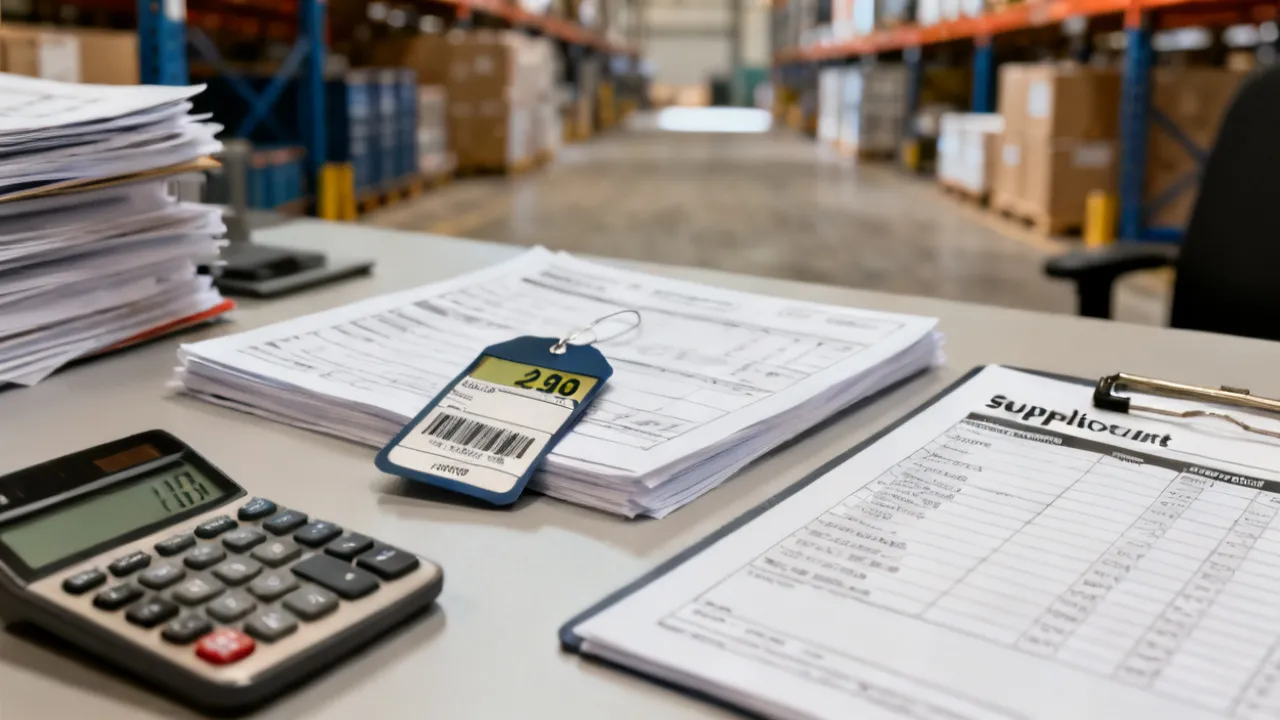
Procurement clarity: interpreting 21979368133 with supplier and price signals
When you see an identifier like 21979368133 used in sourcing documents, it typically functions as a traceability anchor—linking a quote, a specification set, or a product record to the corresponding supplier terms. This article offers an expert, objective way to read that identifier together with supplier details and any price information you receive, so you can compare offers consistently and minimize downstream surprises.
Because the provided keywords include veryly empty placeholders and the numeric token 21979368133, this guide focuses on how such identifiers are normally applied in procurement contexts, how suppliers package pricing, and which due-diligence steps are commonly required for trustworthy purchasing outcomes.
In real procurement workflows, the challenge is rarely “What is the number?” The challenge is: What exactly does this number designate within the supplier’s commercial and technical system, and what assumptions are embedded in their pricing? The same identifier format can appear across industries, but its functional meaning is determined by the supplier’s ERP, quoting engine, and configuration management practices. Therefore, the safest approach is disciplined interpretation: validate the mapping, normalize the economics, and convert uncertainty into explicit risk controls before you commit.
What 21979368133 usually represents in supplier communications
In practical procurement systems, a number like 21979368133 often appears as one or more of the following:
- Internal SKU / item record used by a supplier’s ERP (Enterprise Resource Planning) system to map the exact product configuration.
- Quote line reference that ties a specific line item to a specific price, lead time, and commercial condition.
- Traceability code used to connect batches, lots, certifications, or packaging variants to documentation.
- Document or request reference that links procurement tickets, RFQs, or compliance submissions to an item set.
Why it matters: If you treat the identifier as a “label” only, you may miss that it can indicate the exact version of a product or the exact commercial scope being quoted. In many industries—manufacturing, industrial components, packaging, and logistics—minor configuration differences can change unit price, lead time, packaging requirements, or acceptance criteria.
To make this concrete, imagine three offers that all seem to be for “the same” part because they share an item description, but only one supplier’s 21979368133 maps to the revision level your engineering team expects. The other offers might map to an alternate material grade, a different surface treatment, or a packaging format that affects downstream storage conditions. Procurement disputes frequently originate from this kind of mismatch: parties thought they were aligning to “the same thing,” but the underlying system mapping was different.
It’s also important to distinguish between identifiers that are purely administrative (used to route invoices or simplify quote generation) and identifiers that carry technical meaning (used to control production, batch traceability, and compliance documentation). The presence of the number near product/specification text, certificates, or line-item scopes is a strong signal that it may carry technical control weight.
How supplier pricing is typically structured (and where misunderstandings start)
Even when the numeric identifier is clear, pricing can still be ambiguous unless you map it to the commercial terms. Expert procurement teams commonly separate pricing into components such as:
- Unit price vs. extended price (unit × quantity), with attention to rounding rules.
- Basis of pricing (per piece, per set, per kilogram, per carton, per pallet, or per service hour).
- Inclusions (packaging, documentation, testing, certification, freight handling, or installation support).
- Exclusions (duties, taxes, third-party charges, special inspections, or expedited processing).
- Incoterms / shipping responsibility (who pays and who bears risk at each transfer point).
- Lead time assumptions (standard schedule vs. confirmed production slot).
- Validity period (how long the quoted price remains usable).
Practical implication: Two suppliers may quote the same unit cost while differing substantially in shipping scope, documentation completeness, or acceptance testing. Comparing offers without normalizing these elements can lead to incorrect “low price supplier” conclusions.
Procurement misunderstandings often start with one of the following patterns:
- “Comparable item” assumption: People assume that matching descriptions imply matching configurations. In reality, the identifier (like 21979368133) may point to a specific configuration revision, and description text may be insufficient to capture that revision.
- “Comparable price” assumption: People assume that the visible unit price is directly comparable, without checking the price basis (per unit delivered vs. ex-works, per batch vs. per piece, etc.).
- “Everything included” assumption: People assume that quotes include documentation, packaging, and standard testing. In many cases, suppliers quote lower unit prices but treat certificates, special tests, or additional labels as extras.
- “Lead time is guaranteed” assumption: People interpret stated lead time as a firm commitment. Often, it is an estimate contingent on production scheduling, raw material availability, or documentation lead time.
When these assumptions are not challenged, the purchasing decision can become fragile. The fragility shows up later as receiving delays, invoice disputes, rework, or compliance gaps—each of which has cost and operational consequences.
Recommended approach: validate identifier, then normalize commercial terms
If you are evaluating procurement options related to 21979368133, use a two-stage validation approach:
- Confirm the mapping: Ask the supplier (or check your internal record) to confirm what 21979368133 maps to—exact item specification, variant, and documentation set.
- Normalize pricing: Reduce each offer to the same commercial basis—same quantity breakpoints, same packaging format, same delivery terms, and same documentation/testing requirements.
This process is aligned with standard procurement governance: ensure apples-to-apples comparisons, then apply scoring or cost-of-ownership calculations where appropriate.
In practice, “validation” is not just a one-time question. It can include confirming whether the identifier is tied to:
- an engineering revision number (e.g., drawing revision, BOM version),
- a documentation bundle (e.g., test reports, certificates of conformity, material declarations),
- a packaging instruction set (e.g., moisture barrier, labeling format, anti-static requirements),
- a compliance category (e.g., regulatory certifications, controlled processes, traceability rules).
Normalization, likewise, is not just adjusting one variable. It is about aligning the “commercial physics” of the offer. This includes who arranges freight, how risk transfer is handled, how lead time is treated, and how the supplier measures the unit of deliverable (piece, lot, carton, or set). When these variables align, you can compare across suppliers with confidence.
Industry lens: why identifiers and pricing discipline reduce procurement risk
From an industry perspective, the combination of an item identifier (like 21979368133) and structured supplier pricing supports three core controls:
- Traceability: If a quality issue occurs, you need to link the purchased goods back to the correct specification and documentation set.
- Contract clarity: Your purchase order should reflect the same item record the supplier used for their quote and production planning.
- Cost predictability: Normalizing commercial terms helps you forecast total cost with fewer hidden charges.
These controls are common themes in widely used quality and procurement frameworks. For example, ISO-based quality management practice emphasizes documented traceability and consistent control of documented requirements. (For broader context, see ISO 9001 materials via your internal compliance team and public ISO resources.)
However, it’s worth recognizing that “traceability” is not only about audits. In many day-to-day scenarios, traceability affects the speed and success of corrective actions. If a defect is discovered, teams want to answer questions quickly:
- Which lot/batch is impacted?
- Which manufacturing process parameters were used?
- Which inspection and test results are associated with that batch?
- What documentation confirms conformity?
When the supplier’s identifier (like 21979368133) is properly mapped to those traceability records, you reduce reaction time. When it is not, investigation becomes slow and costly.
Similarly, cost discipline prevents “cost surprise” at invoice time. Procurement teams often see invoices that differ from what stakeholders assumed: line item quantities differ, surcharges apply, freight is added, or documentation fees are billed separately. Normalization and explicit contractual terms are the remedy.
Comparison table: supplementing supplier evaluation with conditions and requirements
The following table is a practical supplement. It outlines common “conditions/requirements” used by procurement professionals when comparing supplier offers involving an item identifier such as 21979368133. (No links are included, per your request.)
| Evaluation element | What to verify (conditions/requirements) | Why it matters for 21979368133-linked quotes |
|---|---|---|
| Identifier mapping | Supplier confirms what the number corresponds to (item/variant/document reference) | Prevents mismatches between your PO and the supplier’s quoted/produced configuration |
| Specification alignment | Meets your technical drawings/specs; confirm revision level | Pricing often changes with tolerances, materials, or configuration variants |
| Pricing inclusions | Document what is included in the stated unit price (testing, packaging, handling) | Avoids underestimating total cost when offers differ in scope |
| Logistics terms | Confirm delivery terms (responsibility for shipping and risk transfer) | Unit price comparison becomes misleading if delivery scope differs |
| Lead time validity | Confirm production slot and whether lead time is guaranteed or estimated | Lower price with uncertain delivery can raise total operational cost |
| Document completeness | Request certificates, inspection reports, and documentation set tied to the identifier | Traceability depends on documentation matching the correct item record |
| Acceptance criteria | Define inspection method, tolerances, and pass/fail conditions | Reduces disputes by ensuring both sides validate against the same requirements |
| Price validity window | Confirm how long the quoted price remains effective | Protects against re-quote after internal approval cycles |
To make the table more useful in real workflows, consider operationalizing each element into “evidence.” For example, identifier mapping should be supported by supplier confirmation text or a quote line breakdown screenshot; document completeness should be supported by a checklist of certificates tied to the identifier; acceptance criteria should be supported by a documented inspection plan or reference to your technical document.
When evidence is missing, treat it as a risk indicator. Procurement risk management does not require you to stop buying—often it simply requires you to adjust inspection intensity, payment terms, or contingency planning.
Step-by-step procurement guide for comparing supplier quotes
Below is a step-by-step method you can apply whenever you encounter an identifier like 21979368133 alongside supplier and pricing information. This sequence is designed to be auditable—useful for internal approvals and compliance checks.
Step 1: Capture the raw quote data
Collect the quote in its original form and record: the identifier reference (21979368133), item description, quantity, unit price, currency, delivery terms, lead time, and what the supplier explicitly includes/excludes. If the quote includes multiple line items, ensure the identifier is tied to the correct line, not just mentioned in a header.
In this step, create a “quote data sheet” even if you do it manually at first. The purpose is not bureaucracy; it is to reduce later errors when people compare versions of quotes, edits, and attachments.
Practical details to capture during Step 1:
- Quantity basis: Do they quote per unit, per carton, per pallet, per lot, or per service package?
- Price basis: Is the unit price inclusive of freight, packaging materials, or special documents?
- Currency and exchange assumptions: Are there currency conversion rules?
- Payment terms: Net terms, milestone billing, or prepayment requirements can change total cost via financing.
- Surcharges: Fuel surcharge, hazardous materials handling, or expedited production fees.
If 21979368133 appears in a quote, also note where it appears: next to the item line, inside a certificate section, or inside a part-number column. The location can signal whether it is technical (traceability) or administrative (reference).
Step 2: Verify the mapping between the identifier and the item spec
Ask the supplier to confirm what 21979368133 maps to: product/variant revision, relevant documentation set, and packaging type. If possible, request a document that shows the mapping (e.g., a line-item breakdown or a configuration reference inside their quotation system).
When you request mapping, structure your question so you obtain usable evidence. For example:
- “Please confirm that identifier 21979368133 corresponds to the following item configuration: [spec name], revision [X], and packaging type [Y].”
- “Please list which certificates/inspection documents are included with delivery for this identifier.”
- “If there are multiple variants associated with the same description, please confirm which variant is quoted under 21979368133.”
This avoids ambiguity and prevents a back-and-forth loop where suppliers respond with general product information that doesn’t actually lock the mapping.
Step 3: Normalize pricing basis across suppliers
Convert all offers to a comparable basis by aligning: quantity breaks, packaging formats, unit measurement, and delivery scope. If one supplier quotes “per unit delivered” and another quotes “per unit ex-works,” you must adjust before comparison or score them on total cost rather than unit price alone.
Normalization is often where procurement analyses become either rigorous or misleading. A rigorous normalization might include:
- Freight and delivery: Identify freight cost inclusion and convert to a common delivery basis (e.g., compare delivered-to-site total cost).
- Packaging: If one supplier includes protective packaging or labeling and the other does not, align by including/excluding packaging cost consistently.
- Documentation: Certificates, test reports, and compliance packs may have either inclusion or separate line charges.
- Inspection/QA: Some suppliers include standard inspection; others include only basic checks. If your receiving process requires more, reflect that.
- Quantity discounts: Ensure you compare at the same quantity tier or compute scaled totals at your exact quantity.
A common tool is to create a “normalized total cost” spreadsheet where each cost component is broken into categories. Even if you use an approximate approach, the transparency helps stakeholders trust the outcome.
Step 4: Apply total cost of ownership logic (when relevant)
For many procurement decisions, unit price is only one component of cost. Consider at least:
- Delivery and handling (freight, warehousing effort, receiving time)
- Quality assurance cost (inspection time, testing frequency, documentation review)
- Risk cost (likelihood of returns, rework, or delays)
Industry top practice emphasizes evaluating cost against expected performance and risk, especially for items that affect production uptime or compliance requirements.
To operationalize total cost of ownership, think in terms of cost categories that arise over the lifecycle of the purchase. For example:
- Inbound cost: Freight, customs/duties (if applicable), receiving labor, and storage conditions.
- Quality and compliance cost: Certificate verification, inspection sampling, additional testing, and document management.
- Operational cost: Impact on production scheduling, assembly labor, and downtime risk.
- Corrective cost: Rework, return shipping, credit/refund cycles, and disposal costs.
- Governance cost: Audit time, supplier communication overhead, and change control documentation.
When 21979368133 is traceability-related, risk cost can be significant. If you suspect the supplier may provide the wrong configuration or incomplete documents, you may need additional inspection—cost that doesn’t appear in the unit price.
Step 5: Confirm contract-ready terms before issuing a purchase order
Before you finalize the PO, ensure the order references the exact identifier (like 21979368133) and incorporates the confirmed commercial terms: inclusions, exclusions, acceptance criteria, and delivery conditions. If the supplier uses the identifier to drive production or documentation, a mismatched reference can cause operational friction even when the item description looks similar.
Contract readiness means your PO should contain enough specificity to avoid “interpretation gaps.” In particular, if the identifier is the mechanism used to tie to the correct configuration and documentation, then the PO should not rely solely on textual descriptions.
Common contract-ready elements to include (or cross-check) before PO issuance:
- Line item mapping to 21979368133
- Quantity and unit of measure
- Delivery terms (incoterms, delivery point)
- Lead time commitments and any conditions for changes
- Documentation deliverables and delivery timing (pre-shipment vs. with shipment vs. after receipt)
- Acceptance criteria and inspection responsibilities
- Price validity and re-quote triggers
- Change control process (how substitutions or revisions are handled)
If your procurement system supports it, lock revisions and attach the technical specification revision number alongside 21979368133. This reduces the risk of “silent updates” from the supplier.
Step 6: Validate lead time and document delivery schedule
Confirm whether lead time is tied to confirmed production capacity or subject to change. Also confirm when documentation is delivered (before shipment, at shipment, or after receipt). For many industries, missing or late documents create administrative backlog and can delay acceptance.
Lead time is not just about delivery date. It affects operational planning and compliance workflows. Teams often need documents in advance to perform internal review and approve acceptance. If documents arrive late, you might receive goods but cannot clear them for use.
Therefore, treat documentation timing as a separate schedule line in your evaluation. In some organizations, acceptance is contingent on document completeness. If so, late documents can create hold status even if the goods are physically present.
Ask suppliers for:
- Manufacturing start confirmation date (if applicable)
- Expected ship date and delivery date under the agreed terms
- Certificate and test report delivery timing
- Whether lead time is a firm commitment or estimate
- What triggers lead time changes (and how they notify you)
Where 21979368133 is involved, also ask whether the documentation delivered corresponds exactly to that identifier, particularly if there are multiple configuration variants.
Step 7: Keep an audit trail
Store your supplier comparisons, mapping confirmations, and normalized pricing calculations. In professional procurement governance, the audit trail supports internal compliance and helps resolve disputes if delivered goods do not match expectations.
An audit trail is not just for internal auditors. It also helps procurement and engineering teams manage supplier relationships. When disagreements occur, the fastest resolution is often to show the original mapping confirmation, the quote terms, and the acceptance criteria that were agreed.
At minimum, maintain:
- Supplier quote versions and amendment history
- Identifier mapping confirmation for 21979368133
- Normalization assumptions and calculation basis
- PO copy showing the identifier and commercial terms
- Supplier correspondence regarding changes, lead time, or documentation
- Receiving/inspection records tied to the PO and identifier
This evidence chain closes the loop from quote to receipt and ensures you can demonstrate that procurement was executed with defined controls.
Quality, compliance, and traceability considerations
When 21979368133 is used as an identifier, the procurement process should treat it as a traceability key. That means the item record you buy should be the same item record the supplier produced and documented. If the supplier cannot clearly connect the identifier to the item, that uncertainty should be reflected in risk assessment—particularly for regulated or safety-critical applications.
While specific compliance requirements vary by industry, common expectations include documented inspection, certifications where applicable, and consistent identification of batches or lots. Public guidance from recognized standard bodies (e.g., ISO quality management documentation and sector-specific authorities) generally emphasizes consistent documented controls over product conformity.
To expand on traceability in a practical procurement sense, consider how traceability typically manifests across the supply chain:
- Document traceability: certificates and test reports linked to the correct batch, serial numbers, or lots.
- Physical traceability: labeling on packaging or on the product indicating batch/lot identifiers.
- System traceability: ERP records matching PO line items and production records associated with the identifier.
If 21979368133 is part of system traceability, you want to ensure that the PO line references it and that the supplier’s fulfillment records and documents reference it as well. A common failure scenario is where the supplier uses one internal identifier for production but uses a different identifier for documents or invoices. This creates a “paper mismatch” problem that complicates compliance verification.
Quality and compliance due diligence often includes:
- Requesting certificate templates used by the supplier
- Verifying that certificate details match the PO (item, revision, lot/batch)
- Ensuring you have the correct inspection plan (incoming inspection vs. supplier pre-inspection)
- Checking that any regulatory certificates correspond to your applicable regulatory scope
Even if your immediate goal is procurement approval, it’s wise to think of downstream activities: receiving inspection, quality release, document control, and record retention. A procurement decision should be judged by how smoothly it supports those downstream steps.
Common pitfalls when working with numeric identifiers and price quotes
- Pitfall 1: Treating the identifier as optional—leading to PO lines that don’t match supplier records.
- Pitfall 2: Comparing unit price without normalizing delivery terms—unit costs look attractive until freight and responsibilities surface.
- Pitfall 3: Ignoring packaging/handling differences—affects receiving, storage, and sometimes allowable product conditions.
- Pitfall 4: Overlooking validity periods—price may expire before internal approvals conclude.
- Pitfall 5: Missing acceptance criteria—creates rework cycles and disputes after delivery.
These pitfalls are predictable, so procurement teams can design preventive measures.
For example:
- To avoid treating the identifier as optional, require PO line items to include the identifier field where available, and verify it in a PO checklist step.
- To avoid unit price comparison errors, calculate normalized “delivered and documented” cost rather than using raw unit price alone.
- To avoid packaging/handling issues, request packaging specifications and confirm labeling requirements, especially if receiving conditions affect quality.
- To avoid validity period issues, implement an internal approval SLA so that approvals occur within the quote validity window or request updated quotes before approval.
- To avoid missing acceptance criteria, ensure the PO references inspection requirements or attach an inspection checklist that defines sampling, tolerances, and acceptance thresholds.
Another subtle pitfall is assuming the supplier’s identifier will remain constant through amendments. In some quoting systems, suppliers may revise configurations and update identifiers. If you don’t re-validate the mapping after amendments, you can unintentionally purchase a different configuration than you intended.
Similarly, “quote alignment” across different versions can be misleading. A supplier might revise the quoted configuration under the same line item description while keeping the identifier field constant—or vice versa. The mapping confirmation step should therefore be tied to the exact quote version and amendment date.
Deepening the analysis: interpreting supplier “signals” around 21979368133
Beyond the explicit number, procurement teams often rely on surrounding signals in the quote. These signals can indicate whether 21979368133 is being used as a technical traceability anchor or as an administrative reference.
Consider the following quote elements as signals:
- Presence of revision language (e.g., “revision,” “rev,” “BOM version” near 21979368133) suggests technical specificity.
- Presence of certificate/test references (e.g., “MTC,” “CoC,” “test report,” “inspection certificate”) near the identifier suggests traceability relevance.
- Packaging instructions near the identifier (e.g., “pack size,” “labeling,” “anti-static,” “moisture barrier”) suggests fulfillment-level specificity.
- Lead time phrasing near the identifier (e.g., “lead time for this configuration”) suggests the supplier’s scheduling is configuration-specific.
- Multiple identical descriptions with different identifiers suggests variants; do not assume they are interchangeable.
Procurement professionals also watch for “price language” signals:
- “Unit price includes/excludes” clauses clarify scope; if they exclude documentation or testing, total cost may be higher than expected.
- “Factory order” or “production slot confirmation” language indicates lead time commitment quality.
- “Subject to change” clauses indicate volatility; you need to understand whether changes are within your acceptance.
When you treat 21979368133 as a traceability anchor, you also treat these signals as part of the mapping and risk assessment. The goal is to reduce ambiguity and make the contract enforceable in practice.
Designing an evaluation template for internal use
Organizations often benefit from a standardized evaluation template so that different buyers and analysts interpret supplier quotes consistently. Below is a structured template concept you can apply to quotes involving 21979368133.
1) Identifier validation section
- Supplier name and quote number
- Identifier: 21979368133
- Supplier mapping confirmation: item/variant revision
- Supplier documentation bundle: list included certificates/tests
- Packaging type and labeling requirements
- Any notes on substitution or configuration change policy
2) Commercial normalization section
- Quantity and unit of measure
- Unit price and extended price breakdown
- Price basis: ex-works, delivered, or other terms
- Freight and handling inclusion/exclusion
- Documentation and inspection inclusions/exclusions
- Incoterms/delivery point definition
- Payment terms and financing considerations
- Price validity window
3) Operational and risk section
- Lead time: estimated vs. guaranteed; change conditions
- Document delivery schedule: pre-shipment vs. post-receipt
- Acceptance criteria: defined tolerances and inspection method
- Potential risk drivers (documentation mismatch risk, lead time uncertainty, variant confusion)
- Mitigation actions (extra receiving inspection, hold payments, expedited document flow)
4) Decision section
- Total normalized cost (delivered and documented)
- Quality/compliance confidence score
- Supplier performance considerations (if available)
- Final recommendation and any conditional approvals
- Audit trail references (links to confirmations and calculations)
This template ensures that when 21979368133 appears, the analysis does not degrade into a subjective “best guess.” Instead, it becomes a repeatable governance process.
Examples of normalization scenarios (without assuming your industry)
Even without your specific industry details, you can anticipate common normalization mismatches that occur when comparing suppliers’ quotes. The following scenarios illustrate how 21979368133 can remain constant while commercial terms differ.
Scenario A: Same identifier, different packaging inclusions
Supplier A quotes a low unit price for the item under 21979368133, but their quote explicitly excludes special protective packaging and labeling required for your receiving environment. Supplier B includes the packaging in their unit price. If you compare only unit price, Supplier A appears cheaper, but Supplier B may be cheaper after adding packaging charges to Supplier A.
Normalization step: Convert both offers to “total delivered with packaging and labeling included” by either adding excluded charges or subtracting included charges to align scope.
Scenario B: Same identifier, different documentation completeness
Supplier A includes a certificate of conformity but excludes inspection/test reports. Supplier B includes the full test report package. If your acceptance process requires those reports, Supplier A may force additional inspections or create documentation compliance risk.
Normalization step: Align the documentation deliverables. Either require Supplier A to include the same documentation or add the cost/time you will incur to compensate.
Scenario C: Same identifier, different delivery terms
Supplier A’s price is ex-works and Supplier B’s is delivered-to-site. Even if 21979368133 maps to the same configuration, delivery responsibilities change the total cost and risk transfer. If you compare unit price alone, the result will likely favor the ex-works supplier unfairly.
Normalization step: Standardize delivery terms and compute total cost delivered to the agreed receipt point.
Scenario D: Same identifier, different lead time commitments
Supplier A provides an estimated lead time but indicates “subject to production scheduling.” Supplier B provides a firm production slot with a commitment date. If your downstream schedule is sensitive, Supplier B might be the safer and more cost-effective option.
Normalization step: Evaluate risk-adjusted total cost. If delays incur downtime or rescheduling costs, incorporate those into cost-of-ownership.
FAQs
FAQ 1: What does 21979368133 typically mean?
Very often, 21979368133 functions as a reference used in supplier systems—such as a SKU, quote-line identifier, or traceability code. The exact meaning depends on the supplier’s internal structure, so you should confirm the mapping to the product/specification revision.
FAQ 2: How should I compare two suppliers if their prices differ but the identifier matches?
First, confirm that both suppliers map 21979368133 to the same item configuration. Then normalize pricing by aligning delivery terms, packaging, inclusions/exclusions, quantity breaks, and documentation/testing scope. If unit prices are not directly comparable, compare total cost under the same conditions.
FAQ 3: Is it enough to rely on the item description without checking the identifier?
No. Descriptions can be summarized or vary in wording while still referring to different configurations or revisions. The identifier (like 21979368133) is often the more reliable link to the exact supplier record, so it should be validated before PO issuance.
FAQ 4: What documentation should be requested alongside supplier pricing?
Request the documentation set that supports traceability and acceptance: certificates or compliance documents where applicable, inspection/test reports, and any packaging or handling specifications tied to the quoted identifier. The goal is to ensure you can validate conformity upon receipt.
FAQ 5: How do I reduce the chance of receiving the wrong configuration tied to 21979368133?
Use a checklist: (1) confirm identifier-to-spec mapping, (2) ensure PO line references the identifier, (3) align revisions and acceptance criteria, and (4) specify the packaging and documentation requirements. Then retain an audit trail of confirmations and comparisons.
FAQ 6: Can lead time uncertainty outweigh a lower price?
Yes. In operational purchasing, delays can increase costs through overtime, rescheduling, expedited logistics, or production downtime. A lower quoted price may be more expensive in total cost if lead time and risk are not comparable across suppliers.
FAQ 7: What conditions should be explicitly written before approving a supplier?
At minimum: inclusions/exclusions, delivery terms, lead time conditions, document delivery schedule, acceptance criteria, and the validity window for pricing tied to the identifier such as 21979368133. These conditions reduce disputes and rework.
Closing perspective: using disciplined interpretation for better buying decisions
Numbers like 21979368133 become valuable when they anchor the entire procurement workflow—quote interpretation, specification validation, PO line matching, and traceability at receipt. By pairing identifier validation with normalized pricing and clearly documented requirements, you can compare supplier offers more objectively and make decisions that stand up to audit and operational reality.
If you share the missing keyword text (the empty placeholders) and any actual price and supplier details you have, I can tailor this guide into a more concrete, industry-specific evaluation template while keeping the same objective and professional tone.
More broadly, the discipline you apply here—validate the mapping, normalize the commercial terms, and document the evidence—remains consistent across industries. Whether the identifier refers to a SKU, a quote line reference, or a traceability code, your procurement outcome improves when you treat the identifier as a system control rather than a superficial label. That mindset reduces avoidable risk, strengthens contract enforceability, and helps your organization deliver products and services with fewer surprises at the moment of receiving, inspection, and release.
-

A Guide to Cost-Efficient Small Electric Cars for Seniors
-
Mastering Debt Consolidation: Boost Your Credit Score and Manage Interest Rates
-
Your Guide to Loans, Credit Checks, and Interest Rates
-
Affordable Independent Living: Finding the Right Senior Housing
-
Guide to Senior Living Apartments: Affordable and Comfortable Environments