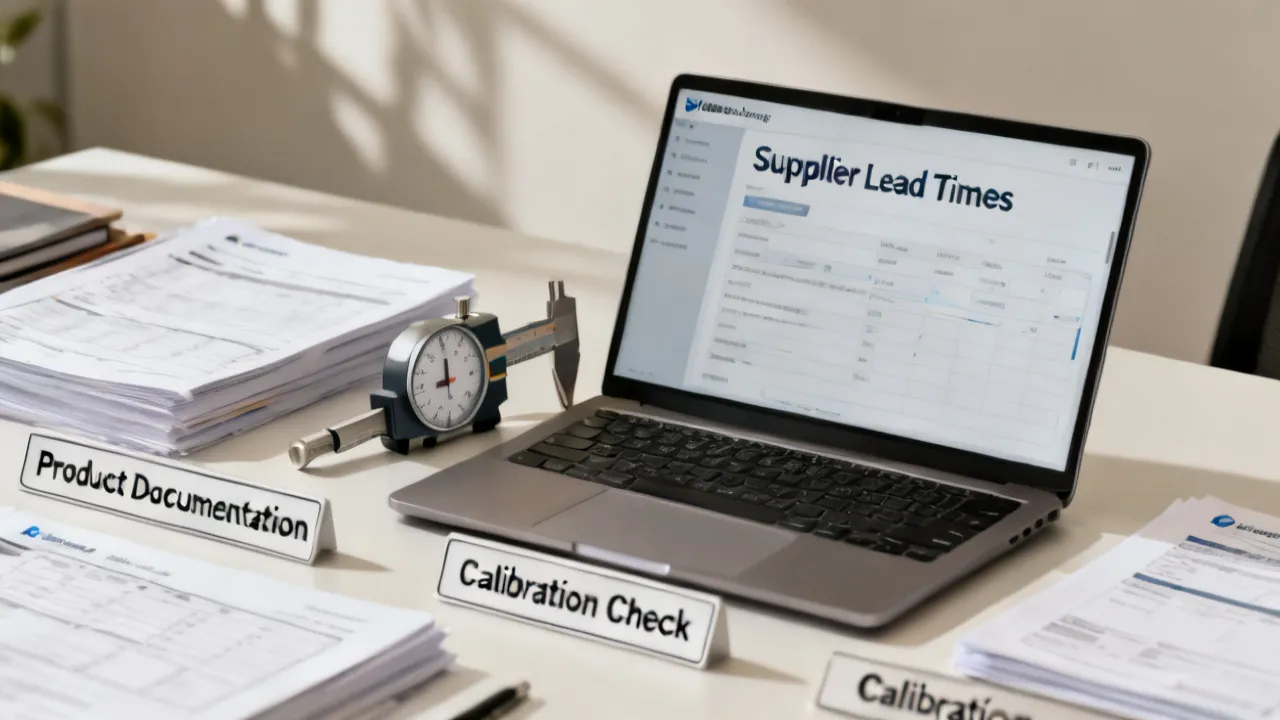
Understanding aewsd: Supplier Options and Practical Considerations
This guide explains aewsd with an objective lens, focusing on how to evaluate suppliers, compare typical pricing factors, and apply clear requirements before purchase. Background context covers how keyword-driven procurement decisions work across industries, why documentation matters, and which due-diligence steps reduce risk when selecting a vendor.

Why “aewsd” matters for vendor decisions
When you encounter the term aewsd, the practical question is rarely “what does it mean in isolation?”—it’s instead about how it affects supplier selection, pricing expectations, and compliance needs. This article presents an expert, objective framework for interpreting aewsd alongside related keywords you provided, then translating that into decision criteria you can use immediately. You’ll also find a supplemental section with a comparison-style table, sourcing notes, and a step-by-step guide with conditions/requirements.
Because you included no explicit city or country in the keywords, no location-specific substitution is required. If your later research ties aewsd to a particular market, you can adapt the method below to local regulatory and logistics realities.
Throughout, the emphasis is on a key procurement principle: a keyword in a quote is never the contract. The contract becomes the agreed scope, deliverables, standards, acceptance criteria, documentation pack, and the evidence required to demonstrate conformity. aewsd typically acts as a pointer toward those details—sometimes accurately, sometimes loosely—and the vendor decision depends on whether you can force clarity before ordering.
Core background: how keyword-driven procurement typically works
In many industries, terms like aewsd function as shorthand for categories, standards, product specifications, internal project codes, vendor-referenced capabilities, or bundle descriptors used in catalogs and RFQs. They may appear in procurement documents, supplier catalogs, or technical briefs. In practice, stakeholders use these terms to align expectations across procurement, engineering, quality assurance, and finance.
However, keyword-driven procurement introduces a failure mode that is well known in procurement operations: terminology mismatch. The buyer believes the term refers to a precise spec; the supplier believes the term refers to a broader or different spec; quality assumes the documentation pack includes certain certificates; finance assumes warranties cover certain periods; logistics assumes packaging and shipment methods meet certain standards. When these assumptions are inconsistent, disputes arise later when acceptance tests fail, documents are missing, or delivery conditions were not what the buyer expected.
From an industry standpoint, the very reliable approach is to treat aewsd as a filter rather than a complete definition. Your due diligence should confirm what the term encompasses (materials, performance targets, certifications, lead times, packaging requirements, or documentation deliverables). That verification is what ultimately controls pricing and reduces the likelihood of scope gaps.
It can also help to understand why suppliers use abbreviations or bundled terms. Suppliers may use shorthand to avoid re-typing long specification text, to align with internal workflows, or to communicate a “typical package” of documentation and handling that they have done repeatedly. These benefits are real, but the buyer still needs traceability to the exact requirements for the current purchase.
In other words, the supplier’s use of aewsd is not wrong—it’s just insufficient unless you confirm how the supplier’s internal mapping to aewsd matches your project’s scope and acceptance thresholds.
Pricing considerations: what usually drives cost variations
Even when two suppliers both reference aewsd, pricing can diverge due to differences in scope, documentation level, testing, and fulfillment conditions. Typical cost drivers include:
- Specification alignment: Whether the supplier’s interpretation of aewsd matches your exact technical requirements (including tolerances, environmental constraints, and performance criteria).
- Quality assurance and testing: Calibration records, inspection reports, in-process checks, acceptance testing, and third-party verification can add measurable cost.
- Packaging and handling: Some use cases require traceable packaging, moisture barriers, temperature controls, tamper-evident labeling, or specialized protective materials. Even if the physical product is identical, the “around it” requirements can be significant.
- Lead time and logistics: Expedite options, freight terms, warehousing practices, seasonal capacity constraints, and shipping method selection vary by supplier. One supplier might quote standard lead time; another may include contingency capacity or expedite coverage.
- Documentation completeness: Certificates of conformity, compliance statements, traceability packs, material test reports, and audit-ready documentation often influence total price. If one supplier provides a complete documentation pack and another provides only a minimal set, costs can differ even for the same material/product.
- Order structure: Pricing differs for prototypes vs. recurring production volumes. Tooling or setup fees may apply in one case and not the other. Similarly, sample lots and production lots may follow different testing or inspection paths.
- Nonconformance handling: Some contracts price in documented rework processes, disposition review workflows, and documented corrective actions for nonconforming items. If the scope includes more rigorous handling, cost will reflect it.
- Risk allocation and warranty coverage: If aewsd implies specific warranty conditions, returns handling, or performance guarantees, those commercial terms affect pricing.
- Regulatory or customer audit readiness: In regulated environments, providing audit evidence, maintaining records retention, and supporting customer surveys can add overhead.
To avoid unverified claims, treat any “price” you see in supplier messages as a starting point pending confirmation of scope, tolerances, deliverables, and incoterms. A professional procurement practice records quoted assumptions explicitly so comparisons remain fair.
A useful technique is to require the supplier to quote against a structured “deliverables list” derived from your scope. For example, if your scope requires “conformity certificate + lot traceability + acceptance report,” the supplier should price that package explicitly or confirm inclusion. If the supplier cannot map aewsd to those deliverables, the buyer should treat the quote as incomplete or provisional.
Another pricing pitfall is hidden variation in “services.” Sometimes aewsd is used to imply installation, integration support, calibration, or lifecycle documentation. If those are included for one supplier but excluded for another, the buyer may select the lower price but later discover a gap that must be filled at additional cost.
Supplier evaluation: what to ask beyond the keyword
When evaluating suppliers for aewsd, the very important step is to force clarity. An expert vendor evaluation typically separates answers into: (1) capability, (2) quality systems, (3) logistics reliability, and (4) contractual terms. Below are practical questions you can use in RFQs and supplier onboarding.
- Definition check: “What does ‘aewsd’ cover in your documentation? Please provide the mapping to your internal specs or standards.”
- Evidence request: “Can you share test reports, inspection samples, or a prior project reference aligned to the same ‘aewsd’ scope?”
- Process transparency: “Describe your production or service workflow from intake to final acceptance, including inspection and documentation steps.”
- Quality requirements: “Which inspection stages apply, and what are the acceptance criteria? Please specify what is verified at each stage.”
- Traceability: “How do you maintain traceability across batch/lot or job numbers? What fields are recorded and how long are records retained?”
- Change control: “If your method changes, how do you notify and document it? Are there predefined change thresholds requiring buyer approval?”
- Lead-time assumptions: “What dates are guaranteed, and what conditions can shift delivery? Include any dependencies (materials availability, third-party testing schedules, seasonal constraints).”
- Commercial terms: “What do you include in the quote (materials, documentation, shipping, installation support, warranties)?”
- Documentation format: “Do you deliver documentation electronically, and in what format (PDF, native files, EDI, portal upload)? Can you deliver audit-ready copies upon request?”
- Acceptance method: “How do you propose to perform acceptance tests? If buyer witness is required, how do you schedule it and what are the interfaces/logistics?”
- Nonconformance response: “If an item fails acceptance, what is your corrective action approach? How do you handle containment, root cause analysis, and customer communication timelines?”
- Subcontracting: “Do you use subcontractors for any part of the scope related to aewsd? If yes, who are they and how do you control their quality and documentation?”
These questions protect both sides: suppliers can quote accurately, and buyers can avoid paying for assumptions they did not authorize. They also reduce “negotiation friction,” because the supplier can respond with a structured mapping rather than ambiguous narrative.
In many cases, suppliers will have a “standard documentation package” for aewsd. Your evaluation should confirm that the package meets your audit and acceptance needs, not merely that the supplier has a package.
Operational readiness: aligning requirements with procurement reality
In many organizations, the gap between a keyword term and an actual purchase is where risk accumulates. If your requirements are vague, suppliers may interpret aewsd differently. That can lead to mismatched deliverables—such as a different material grade, incomplete compliance documentation, or alternate performance targets.
To minimize that risk, document your requirements in a structured way. Even a simple requirements matrix—format type, performance threshold, required documentation, acceptance procedure, and delivery constraints—often produces better quoting and clearer negotiations.
To make this more actionable, consider expanding your requirements from “what you want” into “how it proves conformity.” For example:
- Instead of: “Must comply with aewsd.”
- Use: “Provide conformity certificate referencing the exact standard revision; include test results for defined characteristics; include lot traceability fields; and provide acceptance report signed by authorized QA personnel.”
This shift matters because many disputes are not about whether the product worked—they’re about whether the evidence and documentation were delivered on time and in the required form.
Operational readiness also includes internal alignment. Engineering, quality, procurement, and finance should agree on:
- Which deliverables are required for acceptance (not just “nice to have”).
- Who will review and sign acceptance.
- What documentation is mandatory vs. optional.
- How changes to scope will be approved.
- What constitutes a delivery “on time” under the incoterms/shipping method used.
When those internal alignments are missing, even a strong vendor will struggle because the buyer might not articulate the right evidence requirements or acceptance thresholds.
Comparison supplement (no links): table, source, steps, conditions
Below is a supplemental section designed to help you compare supplier approaches consistently. It’s written as a supplement to the main narrative, not as a replacement for direct supplier verification.
| Category to compare | What to look for when “aewsd” is referenced | Why it affects outcomes |
|---|---|---|
| Scope definition | Supplier clearly maps aewsd to internal specs, standards, or deliverable lists; includes revision numbers if applicable. | Prevents mismatch and reduces rework costs. |
| Documentation pack | Inspection reports, certificates, traceability records, and acceptance criteria are provided or available with clear delivery timelines and formats. | Supports audits and verification; reduces acceptance delays. |
| Pricing breakdown | Quote includes assumptions (materials/services, testing, logistics, handling, warranties, admin fees) and identifies what is included vs. excluded. | Enables apples-to-apples comparison; avoids hidden costs. |
| Quality system maturity | Supplier describes quality controls, calibration routines, nonconformance handling, document control, and record retention. | Improves reliability and consistency across lots. |
| Logistics & lead time | Delivery timeline includes contingencies, packaging requirements, and shipment handling method; indicates how delays are handled contractually. | Reduces schedule risk and damage risk. |
| Change management | Formal process for notification, approvals, and documentation if scope or method changes; includes change thresholds. | Protects continuity and prevents “quiet changes.” |
| Acceptance test method | Supplier proposes a defined acceptance method (witness, review of documents, or physical tests) aligned to your criteria. | Prevents disputes during acceptance; clarifies responsibilities. |
| Traceability & identifiers | Supplied items and documents share consistent identifiers (lot/job numbers, serial numbers, batch IDs) and traceability fields match your system needs. | Supports downstream verification and recalls. |
| Subcontractor controls | Supplier states whether subcontractors are used and how their quality and documentation are controlled. | Reduces risk from uncontrolled third parties. |
| Remedies & warranty terms | Quote specifies warranties, remedies for defects/nonconformance, returns/replace process, and timelines. | Controls total cost of ownership and risk exposure. |
Even though aewsd may appear as a single term, supplier performance will still vary across these categories. Your job is to convert the term into a structured comparison that mirrors your acceptance and compliance requirements.
Source notes (what informs the framework)
This guide uses widely accepted procurement and quality-management practices reflected in standard supplier evaluation approaches and industry documentation norms. For readers who want foundational references, consider:
- ISO-style quality management principles (commonly used across industries for traceability, corrective action, and documentation control). Even when you don’t demand certification, the behaviors those principles encourage—clear documentation control, traceability, CAPA processes—tend to correlate with lower defect and lower dispute rates.
- Procurement top practices that emphasize RFQ clarity, scope mapping, acceptance criteria, and documented assumptions. In practice, procurement excellence often looks like turning ambiguous requirements into measurable deliverables.
- Audit-ready documentation expectations commonly required in regulated or customer-audited supply chains. Audits frequently focus on evidence: “show that it was done,” “show that it was controlled,” and “show that it met the requirement.”
If you tell me your industry context (e.g., manufacturing, IT services, logistics, compliance documentation, or procurement consulting), I can tailor the evaluation checklist to the very relevant standards and document types without relying on speculative claims.
To keep the framework robust even without industry specifics, it’s designed to be “evidence-driven” rather than “label-driven.” That means you don’t need to guess the meaning of aewsd—you only need to confirm the supplier’s evidence and deliverables that correspond to your acceptance criteria.
Step-by-step guide to evaluate an “aewsd” supplier
Use the steps below as a repeatable workflow. The goal is to move from keyword recognition to verified purchase readiness. If you repeat this workflow consistently, you’ll also create internal historical data that improves future decisions—especially if vendors reuse the same terminology in future quotes.
- Clarify the interpretation of “aewsd”: Ask for the supplier’s definition, mapping to specs, and the exact deliverables included. Request a “scope mapping sheet” that ties each deliverable to a portion of your requirements.
- Write acceptance criteria: Define measurable acceptance tests or review gates (what “passing” means). Acceptance criteria should cover both product/service performance and the documentation evidence required. Include thresholds and measurement methods if relevant.
- Request evidence: Collect prior test reports or sample documentation that demonstrates the supplier can meet your scope. Evidence can include previous batch records, conformity certificates, calibration records, or structured test summaries.
- Normalize pricing assumptions: Ask for a breakdown of what’s included (materials/services, documentation, testing, shipping, handling, warranty terms). If the supplier includes optional items, ask them to clearly separate optional vs. required deliverables.
- Validate process controls: Review inspection points, calibration, traceability method, and nonconformance response process. Ensure the supplier can explain how they prevent nonconformance from reaching you.
- Assess logistics realism: Confirm lead-time assumptions, packaging, shipping method, and how delays are handled contractually. Include whether packaging is designed for the shipping mode and environmental conditions.
- Negotiate terms using the checklist: Align contract language with acceptance, delivery obligations, change control, and documentation deliverables. The contract should reference the same deliverable list you used in the RFQ and quote normalization.
- Perform a pre-approval review: Before final ordering, verify that the supplier’s quote and your requirements matrix match line-by-line. Pay special attention to documentation deliverables and to how acceptance is defined.
- Confirm after delivery: Ensure documentation, traceability records, and acceptance artifacts match what was quoted and agreed. If discrepancies appear, trigger your nonconformance and documentation correction process immediately rather than waiting for downstream problems.
It’s also helpful to create a “keyword risk score” internally. For example, vendors that provide clear scope mapping and evidence earn a lower risk rating; vendors that only reference aewsd without a mapping sheet earn a higher risk rating. You can then decide whether to proceed, request additional clarification, or exclude the vendor from award consideration.
Additionally, track how often the supplier requires clarification. If the supplier’s first response is ambiguous about aewsd scope, that can signal inconsistent internal controls—something that might affect production reliability and acceptance ease.
Conditions and requirements (to keep evaluations credible)
To ensure you don’t compare suppliers on incomplete information, adopt these conditions:
- Always request written scope mapping for aewsd, rather than relying on terminology alone. A supplier should be able to say, “Here is what aewsd means for this quote,” and list the deliverables.
- Require documented assumptions in quotes so “price” can be meaningfully compared. If a supplier’s quote depends on “typical documentation” rather than “required documentation,” clarify what is typical.
- Set acceptance criteria upfront and require suppliers to reference them in their response. If acceptance criteria are not included, the supplier can later claim they were outside scope.
- Obtain traceability and quality evidence before final acceptance, not after issues arise. Late evidence is a common root cause of acceptance delays.
- Use consistent evaluation scoring across suppliers to reduce bias. Consistency matters: define scoring weights for scope clarity, evidence strength, documentation readiness, logistics realism, and contractual completeness.
- Require revision control: If standards, drawings, or requirements evolve, ensure the quote and mapping sheet reference the correct revision level.
- Separate required vs optional deliverables: The buyer should not assume optional deliverables are included in the base price.
- Document deviations: If any requirement is not met, require a formal deviation request/response process (who approves, what evidence supports the deviation).
When these conditions are followed, the evaluation becomes auditable and defensible. If procurement decisions are later questioned, you can show that the decision was based on explicit evidence and documented assumptions rather than on ambiguous keyword interpretation.
Expanded practical guidance: turning “aewsd” into a requirements artifact
Many procurement teams struggle with the transition from a keyword in a supplier quote to a usable internal artifact. To address this, you can convert the aewsd conversation into three documents: a scope map, a deliverables matrix, and an acceptance evidence checklist. These artifacts reduce ambiguity and increase consistency in vendor decisions.
1) Scope map (Supplier-to-buyer mapping)
Request the supplier to map their internal interpretation of aewsd to your exact requirement lines. This mapping should ideally include:
- Your requirement line item (as written in your RFQ/spec).
- Supplier’s mapped standard/spec reference (including revision identifiers).
- What materials or processes they use to achieve compliance.
- Which documentation they will provide as evidence.
- Any deviations or exclusions.
The goal is not for the supplier to educate you; the goal is for the supplier to confirm what they will deliver.
2) Deliverables matrix (What you will actually receive)
The deliverables matrix clarifies “what comes in the box and what comes in the paperwork.” It should split deliverables into:
- Physical deliverables: items, quantities, packaging, labeling, shipment configuration, special handling instructions.
- Documentation deliverables: certificates, inspection reports, conformity statements, test results, traceability records, acceptance report, warranty terms, manuals or usage instructions.
- Operational deliverables: installation support, training, configuration assistance, technical support tickets, commissioning checklists (if applicable).
Even in service-based contexts, deliverables exist: documentation of configuration, audit trails, change logs, and evidence of completion all matter. The same keyword pitfall occurs in services, where “aewsd” might indicate a standard workflow but not the proof artifacts you require for acceptance.
3) Acceptance evidence checklist (How you will confirm “pass”)
Acceptance evidence should be explicit about:
- Which documents prove conformity (and whether documents are required at delivery or can be provided later).
- Which tests are performed by the supplier, which are witnessed by you, and which are internal-only.
- What measurement instruments are used (calibration requirements if relevant).
- What threshold values define pass/fail.
- How acceptance status is recorded and who signs it.
When your procurement process uses these artifacts, aewsd becomes less important as a “mystery term” and more important as an index into a structured scope and evidence plan.
Additional depth: risk management in vendor selection linked to “aewsd”
Keyword ambiguity is a risk multiplier. Even when technical risk appears controlled, documentation and acceptance risk can lead to delays and additional costs. A robust vendor evaluation should explicitly treat those risks as part of the decision—not as an afterthought.
Consider the following risk categories and how aewsd-related ambiguity can affect them:
- Conformance risk: If the supplier’s interpretation of aewsd differs from your spec, items may fail technical acceptance or underperform in use.
- Evidence risk: Even if the items are good, missing or incomplete documentation can block acceptance or create audit failures.
- Timeline risk: Lead time might be quoted assuming certain documentation readiness, third-party testing schedules, or internal production sequencing. If aewsd implies additional tests that the supplier doesn’t plan for, schedule slips occur.
- Commercial risk: If warranty, remedies, or change control terms are not defined precisely, it can become expensive to resolve nonconformance.
- Operational risk: Logistics packaging and handling requirements can affect damage rates. If aewsd is interpreted differently, damage and rework become likely.
To manage these risks, you can incorporate them into scoring weights. For instance, a supplier that provides comprehensive evidence and a clear mapping sheet for aewsd can score higher even if their price is slightly higher, because their expected total cost of poor acceptance outcomes is lower.
In mature procurement organizations, they often model total cost of ownership (TCO) rather than selecting based on unit price alone. While you may not have time to build a full quantitative model, you can still use a qualitative TCO approach: include documentation effort costs, acceptance delay costs, potential rework costs, and risk of audit failures.
Expert-level procurement techniques: de-risking ambiguous terms
Procurement experts rely on techniques that turn ambiguous terminology into enforceable requirements. Below are additional techniques you can apply when aewsd is present.
1) Require “deliverables-first” quoting
Ask suppliers to quote by deliverable rather than by keyword label. For example: “Quote includes (a) conformity certificate, (b) inspection report, (c) traceability pack, (d) packaging and labeling, (e) acceptance test evidence.” Then ask them to state that aewsd mapping corresponds to those deliverables. This forces the supplier to reconcile their internal meaning with your external deliverables.
2) Contractual alignment clause
Add a clause or statement in the RFQ that says the keyword is not controlling if it conflicts with your written requirements. Even if you can’t change contract language easily, you can make the procurement documentation explicit: “In the event of conflict, the buyer’s written specification and deliverables matrix control.” This protects you when suppliers interpret aewsd too broadly.
3) Evidence timing rules
Different buyers require documents at different times. For example, traceability records might be required at delivery, while some test reports might be provided later if they are produced after internal processing. Create explicit rules:
- Documents required prior to acceptance.
- Documents required at delivery.
- Documents allowed after delivery (with deadlines).
This reduces disputes and prevents “document chasing” that often burns internal resources.
4) Deviation process
If a supplier cannot meet something implied by aewsd, require a formal deviation request with:
- Deviation description (what is different).
- Impact assessment (technical and documentary).
- Proposed mitigation (additional testing, substitute documentation, alternate packaging, etc.).
- Approval method and approval owner.
This converts ambiguous failure to perform into a controlled exception rather than an uncontrolled surprise.
5) Witness and inspection scheduling
Where witness is required, require the supplier to propose scheduling windows and explain how they will support audits or inspections. Ambiguity about aewsd can cause the supplier to treat witness as optional; your decision should lock in witness requirements if they apply.
Practical examples (how disputes typically happen and how to prevent them)
Because aewsd is a placeholder-like term in the prompt, the examples below use generic scenarios that reflect common procurement patterns. The goal is to show how evidence and scope mapping prevent ambiguity-driven disputes.
Example 1: Documentation completeness mismatch
A supplier quotes “aewsd-compliant” and provides a conformity certificate but not the traceability pack. The buyer later discovers that the traceability pack is required for internal systems and audits. If aewsd was treated as the definitive meaning rather than verifying the deliverables, the supplier claims it was not included.
Prevention approach: Use a deliverables matrix and require the supplier to list each document in the quote assumptions. Tie acceptance to evidence: “Acceptance is contingent on receipt of traceability pack.”
Example 2: Quality test scope difference
Two suppliers reference aewsd but one performs acceptance testing while the other provides only basic inspection. The buyer’s specification expects acceptance testing results for specific characteristics. Technically the items may pass, but without evidence the acceptance is blocked.
Prevention approach: Require an acceptance evidence checklist and ask suppliers to confirm which tests generate which reports. In the RFQ, make the tests and reports explicit rather than implied by aewsd.
Example 3: Packaging and handling interpretation
A supplier quotes aewsd but uses standard packaging. Another supplier uses moisture barriers and shock protection aligned with your handling constraints. The final items are damaged during transit for the first supplier’s shipment, and the supplier disputes responsibility due to unclear packaging expectations.
Prevention approach: Require packaging and labeling specifications as deliverables, not as assumptions. Include packaging design requirements and shipping method constraints in the deliverables matrix. Also align incoterms and responsibilities.
Example 4: Change control misunderstanding
During production, a supplier changes a material variant but believes aewsd remains “equivalent.” The buyer needed notification and approval because the change affects compliance evidence and verification. The supplier did not notify, leading to acceptance failure.
Prevention approach: Require a change control process tied to your acceptance criteria. Include thresholds and require prior approval for changes that affect documentation or technical performance.
FAQs
What does “aewsd” typically refer to?
In many practical settings, aewsd functions as a shorthand reference used by suppliers or procurement teams. Its exact meaning depends on the industry and the supplier’s internal mapping. The very reliable method is to request the supplier’s definition and scope translation in writing.
In other words, assume it’s an index, not a definition. Your evaluation should always translate it into deliverables and evidence relevant to your acceptance criteria.
How should I compare supplier pricing when “aewsd” is used in quotes?
Compare based on normalized scope: included documentation, testing level, packaging/handling, lead-time assumptions, warranty terms, and any setup or admin fees. Treat the keyword as the starting point, not the final definition of what you’re buying.
Where possible, request a quote breakdown that references each deliverable line. If a supplier cannot provide that breakdown, it can signal a higher risk of ambiguity and post-award scope disputes.
What documents should I request for supplier onboarding?
Commonly requested materials include quality and inspection evidence, acceptance criteria, traceability documentation, and a clear list of deliverables associated with aewsd. The exact set depends on whether your use case is regulated, audited, or customer-specified.
For regulated or audit-heavy environments, also request document control procedures and record retention timelines. For high-risk operational contexts, request nonconformance and corrective action processes.
Can two suppliers referencing “aewsd” deliver different outcomes?
Yes. Even if both use the same term, their internal interpretation, tolerance levels, testing approach, and documentation completeness can differ. That’s why scope mapping and acceptance criteria are crucial.
The keyword alone cannot guarantee outcomes; the evidence and the agreed acceptance gates do.
Are there industry standards I can reference?
Many organizations align supplier evaluation with broadly recognized quality-management principles (e.g., traceability, corrective action, and document control). However, the top “standard” for your purchase is the one that directly matches your acceptance criteria and documentation requirements—so confirm relevance with your stakeholders.
Even when you reference standards, you still need suppliers to show how aewsd maps to those standards in practice and what evidence they provide.
What are common reasons for quote rework or disputes?
Typical causes include mismatched scope interpretation, missing documentation deliverables, unclear acceptance tests, unrecorded assumptions in pricing, and delivery terms that weren’t aligned before ordering.
Many disputes also originate from a lack of clarity about evidence timing—when documents must be delivered and in what format.
Expert perspective: turning keywords into defensible procurement decisions
From an industry expert standpoint, the sophistication of procurement isn’t measured by how quickly you recognize a keyword; it’s measured by how rigorously you verify what the keyword implies. With aewsd, your competitive advantage comes from disciplined validation: require scope mapping, demand evidence tied to acceptance criteria, and ensure pricing reflects the same deliverables across suppliers.
When those elements are in place, you typically see fewer late-stage surprises, smoother handoffs between quality and procurement, and more reliable delivery outcomes. Even if suppliers quote different figures, your organization can still choose objectively—based on confirmed requirements, not on ambiguity.
It’s also worth noting that a defensible decision process protects not just the project but the organization. If procurement actions are later reviewed, the key question becomes: “Did you compare suppliers based on explicit requirements and documented evidence?” A good answer doesn’t rely on interpreting aewsd correctly in isolation; it relies on converting aewsd into evidence and deliverables you can verify.
How to proceed if you want a tighter fit
If you share the industry context for aewsd (for example, whether it relates to a product category, service capability, documentation standard, internal project code, or compliance evidence bundle), I can refine the evaluation framework with more targeted criteria and sample requirement wording—while keeping the same objective, non-speculative approach.
In the meantime, the most effective next step is simple: create a requirements matrix that lists (1) deliverables, (2) evidence, (3) acceptance criteria, and (4) evidence timing. Then ask each supplier to map aewsd directly to that matrix.
If you do that consistently, vendor selection becomes less about interpreting a mysterious term and more about managing a measurable scope—exactly what procurement is meant to do.
-

A Guide to Cost-Efficient Small Electric Cars for Seniors
-
Mastering Debt Consolidation: Boost Your Credit Score and Manage Interest Rates
-
Your Guide to Loans, Credit Checks, and Interest Rates
-
Affordable Independent Living: Finding the Right Senior Housing
-
Guide to Senior Living Apartments: Affordable and Comfortable Environments