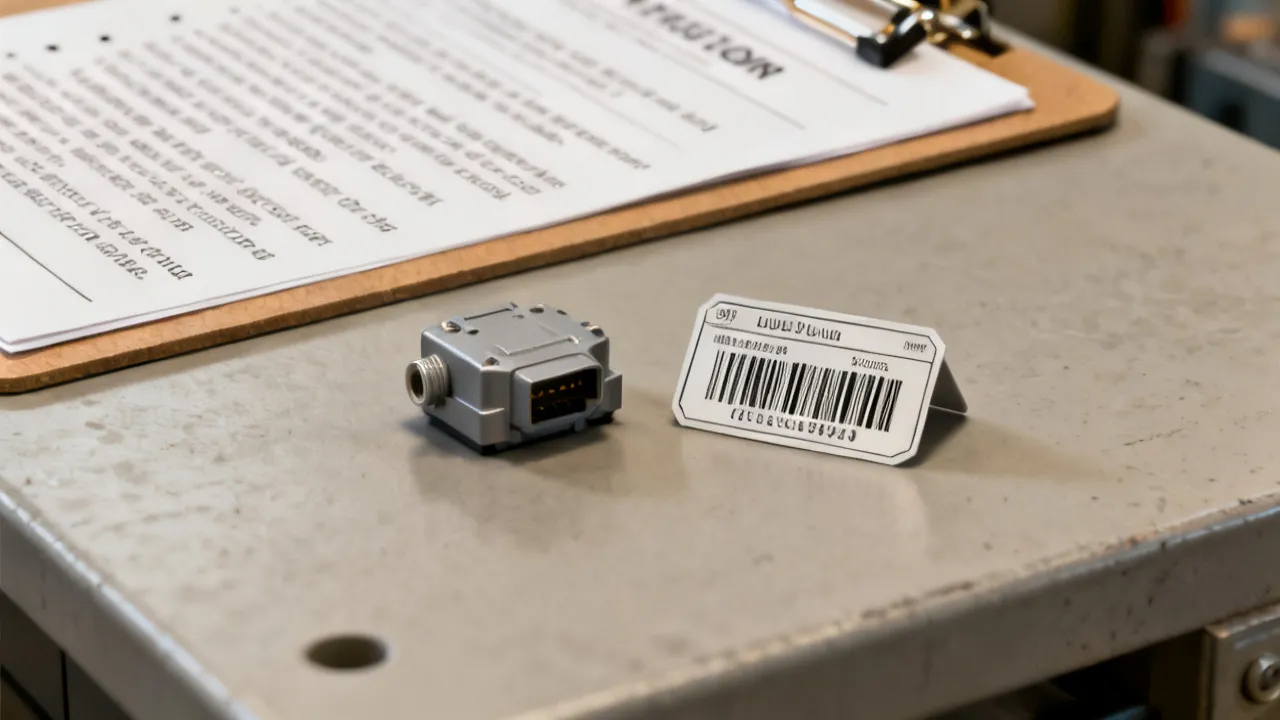
Pmoc Abrava: Industry Overview and Procurement Guide
Pmoc Abrava is a manufacturing-related component term whose selection affects downstream performance, compatibility, and lead times. This guide explains the objective background behind Pmoc Abrava, including typical procurement considerations, risk factors, and how to evaluate suppliers and specifications. It also provides a structured comparison of procurement conditions and a practical checklist for buyers.

1) What buyers should know first about Pmoc Abrava
When sourcing Pmoc Abrava, the very important decision is not simply “availability,” but how well the item’s specification, materials, and compatibility match your application requirements. In procurement terms, buyers should verify documentation, confirm dimensional and functional tolerances, and ensure the supplier’s quality controls align with your receiving and inspection process. Doing this early helps reduce rework, installation issues, and schedule slippage—especially in industrial workflows where one mismatched component can cascade into additional testing, engineering review, supplier containment actions, or even temporary shutdown.
Because “Pmoc Abrava” can sometimes refer to a product family, engineering configuration, or technical shorthand rather than a single universally interchangeable part, the buyer’s top starting point is a clear internal specification pack: required interfaces, operating environment, expected duty cycle, and acceptance criteria. If your internal team cannot describe these clearly, the risk of an incompatible supply increases—even when the supplier claims “standard fit.”
It is also useful for buyers to establish an internal “single source of truth” document before contacting suppliers: a controlled specification reference (e.g., a drawing revision, a procurement standard, a technical data sheet, or an internal engineering release). Without that, it becomes easy for multiple people in your organization to provide inconsistent expectations to vendors, and that inconsistency often leads to confusion, revision mismatch, and quality disputes later at receiving.
In addition, buyers should treat Pmoc Abrava as something that must be validated at multiple levels: not only whether it “looks right,” but whether it satisfies the measurable and traceable requirements needed for stable operation in the field. Many procurement failures happen because teams focus on one dimension or one nominal feature, while the operational risk is actually driven by tolerances, material behavior under conditions, or interface geometry that only becomes obvious during installation.
Therefore, the first step for any buyer is to define what “success” means for your specific use case: will you verify form, fit, and function during incoming inspection? Will you run a downstream test after installation? Will you require certificates and traceability to support audits? Your procurement plan should match your risk tolerance and the cost of failure—both in monetary terms and schedule terms.
2) Objective background: what “Pmoc Abrava” typically implies
In many industrial contexts, terms that look like Pmoc Abrava function as a shorthand used in engineering documentation, procurement lists, or vendor catalogs to denote a particular configuration. Buyers often encounter such terms alongside part numbers, material grades, and process notes. In other words, the phrase you received may point to a specification set that includes:
- Functional role: what the component is intended to do within an assembly.
- Compatibility: interfaces, connectors, mounting patterns, mating geometry, or process conditions.
- Manufacturing basis: how the item is produced and measured (e.g., what standards the supplier uses to manufacture and inspect).
- Quality assurance: inspection approach, documentation readiness, and what records are provided.
From an industry standpoint, the buyer should treat “Pmoc Abrava” as a procurement identifier that must be translated into measurable and testable requirements. This is a common top practice in supply chain management across regulated and safety-sensitive industries, but it applies equally to non-regulated work where failure can still be expensive.
In practice, buyers should assume that the same phrase can appear with different embedded meanings depending on the source. For example, one vendor might interpret a configuration as including a specific coating or treatment, while another might treat those as optional add-ons. Likewise, “Pmoc Abrava” might be associated with different revision levels of drawings, different material batches, or different inspection thresholds. Without pulling the identifier apart into explicit requirements, it is easy to buy something that is “close enough” on paper, but not close enough for your acceptance tests or your assembly process.
It can also help buyers to confirm whether “Pmoc Abrava” is:
- A drawing-based designation tied to a particular engineering release.
- A vendor-specific code that maps to manufacturing variants.
- A category label within a broader family of parts.
- A procurement shortcut that internally corresponds to a controlled bill of materials (BOM) line.
Each of these interpretations changes what the buyer needs to request. If it is drawing-based, you need revision cross-reference; if vendor-specific, you need a vendor-to-drawing translation mapping; if category-based, you need the exact configuration options and inclusions; if shorthand for a BOM line, you need your internal BOM release and its controlled properties.
3) Procurement economics: price is only meaningful with scope clarity
Buyers frequently ask for “the price” first. However, with Pmoc Abrava, price becomes comparable only when the scope is aligned. Two suppliers may quote similar numbers while covering different:
- Specifications (tolerance bands, revision level, material certification expectations, coating parameters, allowable test methods)
- Inspection and testing (sample size, acceptance methods, inspection equipment requirements, test frequency)
- Packaging and handling (protected labeling, traceability marks, moisture controls, anti-damage requirements)
- Logistics (incoterms, lead time buffers, expedited shipping, special handling during transit)
Therefore, when you evaluate procurement cost for Pmoc Abrava, insist on an “apples-to-apples” quote request. If a supplier can’t provide detail beyond a rough item name, you should treat that as a signal to clarify specification and quality requirements before proceeding. In many cases, the “cheaper quote” is cheaper because it includes fewer documentation deliverables, less rigorous inspection, different tolerances, or a different packaging approach that shifts costs to your receiving and installation teams.
A practical buyer’s approach is to split the procurement evaluation into components:
- Unit cost: direct price per piece or per lot.
- Quality/documentation cost: includes certificates, inspection reports, traceability support, and documentation package delivery.
- Risk cost: includes estimated probability of nonconformance and the cost of rework, scrap, engineering troubleshooting, and schedule impact.
- Time-to-deliver: not only the lead time but the stability of that lead time (variance matters).
- Downstream integration cost: includes expected time for receiving inspection, installation verification, and potential field correction.
When you consider these components explicitly, procurement decisions become more rational. Even if Supplier A has a slightly higher unit price, it may be lower total cost if the documentation is complete and the acceptance tests align with your receiving plan.
Buyers should also watch for “hidden scope changes.” Sometimes suppliers quote a baseline item but later—after you place the order—clarify that certain deliverables were never included (e.g., the inspection report format differs, traceability marks are missing, or a different revision is being shipped). The only reliable way to avoid this is to require the scope detail in the quotation and to include it in the purchase order (PO) terms.
4) Supplier due diligence: how to evaluate a provider of Pmoc Abrava
An expert procurement view focuses on whether the supplier can reliably deliver the required quality and documentation. For Pmoc Abrava, consider the supplier’s capability in terms of traceability, measurement discipline, and responsiveness to engineering changes.
Key diligence checkpoints include:
- Documentation readiness: ability to provide certificates of conformity, material statements, and inspection records aligned with your requirements.
- Quality system maturity: whether the supplier operates under recognized quality frameworks and can describe how defects are contained and corrected.
- Revision control: whether the supplier can confirm which technical revision of “Pmoc Abrava” you are receiving and can prevent accidental substitution.
- Traceability: ability to link delivered units/batches to production records, and to provide lot/batch identifiers consistently.
- Communication cadence: how promptly the supplier responds to RFQs, clarifications, and change requests.
While you may encounter many vendors, you should not treat all quotes as equivalent. The main differentiator is usually not the base item name—it is the supplier’s demonstrated ability to meet your acceptance criteria. A supplier might be able to deliver “a part” but still fail on critical tolerances, interface geometry, documentation completeness, or packaging requirements.
Buyer due diligence can be deepened by requesting specific evidence. For example:
- Sample documentation: ask for an example of the certificates and inspection reports they will deliver for your order.
- Measurement system capability: if your application is sensitive, ask how they ensure measurement accuracy (e.g., equipment calibration, measurement uncertainty management).
- Nonconformance process: ask how they handle deviations—do they use containment and disposition (e.g., rework, use-as-is, scrap), and do they provide records quickly?
- Change management: ask how they notify customers of supersessions and how they ensure cross-reference between old and new configurations.
Even if you cannot evaluate everything fully before purchasing, you can reduce risk by imposing key requirements in the RFQ and PO. For example, require traceability, revision control, and a defined documentation package. That makes supplier performance more transparent.
Additionally, buyers should ensure that the supplier’s scope matches the buyer’s reality. If your receiving department uses a particular inspection method, ask the supplier to align on test methods or at least provide reports that can be interpreted consistently. If your facility requires specific labeling standards for internal tracking, make sure the supplier can label appropriately.
5) Technical selection: translating the term into verifiable criteria
To select Pmoc Abrava effectively, buyers should work from a structured requirements list. A strong specification pack reduces ambiguity and improves outcomes during receiving inspection.
In practice, “verification” can include:
- Dimensional validation: measured geometry against drawings or tolerances, including critical-to-function features and any interface surfaces.
- Material confirmation: alignment with grade and certification requirements, including any required chemical composition statements or mechanical property certifications.
- Process compatibility: suitability for the downstream process (e.g., handling, installation method, operational environment, exposure to temperature cycles, chemical exposure, vibration, or moisture).
- Documentation completeness: ensuring that test/inspection data is understandable and usable (clear identifiers, revision references, and measurement context).
For buyers who need consistent repeat deliveries, it’s also critical to confirm whether the supplier uses stable tooling, consistent inputs, and controlled rework procedures—because drift over time can affect fit and performance. This is particularly important when parts are manufactured across different lines, different shifts, or different subcontracting partners.
To make technical selection more reliable, buyers should define:
- Critical dimensions: which features drive assembly fit, alignment, sealing, or electrical/mechanical performance.
- Non-critical dimensions: dimensions that can vary within bounds without affecting function, so inspection effort can be prioritized.
- Acceptance criteria: explicit pass/fail thresholds, not “according to standard” unless the standard is specified and accessible.
- Test method references: identify measurement tools and test standards so results are comparable.
- Labeling and traceability requirements: what exactly must be printed/affixed and how it maps to the documentation package.
Buyers should also clarify whether Pmoc Abrava requires any special treatments—such as surface coatings, heat treatments, plating, or protective packaging. These can change performance characteristics and may introduce additional acceptance requirements (e.g., coating thickness, adhesion properties, corrosion resistance indicators, or environmental shelf-life conditions).
In addition, some procurement terms can hide “configuration options.” Buyers should request a configuration checklist from the supplier, including optional inclusions (e.g., specific connectors, specific finishes, specific tolerancing approach, or bundled documentation). Doing so prevents silent substitution of equivalent-but-not-identical components.
6) Risk management: common issues when procurement is too name-based
One of the very frequent procurement problems with terms like Pmoc Abrava is “name-based purchasing”—choosing by label alone. When specifications are not fully clarified, risk rises in these areas:
- Mismatch at receiving: units fail dimensional checks or interface requirements, leading to quarantine and delayed assembly.
- Documentation gaps: certificates or inspection records are missing, incomplete, incompatible with your audit needs, or missing revision/batch identifiers.
- Inconsistent batches: performance differs because underlying inputs or manufacturing settings changed.
- Engineering change friction: you learn late that a supplier revision has occurred, affecting integration or downstream performance.
To mitigate these risks, buyers should request a “full quote pack” rather than a single line-item number. The goal is not to slow down procurement—it is to prevent rework costs that can far exceed the difference between two unit prices.
Risk management should also account for organizational workflow. Even if a supplier delivers correctly manufactured product, you can still face delays if your receiving process is not ready to inspect against the right criteria. Therefore, buyers should align procurement with quality operations: define incoming inspection steps, documentation review steps, and how nonconformance will be escalated.
Common risk scenarios buyers should anticipate include:
- Revision mismatch: receiving inspection shows you got a different revision than what your engineering team validated.
- Lot traceability mismatch: paperwork says “Lot X,” packaging says “Lot Y,” making it hard to trace issues.
- Packaging damage: protective packaging is insufficient; parts arrive compromised, resulting in scrapping or rework.
- Supplier-submitted documentation differs from expected format: your auditors or quality team cannot use the reports to prove compliance.
- Test methods mismatch: supplier used a test method that is not comparable to your acceptance expectations.
Each scenario has a mitigation. For example, revision mismatch can be mitigated by requiring revision references in the PO and on certificates; packaging damage can be mitigated by requiring packaging specifications and, if needed, drop-test or protective handling instructions. The key is to identify the risk categories early and then build requirements into the procurement contract.
7) Quality expectations: acceptance tests and inspection strategy
From an industry expert perspective, the top time to define inspection is before purchase. For Pmoc Abrava, plan the receiving approach so that it supports your operational needs.
A practical approach typically includes:
- Incoming inspection: focus on dimensions, interface checks, labeling/traceability, and basic functional verification where possible.
- Documentation review: ensure certificates and inspection data match the correct revision and batch identifiers.
- Sampling method: agree on sampling strategy and acceptance criteria in advance (e.g., AQL approach or engineering-based sampling) and make it part of the purchase contract.
- Nonconformance handling: define how deviations are reported, contained, and resolved, including whether supplier returns require an RMA process, and expected corrective action timelines.
This is especially important if Pmoc Abrava is used in an assembly where field failures can be costly. While not every project is safety-critical, the principle still holds: clear acceptance criteria reduce uncertainty. In practice, uncertain acceptance criteria lead to negotiation disputes, delays, and rework cycles that cost more than implementing a thorough inspection plan up front.
Buyers should also consider how acceptance criteria map to operational outcomes. For example, passing a dimensional check may not guarantee functional success if the operational environment stresses material properties differently than the supplier’s manufacturing environment. If your application involves high temperature, chemical exposure, vibration, or long-term load, you may need additional verification categories (e.g., material property checks, environmental resistance evidence, or relevant test results).
In addition, buyers should coordinate with engineering on “fit for use.” If engineering expects specific tolerances or mounting procedures, receiving inspection should verify those features. If engineering later discovers that a certain interface was not checked, the result is usually an expensive feedback loop—parts may already have been assembled or integrated.
Another quality expectation relates to communication during manufacturing. Some suppliers can provide pre-shipment inspection (PSI) results or at least provide inspection status updates. For high-value purchases or long-lead items, this reduces the likelihood of receiving nonconforming goods without warning. While PSI is not always feasible, buyers should consider it based on risk.
8) Procurement conditions comparison for Pmoc Abrava (supplement)
The section below rephrases the additional information request into a structured supplement. It is intended as a comparison guide for buyers organizing purchase conditions around Pmoc Abrava. (Note: specific “price” values and named supplier identities were not provided, so this guide focuses on how to structure quotes rather than claiming a particular cost or vendor.)
| Procurement Condition | What to Ask for | Buyer Benefit |
|---|---|---|
| Specification confirmation | Revision level, drawings reference, tolerance bands, material grade statements, configuration options checklist | Reduces mismatches during receiving inspection and integration |
| Quality documentation package | Certificates of conformity, inspection reports, traceability batch/lot IDs, documentation format examples | Supports audits, internal quality sign-off, and easier issue resolution |
| Inspection and acceptance alignment | Sampling approach, acceptance criteria, test methods, measurement equipment standards, defined pass/fail thresholds | Prevents disputes over what “pass” means and reduces receiving rework |
| Lead time clarity | Production schedule assumptions, shipping timelines, buffer policy for delays, latest possible ship date, update cadence | Improves planning and reduces schedule risk |
| Change control | Notification process for engineering changes or supersessions, cross-reference between old/new revisions, required approvals | Maintains configuration integrity over time and avoids silent substitution |
| Logistics and handling | Packaging method, labeling rules, environmental handling requirements (e.g., humidity control), damage prevention approach | Limits damage, preserves part integrity, and avoids downstream defects |
| Nonconformance handling | RMA/return process, containment steps, corrective action timeline, documentation requirements for deviations | Speeds resolution and improves supplier accountability |
| Requirements for traceability | How lot/batch IDs are applied, mapping to paperwork, expected readability/placement, traceability depth | Makes troubleshooting faster if issues occur |
9) Step-by-step guide to sourcing Pmoc Abrava
Use this step-by-step approach to keep the process objective and repeatable. It is designed to help you move from a vague identifier to a defensible purchase.
- Collect internal requirements: Identify interfaces, dimensions, material expectations, and any operational environment constraints for Pmoc Abrava.
- Create an RFQ specification pack: Provide drawings or reference documents, revision level, acceptance criteria, and the expected documentation package.
- Request quote “scope detail”: Ask each supplier to list what is included in their quote (testing, certifications, packaging, and lead time assumptions) and request examples of documents.
- Verify supplier traceability: Require batch/lot linkage and traceable production records suitable for your quality system.
- Align inspection plan: Define incoming inspection steps, sampling approach, and nonconformance procedures before shipment.
- Confirm change-control mechanism: Ensure the supplier can notify you about revision changes and can provide cross-reference information.
- Review documentation before release: Check that certificates and inspection records match the correct revision and batch identifiers, and confirm that document formats meet your team’s expectations.
- Conduct receiving inspection and record outcomes: If deviations occur, document them immediately and ensure corrective actions are tracked.
To strengthen this process, you can also define decision points: for example, at RFQ stage you confirm specification alignment; at pre-shipment stage you confirm document completeness; at receiving stage you confirm physical compliance; and post-receiving you capture supplier performance metrics. Over time, this data makes future purchases faster because you know which suppliers consistently meet requirements.
10) Conditions and requirements buyers should insist on
To avoid ambiguity, buyers should set baseline requirements early when procuring Pmoc Abrava:
- Clear revision control: ensure the delivered configuration matches the quoted revision, including the revision level on both physical labeling and paperwork.
- Traceability: batch/lot identifiers must be available on both paperwork and packaging labels, and the mapping must be consistent.
- Documentation completeness: certificates must correspond to delivered units and include relevant inspection results, test methods, and measurement context.
- Defined acceptance criteria: specify what measurements or checks constitute acceptance, and reference the governing drawings/specifications or standards.
- Change notification policy: supplier must communicate any supersession or process change that could affect compatibility or inspection outcomes.
It can also be valuable for buyers to include contract language that clarifies what happens if requirements are not met. For example, if documentation is missing or traceability labels do not match, you should define whether the shipment is held, rejected, or subject to an exception process. Clear contractual outcomes reduce conflict and speed up resolution when issues arise.
Additionally, buyers should ensure that the purchase agreement addresses:
- Responsibility for rework: if nonconformance is discovered after receiving, who pays for re-inspection, rework, or engineering troubleshooting?
- Time expectations for corrective action: define how quickly the supplier must submit containment and corrective actions.
- How exceptions are authorized: define who can approve deviations and under what documentation.
- Documentation delivery method: electronic format, required turnaround time after shipment, and file naming conventions if applicable.
When these conditions are clearly defined, buyers gain control over both technical risk and commercial risk.
11) Industry context: why buyers increasingly tighten component sourcing
Across manufacturing supply chains, organizations are placing greater emphasis on traceability, quality documentation, and revision control. This trend is driven by audit expectations, regulatory pressure in certain sectors, and the business reality that quality issues can be far more expensive after installation. While specific performance statistics vary by industry segment, the underlying procurement principles are consistent: fewer uncertainties, more measurable requirements, and better evidence that delivered goods match the specification.
For buyers seeking broader context on supply chain and quality practices, they often align purchasing activities with established frameworks and quality engineering concepts. While the exact standards depend on your industry, common elements include controlled documentation, disciplined change management, and systematic inspection planning.
For objective grounding on broader supply chain and quality practices, buyers may reference established standards and guidance from reputable organizations such as:
- ISO quality management frameworks (for example, ISO 9001 approaches to quality system discipline)
- GxP/regulated-industry documentation norms where applicable (industry-specific)
- Quality engineering concepts related to inspection planning and nonconformance handling
Source note: Specific “market numbers” were not provided in your prompt, so this article intentionally avoids unverified statistics. For standardization and quality system principles, buyers can consult ISO documentation and sector-specific official guidance. The key takeaway for procurement is not the exact numbers; it is the method: translate identifiers like Pmoc Abrava into requirements you can test and verify.
Another reason sourcing teams tighten control is data visibility. Modern manufacturing and procurement organizations often rely on quality records to support ongoing reliability programs, warranty analysis, and continuous improvement. When the supplier can’t provide consistent traceability data, buyers lose visibility into root causes and may struggle to comply with internal quality metrics.
Finally, buyers tighten sourcing because global supply chains introduce more variation. Even when suppliers use the same product name, different plants, subcontractors, or raw material lots can produce differences that matter. Tighter sourcing does not necessarily mean buying more expensive items; it means requiring evidence, clarity, and repeatability.
12) FAQs about Pmoc Abrava
Q1: What exactly is “Pmoc Abrava”?
Pmoc Abrava is typically used as a procurement identifier for a specific component configuration within an industrial context. The exact meaning depends on the drawing or vendor specification associated with the term. The top practice is to request revision-controlled documentation and measurable acceptance criteria, rather than assuming the identifier alone fully describes the item.
Q2: How can I confirm that the Pmoc Abrava I receive matches my needs?
Ask for the revision level, drawings reference, material-grade statements, and an agreed acceptance plan. Then verify the delivered units using incoming inspection aligned to your tolerances and interface requirements. If possible, include a pre-shipment documentation review step to reduce last-minute surprises.
Q3: Price quotes differ—how should I compare them objectively?
Compare quotes only after confirming scope details: included documentation, inspection/test approach, packaging, traceability requirements, and lead time assumptions. If two quotes cover different scopes, the unit price is not comparable. Buyers should also compare turnaround expectations and the supplier’s ability to provide responsive corrective action if deviations occur.
Q4: Do I need certificates and traceability for Pmoc Abrava?
In very professional procurement setups, yes—especially if you operate under a quality management system or must support audits. Certificates and traceability help verify that what was delivered matches the quoted configuration and make it possible to isolate and correct issues when problems arise.
Q5: What are common causes of nonconformance with Pmoc Abrava?
Common issues include revision mismatches, unclear interface requirements, missing or incorrect documentation, batch-to-batch drift, and differences in inspection methods. Defining acceptance criteria and revision control upfront reduces these risks, and including clear documentation deliverables in the PO reduces disputes.
Q6: Can I use Pmoc Abrava as a direct replacement for an older configuration?
Only after you confirm engineering equivalence through documentation review (revision cross-reference, drawings, and acceptance criteria). Never rely solely on the component name. Even if the component “appears identical,” differences in manufacturing inputs, coatings, or tolerances can affect performance.
Q7: How should I handle a supplier delay for Pmoc Abrava?
Require lead time clarity in the RFQ, including buffer assumptions, and ask for updated production timelines if delays occur. Assess impact using your internal schedule and acceptance readiness. For time-sensitive assembly, consider contingency planning such as partial shipments, emergency documentation, or controlled substitutions only after engineering approval.
Q8: Should I order a trial quantity first?
That depends on your application criticality and prior compatibility history. For unfamiliar configurations, a controlled trial order can reduce risk by validating fit, documentation sufficiency, and receiving inspection outcomes before scaling. Even when trial orders are feasible, buyers should still require the same revision control, traceability, and acceptance criteria as the scaled order—otherwise the trial does not truly de-risk the purchase.
13) Practical buyer checklist for Pmoc Abrava
- Specification pack includes revision, interface requirements, and tolerances
- Supplier provides documentation aligned to your acceptance plan
- Traceability (batch/lot IDs) is confirmed for delivered units
- Quote scope is comparable across vendors (testing, packaging, lead time assumptions)
- Incoming inspection procedure is ready before shipment arrives
- Change-control policy is defined (notification and replacement rules)
- Nonconformance handling process is agreed (containment, corrective action timeline, and responsibility)
- Packaging and handling requirements protect the item integrity during transit
14) Conclusion: making Pmoc Abrava procurement reliable
Successfully sourcing Pmoc Abrava comes down to turning a procurement term into controlled, verifiable requirements—then selecting a supplier that can deliver those requirements consistently with complete documentation. By prioritizing specification confirmation, traceability, and an aligned acceptance strategy, buyers can control risk and make downstream integration smoother. If you standardize this approach, your procurement outcomes become more predictable across future orders and revisions.
Ultimately, reliable procurement is not achieved by asking for the right name; it is achieved by demanding the right evidence and building the right checks into your workflow. When your organization can repeatedly translate “Pmoc Abrava” into measurable requirements, your team reduces ambiguity, speeds receiving decisions, improves supplier accountability, and protects schedule and quality performance across the lifecycle of the assembly.
To make these benefits durable, buyers should treat each purchase as a learning opportunity. After receiving, capture whether documentation matched expectations, whether traceability was complete, whether inspection outcomes were smooth, and how quickly nonconformance issues were resolved. Those metrics support continuous improvement, help refine future RFQs, and strengthen your supplier selection over time—ensuring that Pmoc Abrava procurement remains reliable not only once, but across long-term supply relationships.
-

A Guide to Cost-Efficient Small Electric Cars for Seniors
-
Mastering Debt Consolidation: Boost Your Credit Score and Manage Interest Rates
-
Your Guide to Loans, Credit Checks, and Interest Rates
-
Affordable Independent Living: Finding the Right Senior Housing
-
Guide to Senior Living Apartments: Affordable and Comfortable Environments