Understanding 21979368133 Procurement and Supplier Options
This guide explains how to evaluate the procurement landscape surrounding the identifier “21979368133” and related supplier considerations, with an objective, industry-focused lens. Background context covers how identifiers, documentation, and sourcing practices typically influence buying decisions across business-to-business procurement, compliance, and risk management.
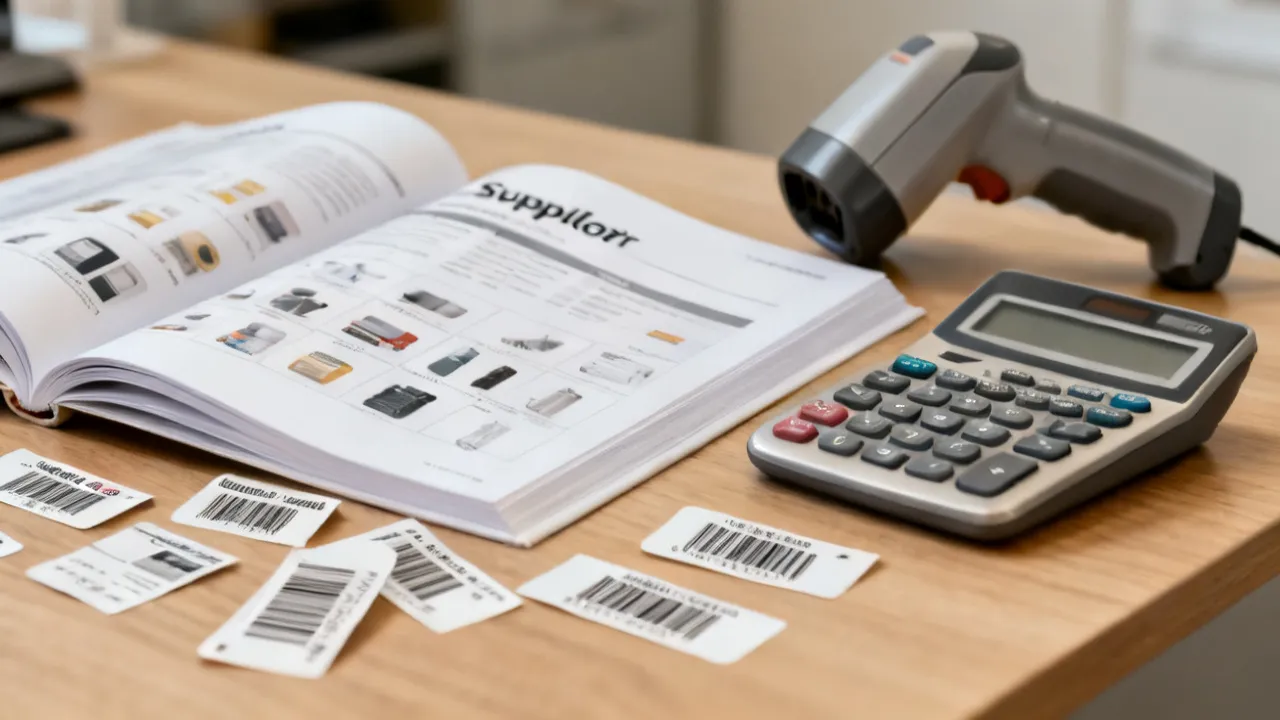
1) Key takeaways for evaluating 21979368133 and supplier fit
If you’re trying to make sense of procurement decisions tied to 21979368133, the very important step is to validate what the identifier represents (catalog number, internal reference, lot code, or request ID) and then assess supplier capability against your technical and compliance requirements. In practice, “supplier options” are rarely interchangeable: delivery reliability, documentation quality, quality control processes, and traceability vary substantially, even when items appear similar.
Because the provided keywords include placeholders (e.g., '' '' '') and additional numeric reference 21979368133, treat the identifier as a starting point, not a conclusion. An expert approach is to verify the exact product/specification mapping, confirm pricing structure (unit price, MOQ, lead time, and terms), and request evidence of compliance relevant to your industry.
To make this more operational, it helps to think of the identifier as the first “gate” in your workflow. The supplier fit decision comes after you confirm that the gate is not misleading—i.e., that the code points to the same physical deliverable across supplier catalogs, your purchase order system, and receiving/inspection. Once the mapping is confirmed, you can compare suppliers using objective criteria rather than assumptions.
Also note that even if the identifier is correct, you can still face failure modes related to packaging, documentation labeling, or traceability. For example, a supplier may ship the correct part but place the wrong cert label on the box, or they may provide a certificate that corresponds to a different lot. These issues can be as disruptive as receiving the wrong product entirely. Therefore, supplier fit must be evaluated not only on the ability to “quote the item,” but on the ability to deliver the item in a way that meets your receiving, audit, and operational requirements.
Finally, your best procurement outcomes come from aligning the entire chain: the identifier mapping in quoting, the specification revision used in manufacturing, the packaging and labeling standards used at shipment, and the acceptance criteria used at receiving. When these align, you reduce delays, avoid rework, and protect downstream stakeholders such as QA, operations, and finance.
2) What “21979368133” typically signals in procurement workflows
In many procurement systems, long numeric strings such as 21979368133 often function as:
- A catalog or part reference used to prevent ordering errors.
- An internal tracking identifier for quotes, purchase requests, or invoices.
- A lot/batch reference used for traceability and quality investigations.
- A document or SKU code tied to an item description in a supplier’s catalog.
From an industry perspective, you should not assume which one applies. Instead, you should ask for the supplier’s cross-reference: the official item description, revision/spec version, and the mapping from 21979368133 to the actual deliverable. This verification is the fastest way to avoid costly mismatches (wrong specification, wrong packaging, or wrong compliance category).
In real purchasing environments, identifiers can be confusing because different systems use different conventions. Some suppliers label their product families with one numeric code and their specific variants with another. Some use digit-heavy numbers to avoid transcription errors, especially when barcodes and ERP integrations are involved. Others embed codes inside shipping documents rather than on the product itself. As a result, the same number you see in a quote might not be the same thing you later see on a certificate of conformity or packing list.
To avoid this trap, you want a mapping that is verifiable across documents. The ideal mapping looks like this: identifier → product description → spec revision → manufacturing/lot information → packaging/labeling → certificates/trade documents. If any link is missing, it becomes harder to prove that the item you received matches what was quoted and approved.
Another common scenario is that the identifier might relate to a request in your internal system. For example, a purchasing team might export a list of requisition IDs, and those IDs might appear alongside keywords that do not reflect the actual product. In that case, the supplier may be quoting something else entirely, because the ID is only meaningful inside your procurement software.
So the first practical question you should ask is not only “what is this number,” but “what does it mean for ordering, receiving, and compliance documentation.” That framing forces the supplier to connect the number to tangible deliverables and paperwork rather than simply defining it in abstract terms.
3) Why supplier evaluation matters more than surface-level similarity
Even when procurement codes match, suppliers can differ in the details that determine whether your order will succeed—especially at scale. Industry practitioners typically focus on:
- Traceability: batch/serial tracking, documentation completeness, and audit readiness.
- Quality systems: whether they operate under documented procedures (commonly ISO-aligned processes, where applicable to your sector).
- Packaging and handling: protective packaging, labeling accuracy, and damage-reduction practices.
- Lead time realism: what happens when demand spikes or logistics disruptions occur.
- Responsiveness: how quickly they resolve spec questions, substitutions, and claims.
These factors often outweigh minor differences in quoted cost because they directly affect downstream operations such as receiving, installation/usage, inventory planning, and warranty/returns management.
To illustrate why supplier evaluation is so important, consider a typical receiving process. Receiving staff often have time constraints and standardized checks. If the supplier’s labeling is inconsistent—e.g., the box says one code but the paperwork uses another—receiving may reject the shipment or release it incorrectly. Even if the physical item is correct, a mismatch between documentation and labels can trigger internal investigation, delaying inventory usage.
Similarly, traceability failures can cause problems when you need to investigate a quality event. Without a clear link between purchase order, lot number, and certificate documentation, you might not be able to isolate which units were affected. That can increase recall scope or force conservative operational shutdowns.
Another common operational issue is packaging quality. In some industries, packaging impacts not only physical integrity but also shelf life or sterility (in regulated contexts), corrosion resistance (in industrial supply chains), or ESD safety (in electronics). Suppliers that do not treat packaging as part of quality can cause avoidable failure rates that are later attributed to the product rather than the handling.
Finally, supplier responsiveness matters because procurement rarely ends at order placement. Suppliers may clarify revisions, propose alternates, update certificates, or handle claims. If they are slow or inconsistent in responding, the cost of delays can eclipse the initial price advantage. For example, a supplier might offer a slightly cheaper unit price, but if their lead time slips by two weeks and you must expedite freight or miss production windows, the true cost is much higher than the quote difference.
4) Building an objective sourcing decision around the identifier
To make a defensible purchasing decision linked to 21979368133, you generally want to structure your evaluation around three layers: spec truth, supplier assurance, and commercial clarity.
This three-layer structure is effective because it separates “what the product is” from “how confident we can be that it’s that product” and from “what it will cost and under what conditions.” Many procurement mistakes happen when these layers are blurred—for instance, when a team trusts the identifier without verifying the spec revision, or when they decide based on unit price without comparing acceptance and warranty terms.
4.1 Spec truth: confirm what you are actually buying
Request a product datasheet or specification sheet that explicitly references the identifier. Confirm:
- Manufacturer name (if applicable)
- Model/variant and spec revision
- Compliance documentation (as relevant)
- Packaging format and labeling
- Service life, performance characteristics, or acceptance criteria
“Spec truth” is not just a documentation exercise; it prevents functional failures. For example, a component may have multiple revisions with minor changes that significantly impact performance—tolerances, material composition, contact plating, coatings, electrical ratings, or chemical compatibility. Even if the identifier looks similar, revision mismatches are a common cause of receiving failures or later field issues.
When requesting datasheets, ask the supplier to specify what exactly is included: are measurements based on nominal values, do they include typical vs. minimum guarantees, what test method is used, and what is the sample size or confidence range? If your use case requires strict verification, you may also need test standards (e.g., ASTM, ISO, IEC) referenced in the datasheet.
In addition, confirm whether the identifier corresponds to a finished good or a material input. Some codes represent subassemblies or intermediate products. If you need a finished assembly, ordering a subassembly can create integration problems later. Thus, spec truth should include clarity on packaging units and how the item is meant to be used.
4.2 Supplier assurance: confirm how they control quality
Ask for evidence of quality control. While requirements vary by sector, commonly requested items include:
- Inspection/test plan overview
- Certificates or conformity documentation (where applicable)
- Traceability process description for the specific code/lot
- Handling procedures to preserve shelf life or condition
Supplier assurance is where many organizations strengthen or weaken their risk posture. Evidence should ideally be connected to the specific identifier or production lot, rather than being generic quality statements.
For instance, you may ask whether the supplier can provide a certificate of analysis (COA) for materials, a certificate of conformity (CoC) for manufactured parts, or specific test reports. The type of certificate depends on the industry: chemicals, electronics, medical devices, building products, automotive components, and industrial safety equipment each have different documentation expectations.
Also consider asking how the supplier handles nonconforming material. A mature supplier will have documented corrective action processes (often aligned with CAPA principles) and will be able to explain how they quarantine and resolve defects before shipment.
Traceability evidence is particularly important when you have regulatory obligations or strong internal QA requirements. The best case is when the supplier provides a way to map each shipped unit or batch to internal production records. If you cannot get item-level traceability, you may at least get batch-level traceability plus a clear explanation of how lots are defined and segregated.
Handling procedures matter when the quality risk is sensitive to environment. For example, some items degrade with moisture exposure or temperature swings. Suppliers may need to use desiccant packs, controlled packaging, or specific storage conditions. If the supplier can describe these processes and link them to acceptance outcomes, it improves confidence.
4.3 Commercial clarity: compare total delivered terms, not only unit price
Procurement reviews frequently fail when they compare only unit price. A robust comparison should also include:
- MOQ and price breaks
- Lead time and shipping method
- Incoterms or equivalent terms (who pays what)
- Warranty/returns conditions
- Acceptance criteria, restocking fees, and claim windows
If price information is available to you from your internal quote comparison, align it with the same specification revision and the same commercial terms. Otherwise, “cheap” quotes can turn into expensive remakes or line stoppages.
Commercial clarity should also address payment terms, currency, and any surcharges. Even when the supplier quotes the same unit price, the supplier may add packaging fees, document handling fees, or expedited freight surcharges. If you’re sourcing for critical operations, you should understand whether the supplier is including or excluding these costs.
Additionally, clarify how lead time is measured. Some suppliers quote “factory lead time” but not “total lead time including shipping and receiving time.” Others include an estimated transit time but do not commit to exact dates. If your production schedule depends on precise delivery, you need to understand their commitment level and what happens when delivery is late (service levels, penalties, or replacement commitments).
Finally, warranty and claims terms should be aligned with your operational needs. For example, if the supplier’s warranty only starts at installation, but you need it to start at delivery to cover receiving testing issues, you should negotiate or define acceptance steps that make responsibilities clear.
5) Industry context: how buyers typically manage identifier-driven sourcing
From an operational standpoint, identifiers like 21979368133 are used because modern supply chains require precision. For example, regulated or safety-sensitive sectors often rely on documentation trails that allow traceability from purchase order to receiving to inventory records. Even outside strict regulation, many companies adopt barcode/SKU systems and standardized receiving steps to reduce human error.
When evaluating supplier options, professional buyers usually implement a structured workflow:
- Pre-qualification of suppliers for capability and compliance alignment.
- Specification validation using product datasheets and reference mappings.
- Quote normalization to compare like-for-like terms.
- Risk review (lead-time volatility, substitution policy, quality history).
- Receiving controls to ensure the deliverable matches the code and spec revision.
This workflow exists because supplier performance is not only about product quality but also about process reliability. A supplier may have excellent products historically but might struggle with documentation updates, revision control, or shipping accuracy. Identifier-driven sourcing highlights these process issues because it depends heavily on correct document-product linkage.
In many organizations, identifier-driven sourcing also interacts with ERP system controls. For example, your system might prevent purchasing unless the item number matches a master data entry. If supplier-provided codes do not align with master data, procurement may need supplier cross-references or master data updates. That adds time and risk. A supplier that proactively provides crosswalks and revision details reduces that friction.
Another dimension is substitution policy. Some suppliers may substitute equivalent materials if supply constraints exist. If substitution is allowed, your receiving process must detect it and your documentation requirements must capture it. For example, a supplier might ship a “new revision” that is functionally equivalent but requires re-qualification in your system. Without clear substitution rules, you could receive material that meets physical intent but violates your internal configuration control.
Therefore, industry context isn’t just a background concept—it affects the operational steps you take and the evidence you require from suppliers. If you’re in regulated industries, you might require specific certification formats and documented evidence of conformity. If you’re in less regulated industries, you may rely more on supplier historical performance and receiving inspections, but the identifier mapping is still foundational.
6) Comparison table: practical criteria for choosing among supplier options
Below is a supplement-style comparison table that summarizes how buyers often weigh supplier criteria when an identifier such as 21979368133 is involved.
| Evaluation area | What to verify | Why it affects outcomes | Typical evidence requested |
|---|---|---|---|
| Reference mapping | How 21979368133 maps to the exact product/spec revision | Prevents wrong-item ordering and acceptance disputes | Catalog cross-reference, datasheet with matching code |
| Documentation quality | Whether certificates/spec documents are complete and correctly labeled | Supports audits, receiving checks, and quality investigations | Conformity documents, test reports (if applicable) |
| Traceability process | How lot/batch or serial details are maintained from ship to receiver | Enables targeted recalls/claims and reduces downtime | Traceability procedure description, sample labels |
| Quality control | Whether inspection/testing aligns with your acceptance needs | Reduces defect rates and rework costs | Inspection plan summary, QA workflow |
| Lead time reliability | Whether quoted timing holds up under realistic conditions | Protects production schedules and inventory planning | Delivery history (where available), capacity statement |
| Commercial terms | Total delivered terms, warranty, and claim process | Determines true cost of ownership | Quote terms sheet, returns/warranty policy |
7) Step-by-step guide to validate 21979368133 before finalizing a purchase
The following is a practical, step-by-step approach commonly used by procurement and quality teams. Adjust the sequence based on your industry and internal governance.
- Clarify the identifier’s meaning: Ask the supplier whether 21979368133 is a SKU, part number, lot reference, or internal quote ID.
- Request the specification sheet: Ensure the document explicitly matches the identifier and includes revision/version where relevant.
- Normalize commercial terms: Compare quotes on the same delivery terms (shipping method, lead time definition, and incoterms equivalent).
- Confirm traceability expectations: Determine what batch/serial details must appear on packing slips and certificates.
- Validate labeling and packaging: Ask for packaging photos or a description of labeling layout; confirm damage-protection approach.
- Define acceptance criteria: Align on inspection steps at receiving—what will be checked, how defects are handled, and timelines for claims.
- Plan substitution policy: Confirm whether the supplier allows substitutions, and if so, require your approval with documented evidence.
- Perform a receiving control check: Cross-check the received item code against 21979368133 and verify documentation completeness before inventory release.
- Maintain a feedback loop: Record quality outcomes and delivery performance to refine future supplier selection.
To make this process even more defensible, you can also formalize a “pre-receipt packet” checklist. For example, before shipment or before the receiving team releases inventory, you can require the supplier to send digital copies of certificates, packing lists, and any test documentation. That creates a paper trail and reduces the likelihood that you discover missing documents only after the shipment is already on-site.
Another operational step is to align internal master data and supplier data. If your ERP item master uses a standardized part number format, ensure that the identifier 21979368133 is mapped correctly in master data. When master data is wrong or incomplete, even correct supplier shipments can fail automated receiving checks, forcing manual overrides that increase risk and reduce traceability.
Finally, incorporate a risk-tiering mechanism. Not every purchase needs the same level of documentation or inspection intensity. But identifier-driven sourcing can be risky when the cost of failure is high or when the product affects regulated compliance. A tiering approach might classify purchases into low/medium/high risk categories and then apply appropriate controls. High-risk categories might require stronger inspection evidence, more frequent sampling, and stricter documentation requirements.
8) Conditions and requirements to consider (so the process stays defensible)
These conditions typically help buyers ensure their procurement process is internally consistent and externally auditable:
- Documentation must match the identifier: the product/spec documents should reference 21979368133 or the supplier must show an auditable crosswalk.
- Commercial terms must be comparable: unit price comparisons should only be made under identical lead time, shipping conditions, and acceptance terms.
- Receiving checks should be documented: record the verification performed against the identifier and shipping documents.
- Claims procedure is defined in advance: specify response times, evidence required, and replacement vs. refund expectations.
- Supplier changes require re-validation: if the supplier modifies materials, processes, or spec revision, request updated documentation before approval.
Defensibility also depends on how you handle exceptions. For example, if the supplier cannot provide full traceability documents, you may need a documented deviation/waiver process. The waiver should specify the risk acceptance level, the mitigation actions (e.g., increased sampling at receiving), and the time horizon. Without such structure, exceptions can accumulate and degrade overall quality performance.
Moreover, if you operate in a regulated environment, ensure the supplier’s documentation format matches your audit requirements. Audits often fail not because the supplier lacked compliance, but because the documents were incomplete, not labeled properly, or could not be tied to the correct batch/lot. Therefore, it is beneficial to define exactly which document fields must be present: supplier name, manufacturing site, lot/batch number, product name, revision, conformity statement, and any relevant standards referenced.
Another condition to consider is change management. Even if the identifier 21979368133 stays the same, the supplier might implement engineering changes behind the scenes. Some suppliers encode changes into revision fields; others change materials without changing the visible item code. That’s why you should require confirmation of revision/spec version, not only the identifier. If your internal quality system is strict, you may also require notification of engineering changes ahead of time.
Finally, ensure your acceptance criteria are clear and measurable. “Looks good” is not measurable. Define what physical or performance attributes must be checked at receiving, what constitutes a defect, and what tests (if any) are performed. When you have defined criteria, disputes with suppliers become less subjective and faster to resolve.
9) FAQs about 21979368133 and supplier selection
Q1: What exactly is 21979368133?
A: It is very commonly used as an identifier within a procurement or catalog system. However, its precise meaning (SKU, part number, lot code, or quote reference) must be confirmed with the supplier or your internal system owner. Request an official mapping to the product/specification revision.
Q2: Can I choose any supplier if the identifier matches?
A: Not necessarily. Even when 21979368133 matches, suppliers can differ in quality controls, documentation completeness, traceability processes, and packaging/handling. You should evaluate supplier assurance and acceptance criteria, not only the code.
Q3: How should I compare price across suppliers?
A: Compare total delivered terms and quote conditions: unit price, MOQ, lead time, shipping method, warranty/returns, and acceptance/testing costs. Normalizing these elements prevents misleading “lowest unit price” decisions.
Q4: What documents should I ask for?
A: Typically you should request a specification sheet, evidence of conformity where relevant to your industry, and traceability documentation tied to the identifier. Also request the supplier’s inspection/quality approach and receiving-acceptance expectations.
Q5: What should I do if the delivered item doesn’t match 21979368133?
A: Do not release the items to inventory without resolving the mismatch. Trigger your receiving discrepancy process: document what you received, retain packaging/labels, and request supplier resolution against the correct identifier mapping and documentation.
Q6: Are there any compliance standards that always apply?
A: Compliance depends on your sector (for example, regulated industries often require specific documentation and conformity evidence). Use your internal compliance framework and request supplier documentation that demonstrates conformity to the relevant requirements.
10) Practical risk management: what to watch for during procurement
Procurement specialists often categorize risk into four buckets—spec risk, supplier risk, logistics risk, and governance risk. When an identifier like 21979368133 is involved, spec risk is frequently underestimated because it’s “just a number.” Yet spec mismatches are a leading cause of acceptance failures and claim disputes, especially when suppliers interpret variations differently.
Logistics risk is another common issue. Even with correct products, damage or shelf-life deterioration can occur if packaging and handling are inadequate. That’s why receiving controls and clearly defined acceptance criteria matter.
To manage these risks effectively, you can adopt a “prevention + detection + response” approach:
- Prevention: verify the mapping of 21979368133 to the correct spec revision before ordering; require the supplier to commit to documentation and labeling standards.
- Detection: implement receiving checks that compare code, packaging labels, and paperwork; conduct sampling or testing based on your acceptance criteria.
- Response: define how to handle discrepancies—quarantine actions, claim evidence requirements, replacement timelines, and communication roles.
Spec risk often hides inside revision control. Suppliers may change tolerances, materials, manufacturing locations, or test methods. Sometimes these changes happen without visible identifier changes, especially if the supplier considers the change to be “minor” or “equivalent.” Your defense is to require explicit revision confirmation and, when necessary, require documentation that states the applicable revision or configuration.
Supplier risk includes both capability and reliability. Capability is whether they can produce to spec. Reliability is whether they consistently do it over time, deliver on schedule, and maintain documentation accuracy. A supplier might be capable but unreliable due to capacity constraints, weak planning, or inconsistent internal processes. Historical performance can be useful here, but you should still verify documentation and traceability for each shipment of critical goods.
Logistics risk can be more complex than damaged goods. Some goods are sensitive to environmental exposure—temperature, humidity, UV light, or vibration. For these, shipping method and packaging design are part of the quality specification. If the supplier uses inadequate packaging, you might only discover degradation later when the product is installed or used. By defining packaging requirements and verifying them before shipment, you reduce the chance of “invisible” logistics damage.
Governance risk includes internal issues like unclear procurement authority, incomplete documentation trails, or inconsistent record keeping. Identifier-driven sourcing can strain governance because it creates a reliance on correct coding and master data. If your internal systems are not configured to match supplier data, you can end up with manual overrides and documentation gaps. Address governance risk by ensuring that the supplier mapping is recorded, receiving checks are documented, and any exceptions are handled through formal processes.
11) Reliable sources and how to use them (without guessing statistics)
Rather than relying on unverified claims about market performance, buyers can anchor decisions in widely recognized frameworks:
- ISO standards and quality management principles can guide quality system expectations in many industries (use the relevant ISO standard number for your sector, if known internally).
- International procurement and trade documentation norms help standardize the meaning of terms and reduce ambiguity in shipping and claims.
- Government or standards-body guidance in your specific domain can clarify documentation and conformity expectations.
If you tell me the industry (e.g., industrial components, medical supplies, electronics, building materials), I can suggest the very appropriate standards categories to request—without relying on speculative or exaggerated performance data.
When using sources, the key is to treat them as frameworks for what to request—not as generic checklists detached from your situation. For example, ISO-aligned quality principles can inform what evidence to request (document control, calibration practices, internal audits, CAPA processes), but you still need to tie that evidence to your product category and risk tier.
Another good practice is to request supplier quality documentation in forms you can evaluate. Instead of asking vaguely “do you have a quality system,” ask whether the supplier can provide a summary of their inspection and test procedures for that product line, evidence of calibration where applicable, and their approach to nonconformance handling. You can also request a sample certificate format so you know what fields will appear and whether they align with your receiving requirements.
Similarly, for trade and shipping documentation, make sure the supplier understands your internal requirements. For example, if your receiving team requires a packing list with a specific level of detail (including lot numbers, quantities per carton, and item references), ask for a template or sample packing list. If you only discover missing fields after shipment, you can cause delays or create compliance risks.
12) Conclusion: treat 21979368133 as the start of verification, not the end
When procurement decisions reference 21979368133, the decisive work is verification: confirm what the identifier maps to, evaluate supplier assurance, normalize commercial terms, and implement disciplined receiving controls. Doing so turns supplier selection from a “code-matching” exercise into a defensible, operationally reliable sourcing process.
If you share the missing keyword context (what the placeholders '' '' '' were intended to represent) and the product category linked to 21979368133, I can tailor the evaluation criteria, required documentation checklist, and FAQ answers to your exact use case.
FAQs (additional)
Q7: Is it necessary to request a sample?
A: If your organization routinely needs tight tolerances or if multiple variants exist, sampling can reduce risk. If sampling is not feasible, request stronger documentation (traceability evidence, inspection reports, or test data where applicable) and tighten receiving acceptance criteria.
Even when sampling is common, the sample request should be targeted. Ask for a sample that is produced under the same process revision and configuration as the items you will order. In other words, do not accept a sample that represents a different revision or a different manufacturing lot. If possible, ask the supplier to sample from the same planned production run or to confirm the revision and lot identity in writing.
Also clarify whether the sample is returned or retained, and whether testing results will be documented in a way that can be used to approve the supplier for future orders. If your organization has a supplier qualification program, aligning sample testing with qualification records can streamline future sourcing cycles.
Q8: How do I handle substitutions?
A: Substitutions should be treated as a new verification step. Require supplier notification, updated documentation tied to the correct identifier/spec revision, and your explicit approval before shipment or release.
Substitutions can occur for many reasons: material shortages, supplier capacity constraints, engineering changes, or obsolescence. The operational risk is that a substitution might be “equivalent” in broad terms but not equivalent in your acceptance criteria. For example, material composition could differ, performance could change within allowable tolerances, or documentation could reference the wrong revision.
To handle substitutions defensibly, you should require: (1) notification before shipment, (2) updated spec/datasheet showing the new revision, (3) confirmation that the substitution meets your acceptance criteria, (4) documentation updates (certificates tied to the new lot and revision), and (5) clarity on how the substitution affects compatibility with your internal configuration. If your internal systems require strict configuration control, substitutions may require a formal engineering approval process.
Q9: What’s the very common procurement mistake in identifier-based buying?
A: Assuming the identifier automatically guarantees the correct specification and documentation. The countermeasure is a strict crosswalk: confirm mapping, confirm revision, confirm labeling, then receive against the same reference.
Another related mistake is failing to align the receiving team’s expectations with the supplier’s paperwork. Even if procurement validated the identifier, receiving may not have the same information, or the shipment might arrive with missing certificates. When that happens, receiving staff might release material based on assumptions, or quarantine it unnecessarily. Either outcome creates risk and inefficiency.
To prevent this, communicate the verified mapping and revision details to all relevant stakeholders: procurement, quality, receiving, warehousing, and inventory management. Then ensure the receiving checklist references that mapping. If your organization uses ERP or barcode scanning, confirm that the item master entry is correct so scanning results align with the verified documentation.
In short, identifier-based buying is effective only when it is paired with disciplined verification across the order-to-receive-to-record chain.
-

A Guide to Cost-Efficient Small Electric Cars for Seniors
-
Mastering Debt Consolidation: Boost Your Credit Score and Manage Interest Rates
-
Your Guide to Loans, Credit Checks, and Interest Rates
-
Affordable Independent Living: Finding the Right Senior Housing
-
Guide to Senior Living Apartments: Affordable and Comfortable Environments