Understanding Edilson Duarte Matias and Supplier Procurement
This guide explains how Edilson Duarte Matias is commonly referenced in supplier procurement and sourcing workflows, focusing on objective evaluation, documentation, and due diligence. It then outlines background context around procurement top practices, supplier verification, quality controls, and how buyers typically assess pricing signals—without assumptions or unverified claims.
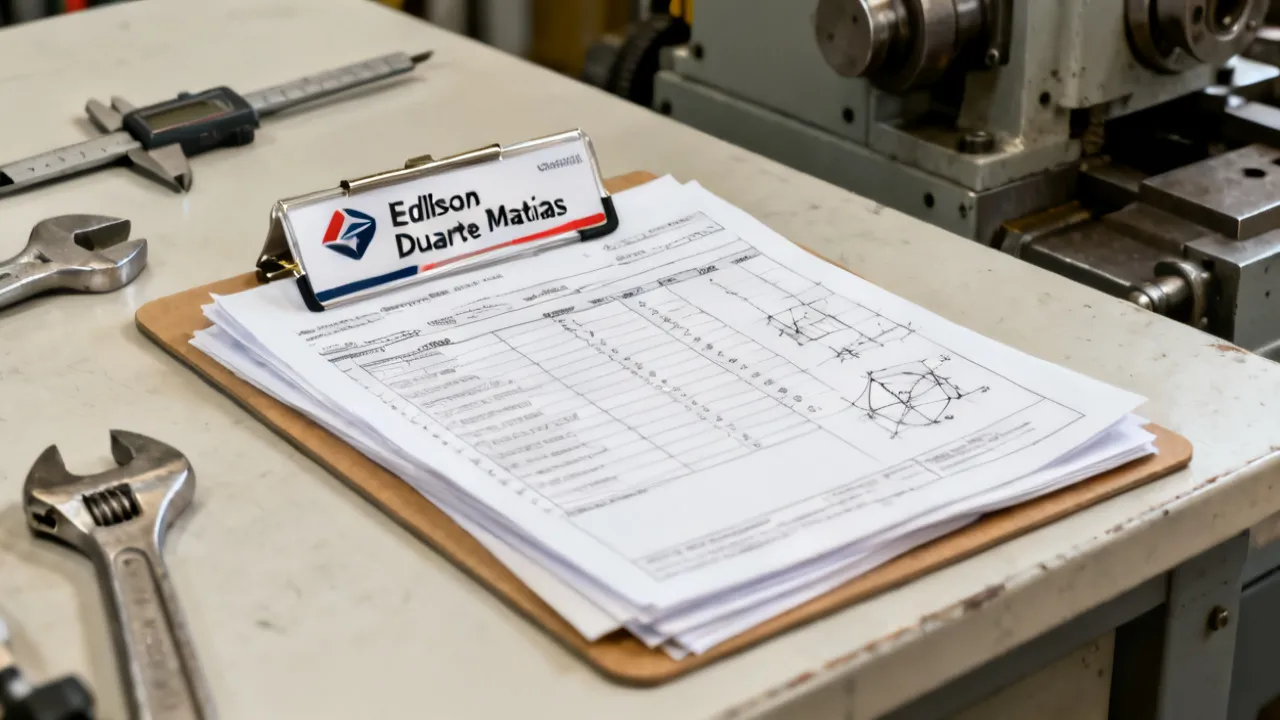
1) Core guidance: how to evaluate procurement references tied to “Edilson Duarte Matias”
When buyers encounter the name Edilson Duarte Matias during sourcing—whether as a point of contact, supplier representative, signatory, or reference in procurement conversations—the most useful approach is to treat it as a starting clue, not a final credential. A professional evaluation should confirm the right legal entity, verify the supplier’s capability, validate quality processes, and clearly map commercial terms such as price, delivery expectations, and documentation requirements. In practice, this reduces operational risk, improves audit defensibility, and increases decision quality for both direct purchasing and longer-cycle vendor onboarding.
In many procurement environments, names appear in emails, bid invitations, qualification documents, and supplier proposals. Sometimes the name is attached to a role (sales coordinator, project manager, technical representative) and sometimes it appears as a personal reference (“worked with Edilson Duarte Matias on similar projects”). Either way, the procurement task remains the same: convert what you hear into verifiable facts. This article is designed to help you interpret “Edilson Duarte Matias” as a reference signal and then apply a structured due diligence workflow so you can evaluate the underlying supplier and contract conditions with clarity and evidence.
Because your keywords appear without additional location text, this article stays broadly applicable while remaining process-focused. The goal is to help readers understand what to ask, what to check, and how to structure a purchase decision so that references connected to Edilson Duarte Matias can be assessed responsibly and consistently.
Before diving into step-by-step tactics, it helps to clarify what procurement “reference” can mean in real life. A reference might be:
- A contact person coordinating quotes or clarifications
- A technical person who can answer scope questions
- A commercial representative who negotiates price and commercial terms
- A named role in project governance (for example, a supplier’s project manager)
- A person who previously led work and is now being cited to support capability
- A signatory or authorized representative associated with proposals or agreements
Each of those meanings affects what you must verify, but none removes the requirement to confirm legal responsibility, delivery accountability, and quality evidence.
2) Why “price” alone is not enough in supplier decisions
In supplier procurement, price is only one dimension of total value. Even if your immediate focus is cost savings, procurement reality is that “cheapest” often fails when the supplier’s delivery reliability, documentation completeness, or quality process maturity is weak. Industry buyers typically consider at least four categories:
- Product or service fit (spec compliance, performance requirements, compatibility)
- Quality assurance (inspection points, test reports, nonconformance handling)
- Reliability (lead time consistency, capacity planning, escalation procedures)
- Total cost of ownership (packaging, logistics, returns, rework, downtime impact)
To make this practical, consider a scenario where two suppliers quote different price levels. The lower-cost supplier may:
- Use materials that meet requirements on paper but fail acceptance tests during inspection
- Provide incomplete certificates that delay your downstream use or regulatory submission
- Ship late, causing production line downtime that dwarfs the initial savings
- Respond slowly to quality issues, increasing scrap, labor, and rework costs
Therefore, a buyer should request itemized pricing and link it explicitly to technical and operational commitments. A good quotation does not just state totals; it connects cost elements to deliverables, and it clarifies boundaries: what is included, what is excluded, what documentation will be supplied, when it will be delivered, and what acceptance criteria will apply.
When the conversation includes a name such as Edilson Duarte Matias, the buyer can still apply the same principle: confirm that the person’s quotation aligns with the supplier’s actual capabilities and documented processes. You should evaluate the quote as a commercial instrument, not as a personal endorsement.
3) Supplier verification: what to confirm when a supplier name includes “Edilson Duarte Matias”
If Edilson Duarte Matias is presented as a supplier contact or reference, the buyer should confirm the supplier’s identity and authority through practical checks. These checks are common across procurement programs and align with widely used governance principles—such as vendor onboarding due diligence concepts found in ISO-aligned management systems and public procurement integrity guidance practices.
Think of supplier verification as a chain of accountability. If any link in the chain is weak, the supplier relationship becomes a risk. The chain usually includes: legal entity, authorization, scope responsibility, quality capability, delivery commitment, and complaint/issue handling.
Consider the following evidence-based confirmations:
- Legal entity and responsibility: Identify the registered company name that will be issuing invoices and fulfilling the contract. Do not assume the contact name corresponds to the legal entity.
- Scope of work: Confirm what exactly will be produced or supplied, including specifications and deliverables.
- Quality documentation: Request relevant certificates, inspection reports, and a description of their quality workflow.
- Capacity and lead times: Ask for historical lead-time ranges and how they handle backlogs, rush orders, and schedule changes.
- Communication and escalation: Ensure there is a documented path for resolving quality or delivery issues, including response times and roles.
Now, add an additional layer specifically tied to the presence of a named contact like Edilson Duarte Matias. Even if the supplier insists that “Edilson Duarte Matias handles quotes,” you still need to verify whether that contact is:
- Authorized to bind the legal entity contractually
- Authorized to commit to delivery dates and quality evidence timelines
- Representing the supplier directly or acting as a subcontractor/agent
- Providing information accurately, including what is included in price versus what is optional
A strong buyer approach is to ask for a signature authority statement or at least confirmation that the quotation and purchase order acknowledgements will be issued by the legal entity that will be responsible for delivery and invoicing.
4) How buyers typically structure commercial terms around “price” and deliverables
Commercial terms should translate pricing into operational reality. When quotes are discussed in the same context as Edilson Duarte Matias, it is wise to ensure the quote clearly includes:
- Unit pricing and volume assumptions (unit price, quantity range, price validity)
- Packaging and labeling requirements (pack type, labeling language, palletization or bundle rules)
- Delivery terms (incoterms or equivalent clarity, if applicable)
- Lead time expectations and production start conditions (trigger dates, design approvals, payment milestones)
- Warranty or guarantees coverage, if the goods or services require it (duration, scope, exclusions)
- Payment terms and invoice requirements (what must appear on invoice, submission timing, penalties if not met)
For many buyers, the very practical method is to convert the quote into a simple procurement brief: “If we pay this price, we receive these deliverables, by this schedule, under these quality controls.” This avoids ambiguity later. Ambiguity is a frequent root cause of disputes, especially when procurement relied on personal contacts without locking technical commitments in the contract or purchase order.
To make this explicit, consider adding these procurement artifacts:
- Scope matrix: line item, description, specification reference, quantity, included documentation
- Schedule table: milestones (design review, production start, inspection, shipment, delivery, installation/acceptance if relevant)
- Documentation list: certificates, test reports, manuals, drawings, traceability records
- Acceptance criteria: measurable tolerances, inspection methods, sampling plans (if applicable)
If Edilson Duarte Matias appears in emails during scoping, ensure the operational documents (purchase order, technical annex, quality plan references) are aligned with what that person promised informally. Informal promises are not enforceable unless incorporated into contract documents or purchase order terms.
5) Objective risk lens: quality, compliance, and traceability
Procurement is often treated as a “buying” function, but in operational terms it is closer to risk management. A supplier connected to Edilson Duarte Matias should be assessed through an evidence-based lens that emphasizes quality, compliance, and traceability—because those are typically the leading drivers of costly failures.
To evaluate objectively, separate what you know from what you assume. “We were told it’s good” is not evidence. Evidence is something you can review: certificates, inspection reports, sample results, audit statements, process descriptions, and contractual commitments.
5.1 Quality management signals
- Process control: Are critical steps documented? For example, do they have documented procedures for manufacturing, assembly, cleaning, packaging, and sealing?
- Inspection readiness: Are inspection points agreed in advance? A mature supplier clarifies when inspections occur (incoming, in-process, final) and what results are provided.
- Nonconformance handling: How are deviations corrected and communicated? Ask about nonconformance reports (NCRs), corrective actions (CAPA), containment strategies, and how they prevent recurrence.
- Change control: How do they manage updates to materials, methods, or sub-suppliers? Ask whether changes require approvals and how they maintain traceability across changes.
When a named contact like Edilson Duarte Matias is involved, you can use targeted questions to determine whether quality information is available and credible. For instance:
- “Who provides the inspection plan?”
- “Do you share test reports automatically or only upon request?”
- “How quickly do you respond if a sample fails acceptance criteria?”
5.2 Compliance and documentation
- Technical documentation: test results, material statements, drawings or specifications, calibration statements for measuring equipment (if relevant)
- Traceability: batch/lot tracking where applicable, including how traceability is maintained from raw materials to finished goods
- Regulatory requirements: any local or industry-specific obligations tied to the product category (for example, conformity declarations, safety standards, environmental compliance statements)
Documentation completeness is especially important when your procurement references a person rather than a department. Suppliers sometimes provide strong technical communication but omit formal records. Buyers should confirm exactly what will be delivered and when it will be delivered. If documentation is missing, it can block acceptance, delay use, or trigger regulatory noncompliance.
Traceability becomes critical in industries where materials or processes must be proven. Ask:
- “What is the traceability method for each batch/lot?”
- “Can you provide batch-level certificates for this order?”
- “Do you identify traceability on the packaging or only in internal records?”
5.3 Reliability indicators
- On-time delivery performance (top verified through records or references). Request historical performance metrics or at least examples of similar deliveries.
- Capacity planning and contingency processes. Ask how they handle demand spikes and how they schedule production when multiple customers request similar lead times.
- Escalation responsiveness (how quickly issues are acknowledged). For example, “Who responds within 24 hours if there is a shipment delay or quality hold?”
Reliability evaluation should also include communication discipline. If Edilson Duarte Matias is described as handling escalations, the buyer should verify that escalation steps are documented and that there is a backup contact if the individual is unavailable.
6) Where localization fits when location text is not provided
Your keywords included a placeholder-like instruction (“Anytime {city} or {country} appears in keywords, replace it with “nearby.””). However, no explicit city or country appeared in the provided keyword text. As a result, this article remains location-neutral. In real purchasing environments, local norms can affect timelines, documentation expectations, and communication style. For instance, in many regions buyers rely on neighborhood-scale logistics planning, regional warehouse handoffs, or local inspection practices. In other regions, customs and certification formalities may dominate schedule risk.
If you share a specific country or city for your market, the guidance can be tailored accordingly without changing the core evaluation logic. Localization typically changes the “how” (forms, authorities, inspection methods, compliance paperwork) but not the “what” (legal entity, scope clarity, quality evidence, reliability assessment, contract enforceability).
To illustrate why localization matters, imagine the same procurement is performed in two different settings:
- Region A: requires local conformity testing and language-specific labeling. Documentation delays might be more frequent.
- Region B: might have strict inbound inspection rules and specific traceability labeling. Failure to label properly could cause immediate rejection.
In both cases, the supplier must provide the evidence—but what evidence is required and how it must be formatted may differ.
7) Comparison table: procurement reference scenarios tied to Edilson Duarte Matias
The following table compares common real-world scenarios where a buyer may encounter Edilson Duarte Matias as part of supplier discussions. This is not a claim about any specific individual; it is a practical decision guide to help you interpret what you hear and what to verify next.
| Scenario | What it often means | What you should verify |
|---|---|---|
| Contact name provided in early sourcing | Someone who coordinates communication and quotes | Which legal entity will supply the goods/services and sign contracts; whether the quote is issued by the supplier |
| Supplier reference mentioned during qualification | A pointer to a capability or past engagement | Request written references, deliverable summaries, and any available inspection/test documentation |
| Pricing discussion linked to a personal name | Commercial negotiation handled by a representative | Confirm pricing validity period, terms, scope boundaries, and what is excluded or optional |
| Escalations route provided using that name | Defined escalation or customer service path | Confirm response times and escalation responsibilities in writing |
| Bid or procurement dossier includes that name | Named role in governance or project execution | Role definition, authority scope, and alignment with contractual responsibilities |
Use this table as a mental model: every scenario suggests a “meaning,” but verification always focuses on enforceable commitments, quality evidence, and responsibility assignment. The name is rarely the risk itself; the risk is the gap between informal reference and formal accountability.
8) Source and step-by-step guide: due diligence workflow for supplier evaluation
Below is a practical, step-by-step due diligence workflow. It is designed to be compatible with common quality and procurement governance approaches used internationally. For broader context, readers can reference ISO-oriented management system concepts (quality management and supplier evaluation ideas) and public procurement integrity principles from established authorities; however, this article focuses on process choices you can apply directly.
Due diligence should be proportionate. A purchase order for low-risk consumables requires less depth than a long-term supply agreement for safety-critical components. Still, even for low-risk items, it is useful to follow a lightweight version of the process so that your decisions remain consistent and defensible.
8.1 Step-by-step guide
- Clarify the buyer objective: Define what you are purchasing (goods/services), required specs, volume, and timeline. If “Edilson Duarte Matias” appears early, document why the contact is being considered (quote coordination, past work reference, technical clarification, etc.).
- Identify the contracting party: Determine the registered supplier entity that will issue invoices and accept contractual terms. Ask for company registration details or equivalent proof.
- Request a structured quotation: Ask for itemized price, scope boundaries, lead time assumptions, and included documentation. Ensure the quotation references the same specifications you will include in the purchase order.
- Collect quality evidence: Request test reports, inspection plans, certificates, and nonconformance procedures where relevant. If samples or prototypes are part of the process, request acceptance criteria for them.
- Review logistics and delivery commitments: Confirm packaging, labeling, shipment method, and expected delivery windows. Identify whether delivery dates are “best effort” or contractually committed dates.
- Validate capability: Ask about capacity constraints, production flow, and how they manage urgent orders or backlogs. Request evidence of similar work when a reference such as Edilson Duarte Matias is used to support capability.
- Confirm escalation and warranty terms: Ensure there is a clear path for handling defects, delays, or specification gaps. Confirm who is accountable for acknowledgements and corrective actions.
- Perform a risk check: Evaluate quality, reliability, and compliance signals; compare total cost of ownership, not only price. Include “soft” risk indicators such as response speed, completeness of documentation, and clarity of communication.
- Run a pilot or sample (when appropriate): For new suppliers or critical goods, test samples or run a small batch to confirm fit. Document the results and any corrective actions required.
- Finalize documentation: Ensure purchase order terms, acceptance criteria, and evidence submission timelines are aligned. Confirm that the named contact’s role is consistent with contractual responsibilities.
8.2 Conditions and requirements
- Documentation completeness: The quote should include scope, exclusions, and required specs. If Edilson Duarte Matias is presented as the coordinator, ensure the quote itself is still issued by the legal entity.
- Traceability expectations: Where traceability is required by your industry, confirm it in writing. Ask how traceability records will be delivered with the shipment.
- Quality acceptance criteria: Define how acceptance will be measured (inspection, tests, tolerances, reporting format). Avoid acceptance criteria that depend only on verbal assurances.
- Communication cadence: Agree on checkpoints for production updates, shipment notices, and issue reporting. Confirm how these updates will be delivered (email, portal notifications, or structured reports).
- Contractual clarity: Ensure the roles discussed (including any reference to Edilson Duarte Matias) are consistent with contractual responsibility. If that person is not contractually authorized, specify who is.
A common pitfall in real procurement is when a buyer exchanges a series of emails with a contact person, negotiates informally, and then discovers that the purchase order does not include the promised terms. Another pitfall is when the buyer assumes the contact is authorized to commit—only to find later that the legal entity refuses the commitment. Prevent both by treating purchase order and technical annexes as the “source of truth.”
9) Industry expert perspective: turning supplier evaluation into a repeatable system
From an industry governance standpoint, the biggest improvement you can make is to standardize how you evaluate supplier references. Many organizations treat vendor selection as an ad hoc process—especially when a recognizable name surfaces in conversations. Instead, you can treat Edilson Duarte Matias as a “data point” within a structured assessment rather than as evidence by itself.
Here is how expert procurement programs commonly improve outcomes:
- Use scoring aligned to your risk profile: For regulated or safety-critical items, quality and compliance carry more weight than aesthetics or speed. For lower-risk goods, a lighter scoring approach still ensures consistency.
- Separate commercial negotiation from technical verification: Negotiate price with a technical baseline already agreed. This prevents “discounts” from substituting for missing evidence or incomplete specs.
- Capture evidence early: Waiting until after a purchase order is issued often reduces leverage and complicates corrections. Early evidence capture also improves stakeholder alignment.
- Audit the quote-to-order translation: Confirm that the final purchase order reflects what was promised in the quotation. Compare scope line-by-line and verify that documentation commitments remain intact.
This approach helps buyers avoid two common failure modes:
- Trusting a reference without evidence: A personal or named reference might be credible, but procurement requires verifiable artifacts (certificates, test results, performance records) before decisions become enforceable.
- Paying for a low price without confirming acceptance criteria: If the acceptance criteria are not defined upfront, disputes escalate and rectification costs increase.
To make evaluation repeatable, many organizations maintain supplier assessment templates that include:
- Legal entity verification checklist
- Scope and technical specification mapping checklist
- Quality documentation request list
- Delivery and logistics checklist
- Commercial terms checklist (price, payment terms, warranty, penalties if applicable)
- Issue escalation and complaint handling checklist
When Edilson Duarte Matias appears, you simply attach these checklists to the supplier entity and ensure that every promise associated with the contact is reflected in contract artifacts. The name becomes an entry point to discovery, not a substitute for procurement documentation.
Another expert practice is to record “assumptions” explicitly during sourcing. For example, buyers might write down “Assumption: lead time begins after design approval.” If the supplier later changes lead time conditions, you can quickly identify whether a new assumption is required and whether the contract must be adjusted. This reduces the chance that informal conversations create uncontrolled variations from the purchase order requirements.
10) FAQs
FAQ 1: Who is Edilson Duarte Matias?
The name Edilson Duarte Matias may be used in procurement contexts as a contact, coordinator, or reference. This article does not assume identity details. In practice, you should verify the actual supplier entity, role, and authority responsible for delivery and invoicing. You can treat the name as a clue pointing to a supplier or role, but the supplier entity and contractual responsibility should be confirmed through documentation.
If you need to proceed operationally, ask for a formal point of contact and confirm whether that individual is authorized to represent the legal supplier entity for commercial matters, including quote issuance and purchase order acknowledgements.
FAQ 2: How should I interpret a quote that only mentions “price”?
A quote should map price to scope, deliverables, lead times, documentation, and acceptance criteria. If those elements are missing or vague, request itemized costs and written terms before committing.
At a minimum, a robust quotation usually includes:
- Line item description and quantity basis
- Unit price basis (including cost drivers such as packaging and documentation)
- Any exclusions and optional components
- Lead time conditions and shipment schedule assumptions
- Included documentation deliverables (certificates, test reports, manuals)
- Warranty or guarantee details (if applicable)
FAQ 3: What is the safest way to validate a supplier reference?
Use a structured workflow: confirm contracting party, collect quality documentation, verify capability and lead time practices, and align escalation/warranty terms. Where appropriate, request samples or a pilot batch and record outcomes.
For references connected to a named contact such as Edilson Duarte Matias, validation should include confirming whether the reference is tied to the supplier entity’s performance or to the individual’s past involvement. Evidence should be supplier-centric: invoices, delivery notes, acceptance records, test results, or performance metrics.
FAQ 4: Should I rely on personal names during procurement?
Personal names can help with communication, but procurement decisions should rely on evidence: legal entity, technical capability, quality processes, and contractual terms. Treat references—including any associated with Edilson Duarte Matias—as starting points for verification.
A best practice is to ensure that every personal name referenced in sourcing has an associated business role with defined responsibilities (who supplies what, who signs what, who escalates quality issues) and that these responsibilities are captured in procurement documents.
FAQ 5: How do I compare suppliers objectively when price differs?
Compare total value, not only unit cost. Evaluate quality evidence, reliability indicators, delivery commitments, and total cost of ownership factors such as rework, returns, logistics overhead, and downtime risks.
A practical method is to use a weighted scoring model. For example:
- Quality evidence (certificates, test reports, process maturity)
- Delivery reliability (historical performance, escalation responsiveness)
- Technical fit (spec compliance, compatibility)
- Total cost (price + logistics + expected rework risk)
Then ensure the scoring is based on documented evidence rather than opinions.
FAQ 6: Can I ask for inspection and test documentation?
Yes. For many categories, requesting inspection plans, test reports, and relevant certificates is standard practice. The key is to ensure the requested evidence aligns with your acceptance criteria.
To avoid misunderstandings, specify:
- Which tests are required
- Standards or test methods used
- Who performs the testing (internal lab, third-party, accredited lab)
- When the results will be delivered (before shipment, with shipment, after receipt)
- How nonconformances are handled and communicated
FAQ 7: What conditions should be written into the purchase order?
Include scope and specifications, delivery/lead time expectations, acceptance criteria, documentation submission timelines, and terms for defects or delays. Also ensure the responsibilities of any involved parties are consistent with what was discussed during sourcing.
Where Edilson Duarte Matias is referenced as a point of contact, you should still confirm the contractual responsibilities in the purchase order and technical annex. Personal contact details are useful for operations, but contract enforceability requires clear supplier commitments.
11) Concluding checklist: next actions for buyers
If you are currently working on a sourcing request connected to Edilson Duarte Matias, your immediate next steps should be:
- Confirm the contracting supplier entity and authority: Ensure invoices and delivery will come from the legal entity you can hold accountable.
- Request a structured quotation with clearly itemized price and scope boundaries, including what documentation is included.
- Collect quality and traceability evidence relevant to your product category (certificates, inspection reports, batch traceability where applicable).
- Align delivery and escalation procedures in writing: confirm lead times, shipment triggers, escalation response times, and warranty/defect handling.
- Use a repeatable evaluation framework so the decision is defensible and consistent across future sourcing activities.
By centering evidence over assumption, buyers can make procurement decisions that are both efficient and resilient—ensuring that any supplier references tied to Edilson Duarte Matias lead to verified outcomes rather than uncertainty. The name is a doorway; the purchase order, technical annex, and quality documentation are the proof.
-

A Guide to Cost-Efficient Small Electric Cars for Seniors
-
Mastering Debt Consolidation: Boost Your Credit Score and Manage Interest Rates
-
Your Guide to Loans, Credit Checks, and Interest Rates
-
Affordable Independent Living: Finding the Right Senior Housing
-
Guide to Senior Living Apartments: Affordable and Comfortable Environments